
Reservoir
A reservoir is the soft water bladder stored inside the pack.
- Example: a two-liter bladder in a running vest
- Check: confirm the fill opening is easy to use
- Limit: larger reservoirs add weight
Hydration packs work by carrying water close to the body and routing it through a hose so the user can drink without stopping, reaching for a bottle, or unpacking a bag. The useful parts are the reservoir, hose, bite valve, harness, storage layout, and fit against the torso.
A good hydration pack keeps fluid accessible while leaving the hands free. The tradeoff is that the pack must be filled, cleaned, fitted, and carried, so comfort and maintenance matter as much as capacity.
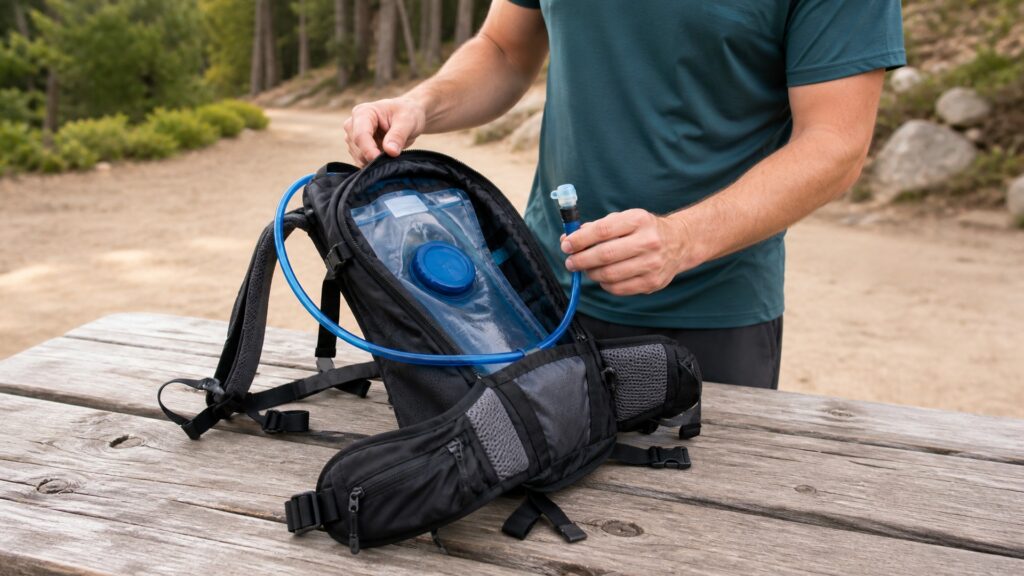
A practical look at reservoirs, hoses, bite valves, fit, storage, and cleaning.
Tip: Judge the gear by the problem it solves during the workout, not by the size of the feature list.
These concepts keep the decision tied to real training conditions, comfort, and setup.
A reservoir is the soft water bladder stored inside the pack.
A drink tube carries water from the reservoir to the user's mouth.
A bite valve opens when the user bites or squeezes it to drink.
Harness fit is how the pack sits on the shoulders, chest, and back.
Capacity is the amount of fluid and gear the pack can carry.
Cleaning access is how easily the reservoir, hose, and valve can be rinsed and dried.
Tip: The right hydration setup is the one that stays comfortable, accessible, and clean enough to use repeatedly.
The reservoir is the main water supply. It sits inside the pack and changes shape as the user drinks, which helps it fit close to the back without a rigid bottle shape.
The reservoir is useful when it carries enough water without making the pack feel bulky.
The hose is what makes the pack different from a simple backpack with a bottle. It keeps water reachable during running, hiking, cycling, or long gym sessions.
Easy access is the reason the pack exists.
A hydration pack has to move with the user. Shoulder straps, sternum straps, waist belts, and vest-style panels all affect comfort when the reservoir is full.
A stable pack makes hydration feel natural instead of distracting.
Some packs carry only water, while others hold snacks, keys, layers, tools, or fuel. Storage is helpful when it keeps essentials organized without adding unnecessary bulk.
Useful storage reduces stops without turning the pack into a heavy bag.
Hydration packs touch water, sweat, and sometimes drink mixes. If the reservoir and hose are hard to clean or dry, the pack becomes less appealing over time.
Maintenance is part of how the system works.
Hydration packs improve access to water, but they are still carried gear.
They keep water reachable without stopping.
They can carry fuel and small essentials for longer sessions.
They add weight and heat on the back.
They need more cleaning than a basic bottle.
The best pack is not always the largest or most technical one.
Extra water adds weight, so capacity should match the session.
Bottles can still be simpler for short workouts or easy refills.
Flow, leakage, and mouth feel vary enough to matter.
Cleaning affects taste, odor, and whether the pack is used regularly.
Tip: A hydration pack is useful only when it makes drinking easier without creating new friction.
Short answers for practical training and gear decisions.
Choose capacity based on workout duration, heat, refill access, and how much weight you tolerate.
No. They can help with hiking, cycling, long walks, outdoor training, and some endurance sessions.
They can bounce if the fit is poor or the load is unstable, which is why loaded fit matters.
Sometimes, but mixes require more cleaning than plain water.
A hydration pack works best when it makes drinking easier without adding comfort or cleaning problems.
Hydration packs work by combining a wearable reservoir, hose, bite valve, and stable harness into a hands-free water system.
They are most useful when easy drinking access matters more than the added weight and cleaning.
Use these Review Streets paths to compare related categories and practical next decisions.
Explore the hydration pack category.
See how pack design affects real workout use.
Review how motion changes pack fit.
Choose a retailer
Prices checked regularly. We may earn a commission at no cost to you.