How Luxury Performance Cars Work

Luxury performance cars combine the machinery that accelerates, steers, and slows a vehicle with systems intended to keep occupants comfortable and the cabin composed. The result comes from coordination: strong propulsion is useful only when the tires can transmit it, while controlled body movement must coexist with the ability to absorb uneven pavement.

There is no single mandatory layout. Engines, electric motors, transmissions, driven axles, suspension designs, and comfort equipment vary. Understanding the flow of energy and the jobs of the chassis makes the category easier to understand than treating a list of horsepower figures and drive modes as a complete explanation.

By: Review Streets Research Lab
Updated: October 5, 2026
Explainer · 8-12 min read
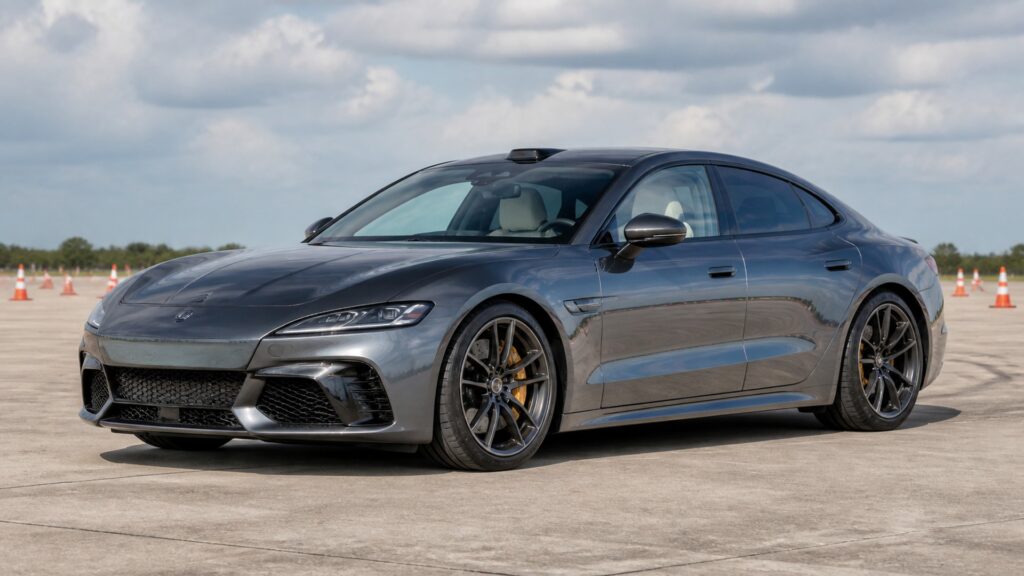
luxury performance cars explainer hero image for Review Streets
What You'll Learn

Following Power, Motion, and Comfort Through the Car

See how the main systems contribute different parts of the driving experience.

  • Follow energy from its source to the driven tires.
  • Understand why power and traction are different limits.
  • Separate spring support from damping control.
  • Connect deceleration with heat and energy recovery.
  • Recognize how refinement and electronic coordination work.

Tip: A drive mode changes selected behaviors within the fitted hardware; it does not replace that hardware.

Definitions

Six Systems Behind the Experience

Each system has a physical job, even when several are managed electronically.

Powertrain

The components that produce driving force and transmit it to the wheels.

  • Example: an engine and transmission, or an electric motor and reduction gear
  • Check: identify the actual propulsion arrangement
  • Limit: not every luxury performance car uses a hybrid system

Traction

The tire-road interaction available to transmit driving and other forces.

  • Example: the driven tires limiting how much acceleration can be used
  • Check: consider tires, surface, and current conditions
  • Limit: more output does not guarantee more usable acceleration

Spring support

The suspension function that supports load while allowing relative wheel movement.

  • Example: a wheel moving over a bump while the body is supported
  • Check: distinguish springs from dampers
  • Limit: spring type and adjustability vary by vehicle

Damping

Resistance that controls the rate and continuation of suspension movement.

  • Example: reducing repeated body movement after a disturbance
  • Check: check whether and how the fitted dampers adjust
  • Limit: a damping setting is not automatically a ride-height setting

Energy recovery

Using an electric drive system to recover some energy during slowing.

  • Example: a hybrid motor returning energy to the battery
  • Check: check which conditions permit recovery
  • Limit: friction brakes remain necessary

Refinement

The management of unwanted noise, vibration, and ride disturbance.

  • Example: reducing mechanical vibration reaching the cabin
  • Check: consider mounts, structure, seats, and sound treatment together
  • Limit: quietness alone does not describe handling or road grip

Tip: The driver experiences one vehicle, but different components support load, control motion, transmit force, and isolate disturbance.

Energy flow

Propulsion Turns Stored Energy Into Wheel Torque

An engine converts fuel energy into mechanical work; an electric motor draws electrical energy to produce torque. A transmission or reduction gear connects the source to the required wheel speed and force. Hybrid layouts combine sources in different ways. The BMW M5 provides one example of coordinated engine and electric drive, but that arrangement is not a requirement for membership in the category.

  • Identify the energy sources on the actual car.
  • Consider the transmission and gearing with the engine or motor.
  • Separate peak output from everyday delivery.

Smooth response depends on how torque arrives as well as how much is available. Two cars with similar output can respond differently to the same accelerator input.

Contact with the road

The Tires Set the Conditions for Usable Force

The powertrain delivers torque to the driven wheels, but the tires must transmit the resulting forces to the road. Front-, rear-, and all-wheel-drive layouts distribute propulsion differently. Steering and braking also depend on tire contact. Electronic controls can manage torque or apply braking interventions, but they work with the available tire-road conditions rather than creating unlimited grip.

  • Account for the fitted tires and surface.
  • Distinguish axle layout from absolute capability.
  • Keep condition and suitable tire selection central.

A powerful car on unsuitable tires can be constrained by traction well before it uses its available output. The engine specification alone cannot describe that situation.

Body and wheel movement

Suspension Balances Support With Motion Control

Springs support the vehicle while permitting wheel movement; dampers control how that movement develops and settles. Geometry guides the wheels as the suspension moves. Adaptive dampers can vary their response using the capabilities of the fitted system. BMW describes electronically controlled damping as one way to balance comfort and dynamic behavior. That adjustment remains part of a complete suspension and tire package.

  • Separate spring support from damping resistance.
  • Consider travel and geometry alongside settings.
  • Evaluate behavior on realistic pavement.

A setting that feels firm on a smooth road may be less agreeable on a broken surface. The useful result is controlled motion appropriate to the conditions, not maximum stiffness.

Slowing down

Braking Manages Energy as Well as Speed

When a car slows, its kinetic energy must go somewhere. Friction brakes convert much of it into heat that the system must tolerate and dissipate. Electrified vehicles may recover some energy through the motor and battery, subject to operating limits. The driver still needs a dependable friction braking system, including when recovery is reduced or a higher braking demand is present.

  • Maintain the friction brakes regardless of electrification.
  • Treat repeated braking as a heat-management demand.
  • Learn the actual car's deceleration behavior.

A quiet, smooth stop does not reveal how much work each system performed. Brake blending and pedal response are calibration choices within the available hardware and conditions.

Cabin and controls

Refinement and Electronics Shape the Combined Result

Isolation mounts, body structure, sound treatment, seats, and suspension tuning influence what reaches the occupants. Electronic control systems coordinate selected powertrain and chassis responses, sometimes offering driver-selectable settings. These features can make the car feel composed and responsive, but their presence does not erase mass, road conditions, or maintenance needs. The integration matters more than the number of menu options.

  • Assess unwanted noise separately from useful feedback.
  • Learn what each setting actually changes.
  • Use settings that suit the road and task.

A quieter cabin can reduce fatigue without proving that the road offers more grip. Comfort, driver information, and physical capability remain distinct qualities to evaluate.

Quick Reality Check

Several Systems, One Driving Experience

Good integration connects complementary functions.

The physical foundations

Propulsion provides torque; tires transmit forces to the road.

Suspension supports and controls movement; brakes manage slowing and heat.

The coordinated experience

Controls adjust supported responses to driver requests and operating conditions.

Cabin design and isolation reduce unwanted disturbance reaching occupants.

Common Myths

Misunderstandings About How These Cars Work

Equipment names are not substitutes for understanding the mechanisms.

More horsepower always means more acceleration

Traction, mass, gearing, and conditions also determine the result.

Adaptive damping means the ride height changes

Damping control and height adjustment are separate functions; equipment varies.

Energy recovery makes friction brakes unnecessary

Recovery is limited by conditions and cannot replace the complete braking system.

A quiet cabin means little is happening mechanically

Isolation can reduce what occupants hear and feel while the systems continue working.

Tip: Ask what a feature physically changes and under what conditions it can do so.

FAQ

Questions About Luxury Performance Systems

Layouts differ, but the underlying jobs remain recognizable.

Must a luxury performance car have all-wheel drive?

No. Driven-axle layout is a design choice, not a universal requirement.

Are all of these cars hybrids?

No. Combustion, electric, and hybrid powertrains use different arrangements.

Why does mass matter with a powerful engine?

Mass influences the force needed to accelerate and redirect the vehicle and the energy involved in slowing it.

Can a softer setting still provide useful control?

Yes. Appropriate damping depends on the complete chassis and surface; stiffness alone is not a quality measure.

What should I learn before changing modes?

Read which systems the mode affects and any operating restrictions for the actual vehicle.

Bottom Line

Luxury performance comes from coordinating propulsion, tire grip, suspension, braking, and cabin refinement.

Understand the fitted systems and their limits. A strong specification becomes a useful driving experience only through the complete vehicle.

Next Steps

Go Deeper or Compare Your Options

Use these Review Streets paths to compare related categories and practical next decisions.

Vehicles

Explore how vehicle categories serve different needs.

Further reading: BMW M5 powertrain example; BMW adaptive suspension explanation; NHTSA tire guidance.