
How Midsize SUVs Work

A midsize SUV works by combining a passenger-and-cargo body with systems that produce driving force, guide the wheels, absorb road inputs, and control speed. The engine or electric motor does not move the vehicle on its own: power must reach the driven wheels, and the tires must develop enough grip against the road.

Midsize describes the vehicle’s general size, not one mechanical design. A midsize SUV may use gasoline, hybrid, or electric propulsion; two or three seating rows; and different structural or drivetrain layouts. Understanding those systems explains both its versatility and the limits behind its carrying and towing claims.

By: Review Streets Research Lab
Updated: September 30, 2026
Explainer · 8-12 min read
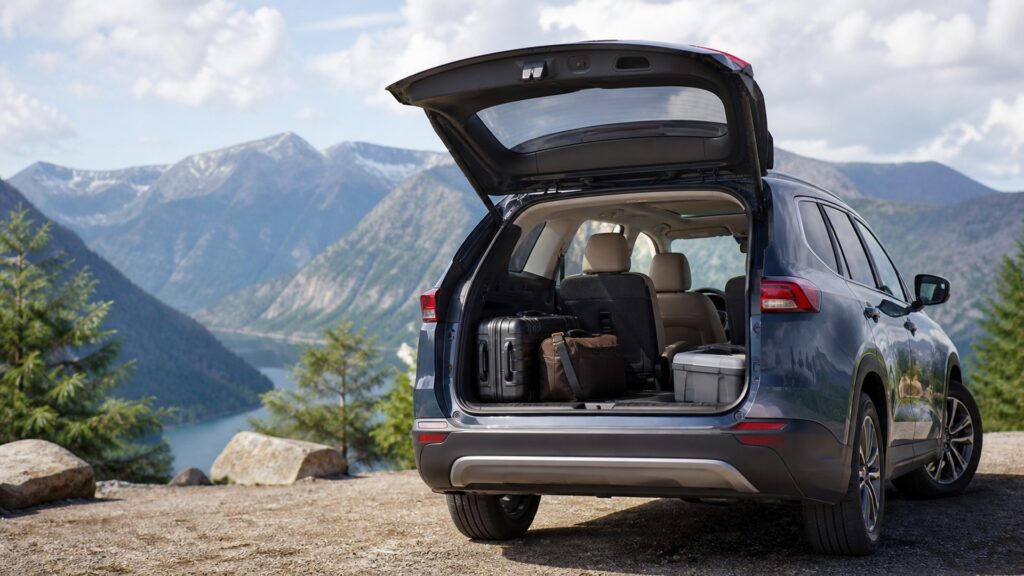
midsize suvs explainer hero image for Review Streets
What You'll Learn

From Stored Energy to a Moving SUV

Follow the major systems through starting, accelerating, turning, carrying a load, and stopping.

  • Trace how an engine or motor creates driving force.
  • Understand what the transmission and driven wheels contribute.
  • See how suspension, steering, and tires work together.
  • Separate braking from acceleration and traction assistance.
  • Connect cabin flexibility with structural and loading limits.

Tip: Ask what each system contributes to the task; one strong component cannot remove every other limit.

Definitions

The Main Systems in a Midsize SUV

Each part of the vehicle has a distinct job, even when electronic controls coordinate their operation.

Body structure

The load-bearing structure that supports the cabin and connects major vehicle systems.

  • Example: A unibody SUV carries structural loads through its body shell.
  • Check: Identify whether the vehicle uses a unibody or separate-frame design.
  • Limit: The construction label alone does not establish capacity or crash performance.

Powertrain

The engine or motor system and associated components that provide propulsion.

  • Example: A gasoline engine supplies rotating output to a transmission.
  • Check: Check the actual powertrain configuration.
  • Limit: Different SUVs can reach similar performance through different mechanisms.

Driveline

The components that transfer driving torque to the wheels.

  • Example: A shaft and axle assembly transmit torque to a driven axle.
  • Check: Identify which wheels are driven and how that is achieved.
  • Limit: Some electrified layouts use separate motors rather than the same mechanical connections.

Suspension

The springs, dampers, links, and related parts that support the body and guide wheel movement.

  • Example: A wheel moves over a bump while the damper controls continued movement.
  • Check: Evaluate both ride comfort and how the body settles.
  • Limit: Suspension does not eliminate the need to observe load ratings.

Tire contact patch

The portion of each tire touching the road at a given moment. Forces for acceleration, braking, and steering pass through it.

  • Example: A turning tire must generate lateral force against the road.
  • Check: Use suitable tires in the specified condition and pressure range.
  • Limit: Available grip is finite even when the engine has more power.

Friction and regenerative braking

Friction brakes slow the vehicle by producing heat; regenerative braking in an electrified vehicle can recover some motion energy electrically.

  • Example: A hybrid blends energy recovery with its friction brakes during a stop.
  • Check: Learn the normal brake feel and limitations of the specific vehicle.
  • Limit: Energy recovery does not replace every use of the friction brakes.

Tip: Propulsion, carrying capacity, and stopping are connected tasks with separate constraints.

Energy and propulsion

The Powertrain Converts Stored Energy into Motion

A gasoline engine releases energy from fuel to turn its output shaft. An electric traction motor uses electrical energy to produce torque. A hybrid coordinates an engine and electric drive, with the exact power flow depending on its design and the driving situation.

  • Gasoline vehicles store propulsion energy primarily in fuel.
  • Battery-electric vehicles draw propulsion energy from a charged traction battery.
  • Hybrids use engine and electric-drive contributions in a coordinated system.

The accelerator requests a response rather than directly setting wheel force by itself. Control systems manage the available output while considering the operating conditions and the vehicle’s design.

Power to the road

Ratios and Driven Wheels Determine How Torque Reaches the Ground

Where a transmission is used, its ratios allow the power source to work across different vehicle speeds. The driveline carries torque to the driven wheels. Front-, rear-, all-, and four-wheel-drive arrangements differ, and electrified vehicles may distribute drive through more than one motor.

  • A lower gear can provide greater torque multiplication at the wheels.
  • The driven-wheel arrangement affects where propulsion force is available.
  • Tires still need grip to turn that force into useful acceleration.

All-wheel drive can help apply power when grip varies, but it does not create unlimited traction. More driven wheels do not cancel braking or cornering limits.

Ride and direction

Suspension and Steering Keep the Wheels Working with the Road

Springs support the vehicle and allow wheel movement; dampers control how that movement continues. Steering changes the direction of the wheels, while suspension geometry influences how they move and maintain contact. Tires add their own compliance and grip characteristics.

  • A bump affects wheel and body movement differently.
  • Damping helps prevent prolonged bouncing after a disturbance.
  • Wheel, tire, and suspension choices alter the balance of comfort and response.

A smooth ride results from several parts working together. A soft spring, a large tire, or a long wheelbase alone cannot describe the whole experience.

Slowing and control

Brakes Remove Motion Energy and Control Speed

Friction brakes use pads and discs or other friction surfaces to slow wheel rotation, converting motion energy into heat. Electrified powertrains may recover some energy during deceleration. The vehicle still needs an appropriate braking system for normal stops and situations where energy recovery is limited.

  • Brake control systems help manage wheel behavior during braking.
  • Regenerative braking availability depends on the vehicle and conditions.
  • Tire grip remains part of stopping and steering control.

Descending a long hill or carrying a heavy load changes the work the vehicle must do. Follow the model’s operating guidance rather than assuming engine power or energy recovery handles every demand.

Carrying people and gear

The Body Provides Space, but Ratings Define Permitted Loads

Folding seats and an enclosed cargo area make an SUV adaptable. Those features rearrange available space; they do not change the structural, axle, tire, or other limits that govern what it may carry. Additional passengers and equipment consume the available weight allowance.

  • Choose the seating arrangement before assessing luggage room.
  • Secure carried items using the specified provisions.
  • Check towing and vehicle limits for the exact configuration.

Folding a rear seat can make a long object fit without making the vehicle capable of carrying any weight that fits inside. Volume and permissible load answer different questions.

Quick Reality Check

What the Combined System Makes Possible

Versatility comes from coordinated systems and a flexible body layout.

A suitable midsize SUV can…

Carry people and luggage in several seating arrangements.

Provide everyday road comfort and, when properly specified, additional towing or terrain capability.

It still depends on…

The exact powertrain, tires, equipment, and manufacturer limits.

Correct loading, maintenance, and operation for the conditions.

Common Myths

Misconceptions About How Midsize SUVs Work

Avoid assigning every capability to one component.

Every midsize SUV has the same mechanical layout

Size does not identify propulsion, construction, driven wheels, or seating.

Horsepower determines what it can tow

Ratings also depend on the vehicle structure, driveline, cooling, braking, equipment, and specified conditions.

All-wheel drive creates extra braking grip

It concerns propulsion distribution. Tire-road grip and the braking system must still control deceleration.

Folding seats increases payload

It creates a different cargo space, not a new weight allowance.

Tip: Use the specification for the complete vehicle rather than extrapolating from a single feature.

FAQ

Questions About Midsize SUV Systems

Answers that connect the mechanism to everyday use.

Are midsize SUVs all built like trucks?

No. Many use unibody construction, while some use a separate frame. Check the model rather than assuming from appearance.

Can a midsize SUV be fully electric?

Yes. Midsize describes size; battery electric describes how it is propelled.

Why does the same SUV have several tow ratings?

Different powertrains, equipment, and configurations can have different limits. Use the rating applicable to the exact vehicle.

Which system should I focus on first?

Start with your task: passenger and cargo fit, driving conditions, or towing. Then check the complete configuration that supports it.

Bottom Line

Midsize SUVs work by coordinating propulsion, driveline, chassis, braking, and a flexible passenger-and-cargo body.

Their usefulness comes from the whole vehicle. Understand the layout, then verify the limits and equipment for the work you expect it to do.

Next Steps

Go Deeper or Compare Your Options

Use these Review Streets paths to compare related categories and practical next decisions.

Vehicles

Compare related vehicle choices against the same carrying needs and driving routine.

SUVs

Compare related vehicle choices against the same carrying needs and driving routine.

Midsize SUVs

Explore Midsize SUVs with your passenger, cargo, and ownership requirements in mind.

Further reading: DOE: hybrid powertrain components; NHTSA: tire operation and care; Ford: towing ratings and configurations. Use the owner’s manual for the exact vehicle’s instructions and limits.