
Nail Plate
Layered keratin structure that grows from the nail matrix.
- Use: set realistic cosmetic limits
- Variable: growth and damage
- Tradeoff: Existing plate must grow out
Nail care products work in different ways depending on the job. Polish removers dissolve or swell coatings; cuticle oils and creams lubricate and soften surrounding skin and the nail surface; base coats, color, and top coats leave solvent- or water-borne films; strengtheners may form a coating or interact with nail keratin; artificial systems polymerize or bond into a harder enhancement.
Those mechanisms are not interchangeable. A glossy coating can make nails feel thicker without changing the plate underneath, while repeated removal, filing, picking, skin contact, or prolonged water exposure can offset cosmetic benefits. Nail products are generally cosmetics when they beautify or alter appearance; products claiming to treat fungus or another medical problem are drugs. Safe use requires label directions, ventilation, fire awareness, limited skin contact, hygiene, and inspection of the bare nail between services.
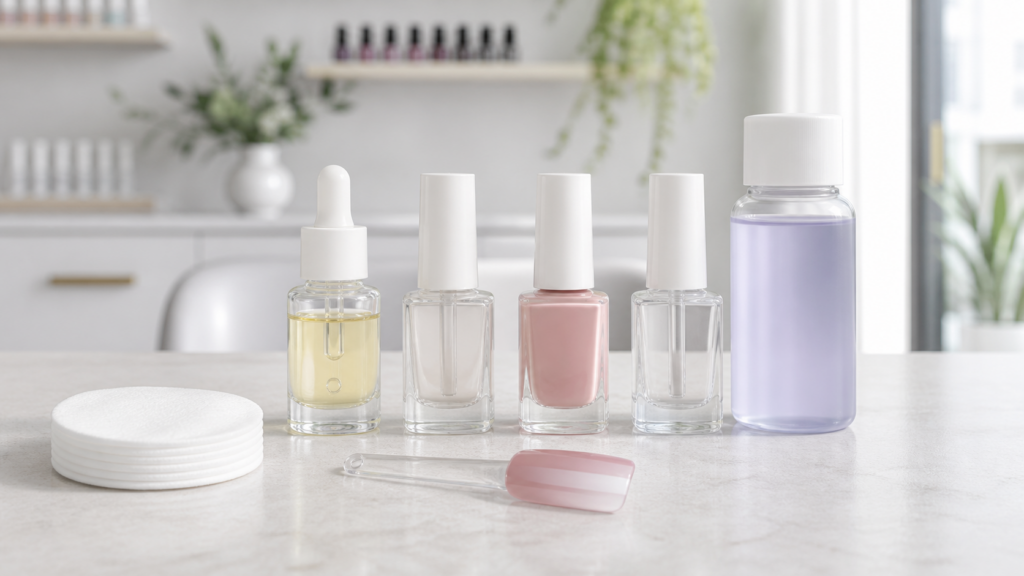
Explain nail care as four distinct jobs—cleaning/removal, conditioning surrounding skin and flexible nail surfaces, forming decorative or protective coatings, and chemically altering or bonding systems—while separating cosmetic appearance from disease treatment and integrating ventilation, flammability, allergy, hygiene, removal, and growth-out.
Tip: The correct mechanism begins with an accurate job.
These nail care products concepts separate mechanism, application, limits, and purchasing consequences.
Layered keratin structure that grows from the nail matrix.
Liquid blend dissolving ingredients during application or removing a coating later.
Material creating the continuous polish or treatment coating after carriers leave.
Ingredient helping a dried film remain flexible.
Reaction linking small molecules into a harder enhancement material.
Movement of existing damage or coating away from the matrix as new nail forms.
Tip: Use these terms to test nail care products instead of relying on a front-label promise.
A remover, cuticle oil, ridge filler, hardener, polish, gel, and acrylic do different work. Start with the observed issue and avoid treating discoloration or lifting blindly.
The correct mechanism begins with an accurate job.
Base, color, and top coats rely on adhesion and continuous films. Thick layers can remain soft, wrinkle, or chip; curing systems require their compatible lamp and instructions.
A coating performs through controlled film formation.
Conditioners lubricate and reduce rough feel but do not permanently rebuild the plate. Apply consistently around, not under lifted or infected-looking areas without professional guidance.
Conditioning supports the surface; growth comes from the matrix.
Acetone is effective for many coatings but can increase temporary dryness; resistant gels or enhancements need system-specific removal. Picking removes layers of nail plate with the product.
Removal quality is part of product performance.
FDA warns that some nail products are flammable and can cause infection or allergic reactions. Keep reactive product off skin, avoid shared contaminated tools or powders, and pause after swelling, pain, lifting, or discoloration.
A durable manicure should never conceal a developing problem indefinitely.
Nail products can clean, condition, color, coat, harden, or extend the visible nail; they cannot make every nail change cosmetic or prevent damage from poor application and removal.
The chosen mechanism solves a defined nail or coating problem.
Application and removal preserve surrounding skin and allow the bare nail to be inspected.
Hardness, thickness, shine, and healthy growth are different outcomes.
Strong solvents, reactive ingredients, and durable systems require proportionate safety and technique.
These claims flatten the variables that determine how nail care products performs in a real routine.
The nail plate does not breathe like lung tissue. Breaks can still be useful for inspecting changes, reducing exposure, and allowing damaged areas to grow out.
Excess hardness can reduce flexibility and increase splitting. FDA notes that frequent use of some formaldehyde-containing hardeners may make nails brittle and more likely to break or peel.
Peeling or prying can remove superficial nail layers and increase roughness. Use the directed removal system and adequate time instead.
Cuticles help protect the space around new nail growth. AAD advises leaving them alone because cutting or pushing can increase infection risk.
A product intended to treat fungus is a drug, not merely a cosmetic. Persistent thickening, discoloration, pain, lifting, or surrounding inflammation needs qualified assessment.
Tip: Test the exact nail care products tool, setting, and routine before generalizing from its category.
The remaining decisions about nail care products concern technique, compatibility, safety, upkeep, and value.
Depending on formula, it can improve adhesion, reduce staining, smooth ridges, or create a sacrificial layer. It cannot prevent every chip or discoloration.
Many conventional polishes form a film as solvents evaporate; water-borne and light-cured systems behave differently. Thin coats and directed time matter.
Thick coats, trapped solvent, shaking in air, incompatible layers, heat, humidity, or coating before the prior layer stabilizes can disrupt the film.
Acetone is an effective solvent that can cause temporary dryness of nail and skin. Use it for the shortest effective directed process, ventilate, and condition afterward.
Stop after pain, burning, swelling, rash, nail lifting, marked discoloration, drainage, or damaged surrounding skin. Remove color when safe and seek care when changes persist.
Include coats per manicure, drying or curing time, chip interval, removal supplies, ventilation, tool hygiene, professional fees, and recovery from damage—not bottle price alone.
Nail care products work through solvent action, surface conditioning, film formation, hardening, bonding, or polymerization. Each mechanism has different application, wear, removal, and safety requirements.
Define the job, keep coatings thin and off skin, ventilate, avoid flame, remove without peeling, protect cuticles, and inspect bare nails between services. Cosmetic appearance should never substitute for evaluating persistent nail changes.
These Review Streets paths narrow the next nail care products decision by format, goal, and routine fit.
Browse nail color, treatment, removal, and maintenance categories.
Compare cuticle oils by vehicle, applicator, absorption, and routine fit.
Choose a retailer
Prices checked regularly. We may earn a commission at no cost to you.