
Plaque Biofilm
Organized microbial film that adheres to teeth and oral surfaces.
- Use: set the cleaning target
- Variable: time and surface access
- Tradeoff: Not removed by rinsing alone
Oral-care products work through different mechanisms rather than one universal cleaning effect. A toothbrush disrupts the soft plaque film on accessible tooth and gumline surfaces; floss or another interdental cleaner reaches spaces a brush may miss; fluoride toothpaste exposes enamel to fluoride while brushing; and some rinses provide a specific active ingredient or short-term benefit.
The routine succeeds only when the product reaches the intended site at the right dose and frequency. ADA guidance centers twice-daily brushing for two minutes with fluoride toothpaste, cleaning between teeth daily, and selecting products with demonstrated safety and effectiveness. A rinse can supplement those steps, but it does not mechanically remove attached plaque or replace brushing and interdental cleaning.
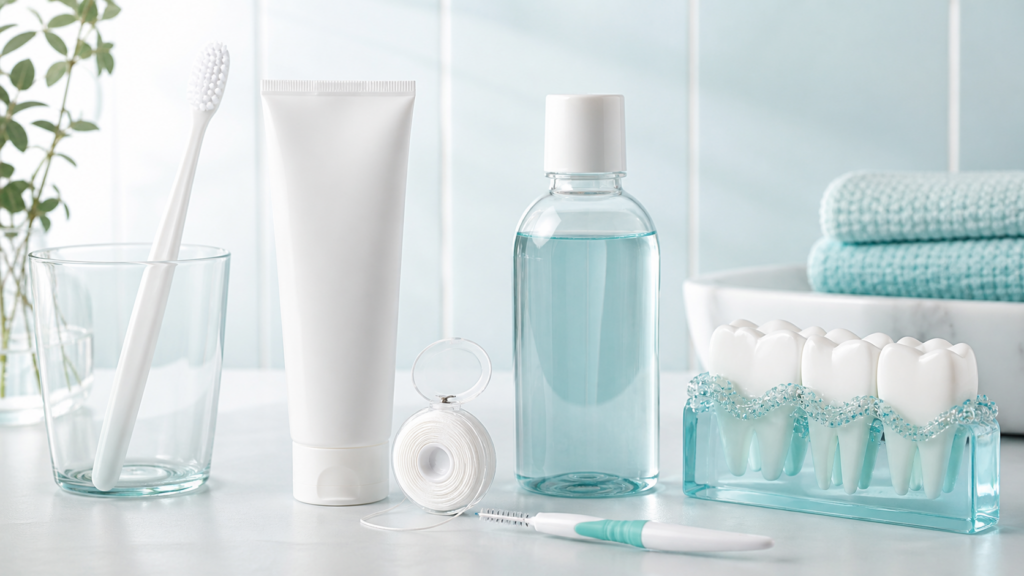
Explain oral-care products by job—mechanical plaque disruption, fluoride delivery, interdental cleaning, breath or symptom support, and specialized indications—then show why technique, contact, frequency, tolerance, evidence, and professional guidance matter more than product count.
Tip: A shelf full of products is not the same as complete surface coverage.
These how oral care products work concepts separate mechanism, application, limits, and purchasing consequences.
Organized microbial film that adheres to teeth and oral surfaces.
Physical movement that breaks up plaque on contacted surfaces.
Contact between fluoride and tooth surfaces that supports resistance to tooth decay.
Ability to clean between teeth and around appliances.
Mouthrinse formulated with an active for a stated purpose.
Voluntary mark indicating an accepted product met ADA safety and efficacy requirements for its claim.
Tip: Use these terms to test how oral care products work instead of relying on a front-label promise.
Start with fluoride toothpaste, a soft-bristled brush, and a suitable interdental method. Add specialty products only for a defined problem or professional recommendation.
A shelf full of products is not the same as complete surface coverage.
Place bristles where plaque collects, including the gumline and each tooth surface. Brush for two minutes twice daily without aggressive scrubbing.
The brush cleans only where its bristles actually travel.
Floss suits many tight contacts, while interdental brushes, water flossers, or special threaders may fit larger spaces, bridges, braces, or limited dexterity.
The useful device is the one that safely reaches the individual space.
Whitening, sensitivity, dry-mouth, tartar-control, and therapeutic-rinse products solve narrower jobs. Compare evidence, expected timeline, irritation, staining, alcohol, and compatibility.
A targeted formula should earn its place in the routine.
Bleeding that persists, tooth pain, swelling, sores, loose teeth, unexplained bad breath, or lasting sensitivity can have causes a retail product cannot identify.
Symptom relief is not proof that the cause is resolved.
Products can support daily prevention and comfort; they cannot make technique irrelevant or diagnose and treat every source of pain, bleeding, odor, sensitivity, or discoloration.
Each item in the routine has a distinct job and target surface.
The routine is comfortable enough to perform consistently.
More actives can increase irritation, staining, taste problems, and cost.
Persistent symptoms require dental assessment rather than product stacking.
These claims flatten the variables that determine how how oral care products work performs in a real routine.
Rinsing does not provide the same mechanical plaque disruption or access as brushing and interdental cleaning. It is an optional targeted addition.
Burning reflects formulation and tolerance, not cleaning power. Pain or irritation is a reason to stop and reassess.
Many formulas mainly remove surface stain. Intrinsic discoloration, restorations, and uneven color respond differently.
Botanical oils, flavorings, abrasives, and acids can irritate or damage when poorly formulated or used. Judge the claim and evidence.
Use the labeled amount and age guidance. Benefit depends on correct regular use, while excess swallowing is inappropriate, especially for young children.
Tip: Test the exact how oral care products work tool, setting, and routine before generalizing from its category.
The remaining decisions about how oral care products work concern technique, compatibility, safety, upkeep, and value.
Brush twice daily for two minutes with fluoride toothpaste and clean between teeth daily using a suitable device; follow individualized dental advice.
Follow the product and dental guidance. Avoid swallowing, and do not assume vigorous rinsing improves fluoride benefit.
No. A rinse should have a defined purpose, compatible active, and tolerable directions; it does not replace the core routine.
Confirm the active and instructions, use consistently for the stated trial, and seek dental care for severe, localized, or persistent sensitivity.
It indicates the specific accepted product met ADA requirements for safety and efficacy for its stated claims. Compare the exact claim, not just the logo.
Rapidly increasing facial or oral swelling, trouble breathing or swallowing, uncontrolled bleeding, or significant trauma needs urgent professional care.
Oral-care products work by distinct mechanisms: mechanical plaque disruption, fluoride exposure, interdental access, or a narrower therapeutic action. Technique and coverage determine whether the active reaches its target.
Build around twice-daily fluoride brushing and daily interdental cleaning, then add only products with a clear job. Persistent pain, bleeding, swelling, sores, odor, or sensitivity needs dental assessment rather than a larger routine.
These Review Streets paths narrow the next how oral care products work decision by format, goal, and routine fit.
Browse toothbrushes, interdental cleaners, rinses, and other oral-care categories.
Compare manual, electric, sonic, and specialty toothbrush formats.
Choose a retailer
Prices checked regularly. We may earn a commission at no cost to you.