How Power Racks & Squat Racks Work

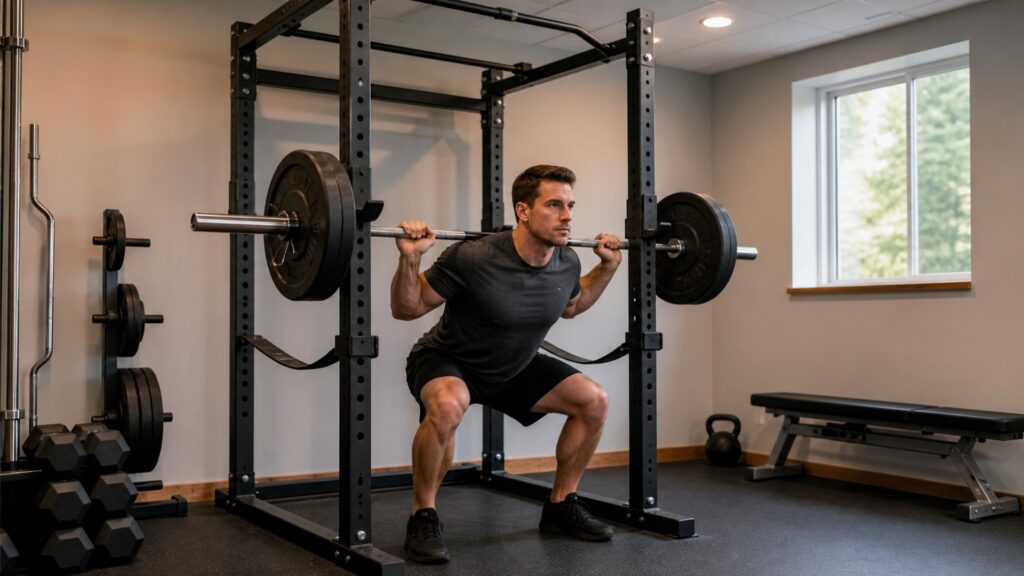
Power racks and squat racks work by giving a loaded barbell a stable place to start, rest, and be caught when a lift gets difficult. The rack does not lift the weight for the user. It provides structure around barbell movements so squats, presses, rack pulls, and related lifts can be set up more predictably.

A power rack usually surrounds the lifter with uprights and safeties. A squat rack is often simpler and more open. The important parts are the uprights, hooks, safeties, pull-up bar, hole spacing, weight capacity, and enough room to move the bar safely.

By: Review Streets Research Lab
Updated: September 25, 2026
Explainer · 8-12 min read
power racks & squat racks explainer hero image for Review Streets
What You'll Learn

How Racks Support Barbell Training

A practical look at uprights, J-hooks, safeties, spacing, and workout setup.

  • How the frame supports barbell starting positions
  • Why J-hooks and safeties matter
  • How power racks differ from simpler squat racks
  • Where hole spacing and capacity affect use
  • What to check before using a rack at home

Tip: Start with the exercises that define the routine. Equipment value comes from supporting those movements safely and repeatedly.

Definitions

Key Concepts Behind Power Racks & Squat Racks Work

These concepts clarify the practical differences between home strength setups.

Power Rack

A power rack is a four-upright frame designed to support barbell lifts with internal safety catches.

  • Example: squatting inside a rack with safety straps
  • Check: confirm the rack has safeties that match the lift
  • Limit: it needs enough floor space and ceiling height

Squat Rack

A squat rack supports a barbell for squats and other lifts, often with a simpler or more open frame.

  • Example: two uprights with J-hooks for a back squat
  • Check: review stability and safety options
  • Limit: some squat racks provide less protection than full cages

J-Hooks

J-hooks are the supports that hold the barbell at the starting height.

  • Example: setting hooks at shoulder height for squats
  • Check: make sure hooks are locked and level
  • Limit: wrong height can make unracking unsafe

Safeties

Safeties are bars, straps, or arms that catch the bar if a rep cannot be completed.

  • Example: safety arms catching a missed bench press
  • Check: set safeties just below the movement path
  • Limit: safeties work only when positioned correctly

Hole Spacing

Hole spacing is the distance between adjustment points on the rack uprights.

  • Example: closer spacing near bench height for better setup
  • Check: see whether hooks and safeties can be placed precisely
  • Limit: wide spacing may force awkward start positions

Working Clearance

Working clearance is the room needed for the lifter, barbell, plates, bench, and safe movement.

  • Example: space behind the rack to load plates
  • Check: measure the full bar path and plate storage area
  • Limit: tight rooms can make setup unsafe

Tip: The better choice is the one that supports the user's repeated workouts with the clearest setup and fewest compromises.

Frame

The Rack Creates A Stable Barbell Station

The rack's frame holds the bar at a chosen height so the lifter can start the movement without lifting from the floor every time.

  • Set hooks at the right height.
  • Check that the rack is stable.
  • Leave room for the bar and plates.

The frame's job is to make the start and finish of the lift predictable.

Safety

Safeties Manage Missed Reps

Safeties are one of the main reasons to use a rack. They give the bar somewhere to land if the lifter cannot complete the rep.

  • Set safeties for each lift.
  • Test height with an unloaded bar.
  • Use the right safety style for the movement.

Safeties are useful only when they are adjusted before the set.

Adjustment

Hole Spacing Controls Setup Precision

Small differences in hook or safety height can change how a lift feels. Better spacing helps users set the bar closer to the ideal position.

  • Use lower hook height rather than reaching up.
  • Set safeties below the full range of motion.
  • Record settings for repeated workouts.

Precise setup makes repeated training easier.

Rack Type

Power Racks And Squat Racks Offer Different Coverage

A full power rack usually gives more surrounding structure. A squat rack may be smaller, simpler, or easier to fit in a home gym.

  • Choose a power rack for more safety coverage.
  • Choose a squat rack when space and simplicity matter.
  • Compare stability and safety attachments carefully.

The right style depends on the lifts and room.

Use

The Rack Works Only With Good Setup Habits

A rack makes barbell training more manageable, but the user still has to load evenly, set safeties, clear the area, and use controlled technique.

  • Load plates evenly.
  • Keep the rack area clear.
  • Use a bench that fits the rack.

The equipment supports the lift, but setup choices make it safe and repeatable.

Quick Reality Check

Where Racks Help And Where They Have Limits

Racks make barbell work easier to set up, but they do not remove the need for good judgment.

Where They Help

They provide a stable starting height for barbell lifts.

They can catch missed reps when safeties are set correctly.

Where They Fall Short

They do not coach technique or choose the right load.

They still require space, setup, and compatible accessories.

Common Myths

Misconceptions About How Racks Work

A rack is support equipment, not a substitute for safe lifting habits.

A rack makes every lift safe automatically

Safeties and hooks have to be set correctly for each lift.

Squat racks and power racks are identical

Power racks usually provide more surrounding structure and safety options.

Weight capacity is the only spec that matters

Stability, spacing, safeties, and room fit matter too.

Any bench works in any rack

Bench height and length can affect setup and bar path.

Tip: Judge equipment by the workout it makes more repeatable, not by how complete it sounds.

FAQ

Frequently Asked Questions About Power Racks And Squat Racks

Short answers for comparing home gym equipment.

What is the main purpose of a rack?

It supports the barbell at useful heights and can provide safeties for missed reps.

Is a power rack better than a squat rack?

A power rack usually offers more safety coverage, while a squat rack may be simpler and smaller.

What should I check before buying?

Check footprint, height, capacity, hole spacing, safeties, J-hooks, and accessory compatibility.

Can beginners use racks?

Yes, when they learn setup basics and use appropriate loads.

What is the practical takeaway?

A rack works by making barbell setup more stable and repeatable.

Bottom Line

Power racks and squat racks work by giving barbell lifts a stable start, finish, and safety structure.

They are most useful when hooks, safeties, spacing, and room setup match the lifts the user repeats.

Next Steps

Go Deeper or Compare Your Options

Use these Review Streets paths to compare related categories and practical next decisions.

Home Gym Systems

Compare broader all-in-one stations with rack-based training.

Cable Machines

Review cable-focused equipment for accessory and angle-based work.