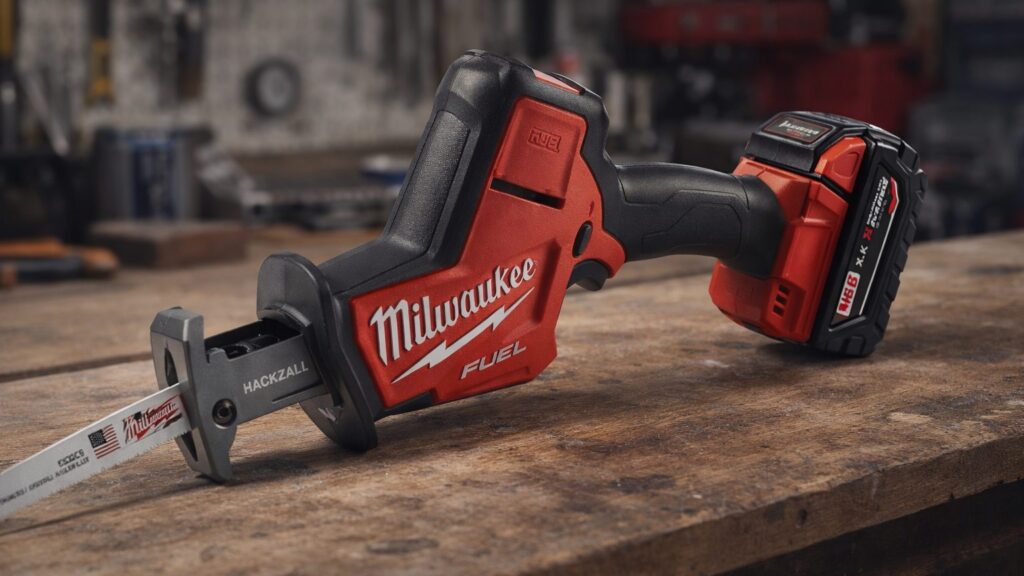
Reciprocating saws operate on a straightforward principle, yet their internal mechanics are often misunderstood. While the tool appears to rely on simple back-and-forth motion, that motion is driven by a coordinated system of motor rotation, gear reduction, and a conversion mechanism that translates rotary energy into linear stroke movement. The interaction between these components determines stroke length, speed, and cutting behavior across different materials.
This explainer breaks down how that system functions from input to output. It walks through the motor, drivetrain, and reciprocating assembly, along with how blade motion is generated and controlled. By the end, the relationship between internal components and external cutting action becomes clear, providing a structured understanding of how reciprocating saws convert power into controlled, linear motion.