
Elastic Tension
Elastic tension increases as the band stretches farther.
- Example: a band row getting harder near the end
- Check: notice where tension peaks
- Limit: exact resistance is hard to measure
Resistance bands work by creating elastic tension as they stretch. The farther the band stretches, the more resistance it usually provides, which makes the exercise feel different from dumbbells, kettlebells, barbells, or machines.
That elastic tension can be useful for warmups, strength accessories, travel workouts, assistance work, and adding resistance from different angles. The tradeoff is that exact load is harder to measure, and safety depends on band condition, anchor stability, and controlled setup.
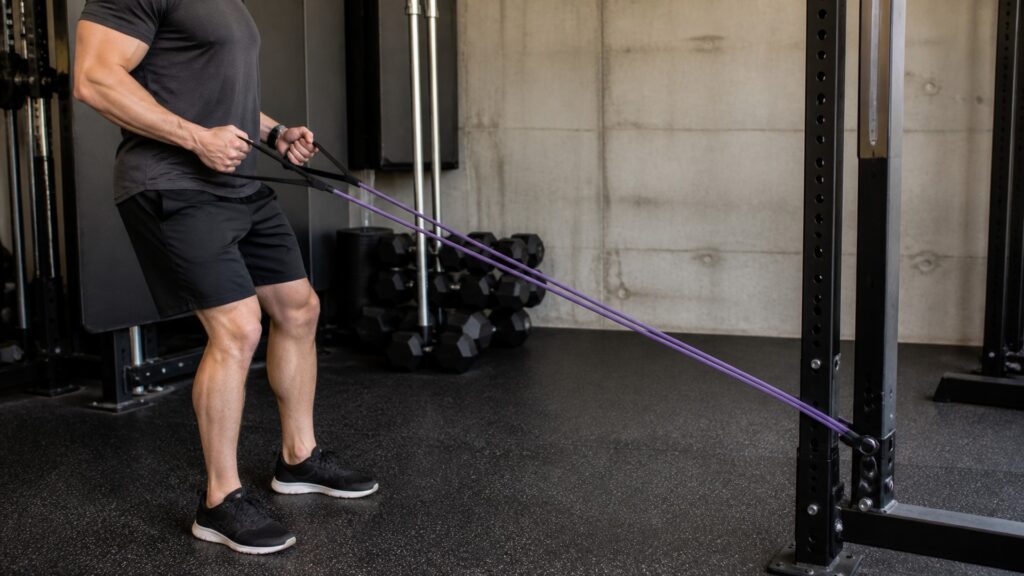
A practical explanation of band stretch, anchors, resistance curves, portability, and safe setup.
Tip: With bands, setup is part of the resistance. Anchor point, stretch length, and band condition all matter.
These concepts explain how bands create tension and where they fit in training.
Elastic tension increases as the band stretches farther.
Anchor point is where the band is fixed or held to create the line of pull.
Resistance curve is how difficulty changes through the range of motion.
Portability is how easily equipment travels and stores.
Assistance uses a band to reduce or guide bodyweight during a movement.
Band wear is damage that can weaken elastic material over time.
Tip: The right training tool is the one whose resistance and setup match the exercise goal.
A resistance band does not feel the same through the whole movement. Tension rises as the band lengthens, so the hardest point depends on setup and range.
Elastic tension is the defining feature.
A band can pull from many directions if the anchor is placed well. That makes bands useful for rows, presses, rotations, assistance, and rehab-style drills.
The anchor can make or break the exercise.
Bands are light and compact, which makes them useful when weights or machines are not available.
Portability is one of the clearest band advantages.
Band resistance changes with stretch length, age, brand, and setup. That makes progression less precise than a labeled free weight.
Bands can progress training, but measurement takes care.
Bands can wear out, slip, or snap if damaged or poorly anchored. A quick inspection protects the session.
Simple setup checks make band training more reliable.
Bands are useful because they are portable and flexible, but they are not perfect for every kind of loading.
They provide portable elastic tension for warmups, accessories, assistance, and travel.
They can create resistance from angles that free weights cannot.
They are harder to measure precisely than fixed weights.
They depend on secure anchors and band condition.
Bands are simple, but their resistance is not automatically simple to judge.
Bands can be useful for many levels when tension and setup fit the goal.
Color systems vary, and resistance changes with stretch length.
Bands can slip, snap, or pull from poor anchors.
They are useful, but heavy fixed loading may still need weights or machines.
Tip: Use bands where elastic tension helps instead of forcing them into every role.
Short answers for practical training and equipment decisions.
They create elastic tension that increases as the band stretches.
They are useful for warmups, accessories, travel workouts, assistance, and angled tension.
Yes, especially when setup, tension, reps, and progression are consistent.
Inspect the band, use secure anchors, control the return, and keep the path clear.
Resistance bands work best when elastic tension and setup match the exercise goal.
Resistance bands work by creating elastic tension that changes as the band stretches.
They are most useful when portability, assistance, or angled resistance matters more than exact fixed loading.
Use these Review Streets paths to compare related categories and practical next decisions.
Explore the resistance bands category.
Compare fixed weight with elastic tension.
Review related strength-training equipment.
Choose a retailer
Prices checked regularly. We may earn a commission at no cost to you.