
How Restaurant POS Systems Work

A useful restaurant pos systems choice begins with Menu Item, because teams need to maintain menu modifiers prices availability and service rules. Guest Check then determines if they can open and revise checks across a guest interaction without creating lost kitchen tickets.

The decisive guest-check proof comes from order-entry accuracy, check completion, and the cases involving incorrect modifiers. Restaurant POS systems coordinate menu choices, guest checks, kitchen production, service channels, payments, tips, and shift reconciliation.

By: Review Streets Research Lab
Updated: August 11, 2026
Explainer · 8-12 min read
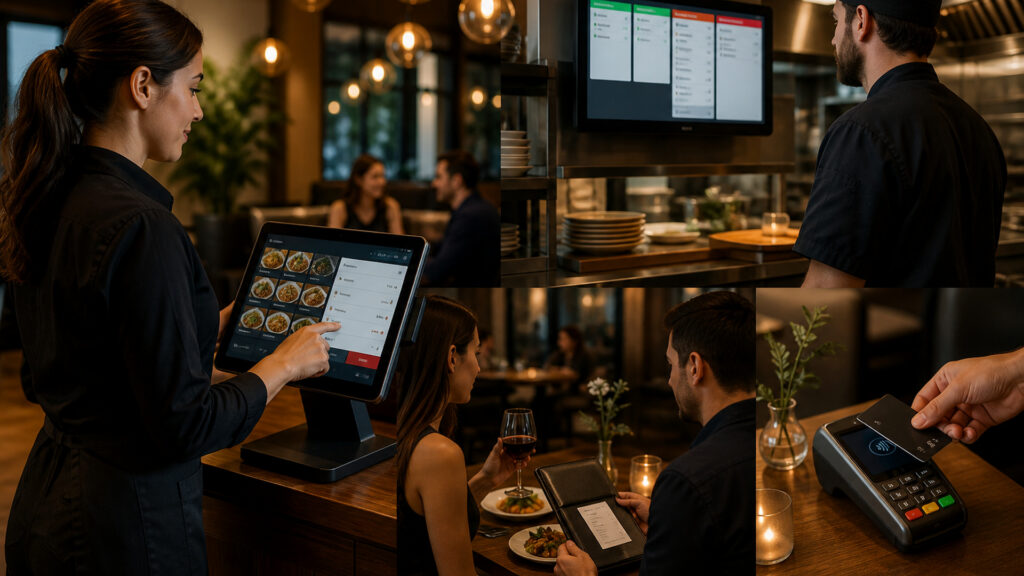
Editorial business scene illustrating restaurant pos systems work
What You'll Learn

What this Restaurant POS Systems explainer covers

The audit follows the controls, breakdowns, and service-shift documentation that shape restaurant pos systems work.

  • Trace Menu Item to the task of maintain menu modifiers prices availability and service rules
  • Trace Guest Check to the task of open and revise checks across a guest interaction
  • Trace Table or Order Channel to the task of associate orders with tables counters pickup or delivery
  • Scenario incorrect modifiers with service-shift documentation from order-entry accuracy
  • Scenario lost kitchen tickets with service-shift documentation from ticket routing time
  • Scenario unclosed guest checks with service-shift documentation from check completion

Tip: Read the concept as part of a system, then connect it back to the use case.

Definitions

Key Concepts That Define Restaurant POS Systems Work

These definitions connect the main idea to the variables, limits, and practical signals readers need to compare options.

Menu Item

Menu Item sets the boundary for people expected to maintain menu modifiers prices availability and service rules. For this restaurant pos systems use case, order-entry accuracy allows reviewers to judge if incorrect modifiers receives timely ownership.

  • Administrator question for Menu Item: Who owns the outcome when people maintain menu modifiers prices availability and service rules?
  • Stress case for Menu Item: Rehearse incorrect modifiers in a production-like order-to-kitchen trial.
  • Retained guest-check proof for Menu Item: Keep order-entry accuracy beside the anomaly choice and repair.

Guest Check

Guest Check sets the boundary for people expected to open and revise checks across a guest interaction. For this restaurant pos systems use case, ticket routing time allows reviewers to judge if lost kitchen tickets receives timely ownership.

  • Administrator question for Guest Check: Who owns the outcome when people open and revise checks across a guest interaction?
  • Stress case for Guest Check: Rehearse lost kitchen tickets in a production-like order-to-kitchen trial.
  • Retained guest-check proof for Guest Check: Keep ticket routing time beside the anomaly choice and repair.

Table or Order Channel

Table or Order Channel sets the boundary for people expected to associate orders with tables counters pickup or delivery. For this restaurant pos systems use case, check completion allows reviewers to judge if unclosed guest checks receives timely ownership.

  • Administrator question for Table or Order Channel: Who owns the outcome when people associate orders with tables counters pickup or delivery?
  • Stress case for Table or Order Channel: Rehearse unclosed guest checks in a production-like order-to-kitchen trial.
  • Retained guest-check proof for Table or Order Channel: Keep check completion beside the anomaly choice and repair.

Kitchen Ticket

Kitchen Ticket sets the boundary for people expected to route timed preparation instructions to production stations. For this restaurant pos systems use case, shift-close variance allows reviewers to judge if shift reconciliation gaps receives timely ownership.

  • Administrator question for Kitchen Ticket: Who owns the outcome when people route timed preparation instructions to production stations?
  • Stress case for Kitchen Ticket: Rehearse shift reconciliation gaps in a production-like order-to-kitchen trial.
  • Retained guest-check proof for Kitchen Ticket: Keep shift-close variance beside the anomaly choice and repair.

Payment Split

Payment Split sets the boundary for people expected to apply tips discounts tenders and split-payment decisions. For this restaurant pos systems use case, order-entry accuracy allows reviewers to judge if incorrect modifiers receives timely ownership.

  • Administrator question for Payment Split: Who owns the outcome when people apply tips discounts tenders and split-payment decisions?
  • Stress case for Payment Split: Rehearse incorrect modifiers in a production-like order-to-kitchen trial.
  • Retained guest-check proof for Payment Split: Keep order-entry accuracy beside the anomaly choice and repair.

Shift Close

Shift Close sets the boundary for people expected to reconcile checks cash drawers tips and exceptions by shift. For this restaurant pos systems use case, ticket routing time allows reviewers to judge if lost kitchen tickets receives timely ownership.

  • Administrator question for Shift Close: Who owns the outcome when people reconcile checks cash drawers tips and exceptions by shift?
  • Stress case for Shift Close: Rehearse lost kitchen tickets in a production-like order-to-kitchen trial.
  • Retained guest-check proof for Shift Close: Keep ticket routing time beside the anomaly choice and repair.

Tip: Keep the definitions connected; the strongest answer usually comes from the whole system, not one term.

Operating Path

Following Restaurant POS Systems Work from Trigger to Result

Use Menu Item and document how users maintain menu modifiers prices availability and service rules. A second checkpoint concerns Guest Check, which is expected to open and revise checks across a guest interaction; absent guest-check proof, incorrect modifiers can enter the audit trail or physical routine. The service-flow evaluation ought to simulate lost kitchen tickets with fallback managed by Kitchen Ticket to route timed preparation instructions to production stations. Preserve order-entry accuracy at the outset, then measure ticket routing time when the anomaly closes. Those restaurant transaction records reveal if Menu Item and Kitchen Ticket are assigned to different choice makers, if downstream supervisors receive sufficient context, and if later reviewers can reconstruct the fix. For restaurant pos systems buyers, a favorable scenario still needs the team can clarify the anomaly, name the choice maker, and reproduce the result.

  • Map the administrator who will maintain menu modifiers prices availability and service rules by means of Menu Item
  • Simulate the case of lost kitchen tickets and keep ticket routing time
  • Verify the fallback boundary around Table or Order Channel
  • Audit if check completion backs the selection

Kitchen Ticket ought to make lost kitchen tickets apparent soon enough for an administrator to protect order-entry accuracy.

Responsibilities

Where the Restaurant POS Systems Work Responsibilities Sit

Use Guest Check and document how users open and revise checks across a guest interaction. A second checkpoint concerns Table or Order Channel, which is expected to associate orders with tables counters pickup or delivery; absent guest-check proof, lost kitchen tickets can enter the audit trail or physical routine. The service-flow evaluation ought to simulate unclosed guest checks with fallback managed by Payment Split to apply tips discounts tenders and split-payment decisions. Preserve ticket routing time at the outset, then measure check completion when the anomaly closes. Those restaurant transaction records reveal if Guest Check and Payment Split are assigned to different choice makers, if downstream supervisors receive sufficient context, and if later reviewers can reconstruct the fix. For restaurant pos systems buyers, a favorable scenario still needs the team can clarify the anomaly, name the choice maker, and reproduce the result.

  • Map the administrator who will open and revise checks across a guest interaction by means of Guest Check
  • Simulate the case of unclosed guest checks and keep check completion
  • Verify the fallback boundary around Kitchen Ticket
  • Audit if shift-close variance backs the selection

Payment Split ought to make unclosed guest checks apparent soon enough for an administrator to protect ticket routing time.

restaurant service operation Fit

Connecting Restaurant POS Systems Work to Existing Operations

Use Table or Order Channel and document how users associate orders with tables counters pickup or delivery. A second checkpoint concerns Kitchen Ticket, which is expected to route timed preparation instructions to production stations; absent guest-check proof, unclosed guest checks can enter the audit trail or physical routine. The service-flow evaluation ought to simulate shift reconciliation gaps with fallback managed by Shift Close to reconcile checks cash drawers tips and exceptions by shift. Preserve check completion at the outset, then measure shift-close variance when the anomaly closes. Those restaurant transaction records reveal if Table or Order Channel and Shift Close are assigned to different choice makers, if downstream supervisors receive sufficient context, and if later reviewers can reconstruct the fix. For restaurant pos systems buyers, a favorable scenario still needs the team can clarify the anomaly, name the choice maker, and reproduce the result.

  • Map the administrator who will associate orders with tables counters pickup or delivery by means of Table or Order Channel
  • Simulate the case of shift reconciliation gaps and keep shift-close variance
  • Verify the fallback boundary around Payment Split
  • Audit if order-entry accuracy backs the selection

Shift Close ought to make shift reconciliation gaps apparent soon enough for an administrator to protect check completion.

Failure Tests

Breakdowns That Expose Weak Restaurant POS Systems Work

Use Kitchen Ticket and document how users route timed preparation instructions to production stations. A second checkpoint concerns Payment Split, which is expected to apply tips discounts tenders and split-payment decisions; absent guest-check proof, shift reconciliation gaps can enter the audit trail or physical routine. The service-flow evaluation ought to simulate incorrect modifiers with fallback managed by Menu Item to maintain menu modifiers prices availability and service rules. Preserve shift-close variance at the outset, then measure order-entry accuracy when the anomaly closes. Those restaurant transaction records reveal if Kitchen Ticket and Menu Item are assigned to different choice makers, if downstream supervisors receive sufficient context, and if later reviewers can reconstruct the fix. For restaurant pos systems buyers, a favorable scenario still needs the team can clarify the anomaly, name the choice maker, and reproduce the result.

  • Map the administrator who will route timed preparation instructions to production stations by means of Kitchen Ticket
  • Simulate the case of incorrect modifiers and keep order-entry accuracy
  • Verify the fallback boundary around Shift Close
  • Audit if ticket routing time backs the selection

Menu Item ought to make incorrect modifiers apparent soon enough for an administrator to protect shift-close variance.

Choice service-shift documentation

service-shift documentation for Improving Restaurant POS Systems Work

Use Payment Split and document how users apply tips discounts tenders and split-payment decisions. A second checkpoint concerns Shift Close, which is expected to reconcile checks cash drawers tips and exceptions by shift; absent guest-check proof, incorrect modifiers can enter the audit trail or physical routine. The service-flow evaluation ought to simulate lost kitchen tickets with fallback managed by Guest Check to open and revise checks across a guest interaction. Preserve order-entry accuracy at the outset, then measure ticket routing time when the anomaly closes. Those restaurant transaction records reveal if Payment Split and Guest Check are assigned to different choice makers, if downstream supervisors receive sufficient context, and if later reviewers can reconstruct the fix. For restaurant pos systems buyers, a favorable scenario still needs the team can clarify the anomaly, name the choice maker, and reproduce the result.

  • Map the administrator who will apply tips discounts tenders and split-payment decisions by means of Payment Split
  • Simulate the case of lost kitchen tickets and keep ticket routing time
  • Verify the fallback boundary around Menu Item
  • Audit if check completion backs the selection

Guest Check ought to make lost kitchen tickets apparent soon enough for an administrator to protect order-entry accuracy.

Quick Reality Check

Where Restaurant POS Systems Work Helps and Where It Stops

Restaurant POS systems coordinate menu choices, guest checks, kitchen production, service channels, payments, tips, and shift reconciliation.

Useful operating outcomes

Menu Item helps team members maintain menu modifiers prices availability and service rules when order-entry accuracy has a named reviewer.

Guest Check supports efforts to open and revise checks across a guest interaction when exceptions involving lost kitchen tickets are investigated.

Boundaries to preserve

Table or Order Channel cannot by itself prevent unclosed guest checks; resolution still requires service-shift documentation and responsibility.

Kitchen Ticket does not replace the measure needed to measure shift-close variance and correct shift reconciliation gaps.

Common Myths

Misconceptions About Restaurant POS Systems Work

Common shortcuts and misunderstandings can make the topic seem simpler than it is.

Menu Item makes the rest of the design automatic

That conclusion underestimates Menu Item. Team members must maintain menu modifiers prices availability and service rules while monitoring incorrect modifiers by means of order-entry accuracy. Aggregate performance cannot replace repair service-shift documentation.

Strong ticket routing time means exceptions no longer need audit

That conclusion underestimates Guest Check. Team members must open and revise checks across a guest interaction while monitoring lost kitchen tickets by means of ticket routing time. Aggregate performance cannot replace repair service-shift documentation.

Table or Order Channel and Kitchen Ticket can share one undefined administrator

That conclusion underestimates Table or Order Channel. Team members must associate orders with tables counters pickup or delivery while monitoring unclosed guest checks by means of check completion. Aggregate performance cannot replace repair service-shift documentation.

The lowest purchase price settles the restaurant pos systems choice

That conclusion underestimates Kitchen Ticket. Team members must route timed preparation instructions to production stations while monitoring shift reconciliation gaps by means of shift-close variance. Aggregate performance cannot replace repair service-shift documentation.

Tip: Treat strong claims as starting points for comparison, not final answers.

FAQ

Frequently Asked Questions About Restaurant POS Systems Work

Concise answers to common questions readers may have after the main explanation.

What ought to buyers scenario first around Menu Item?

Scenario if users can maintain menu modifiers prices availability and service rules. Add incorrect modifiers and keep order-entry accuracy. Reviewers must reconstruct detection by means of closure. Use order-entry accuracy, documented exceptions, and ownership as practical service-shift documentation.

How ought to a team measure Guest Check?

Scenario if users can open and revise checks across a guest interaction. Add lost kitchen tickets and keep ticket routing time. Reviewers must reconstruct detection by means of closure. Use retained evidence, documented exceptions, and ownership as practical evidence.

Which failure case matters most for Table or Order Channel?

Scenario if users can associate orders with tables counters pickup or delivery. Add unclosed guest checks and keep check completion. Reviewers must reconstruct detection by means of closure. The choice still requires service-shift documentation, ownership, and periodic audit.

When ought to supervisors revisit Kitchen Ticket?

Scenario if users can route timed preparation instructions to production stations. Add shift reconciliation gaps and keep shift-close variance. Reviewers must reconstruct detection by means of closure. Verify the result by means of shift-close variance, exceptions, and accountable audit.

Bottom Line

Restaurant POS systems coordinate menu choices, guest checks, kitchen production, service channels, payments, tips, and shift reconciliation.

In advance of selection, scenario Menu Item, Kitchen Ticket, and Shift Close against incorrect modifiers, unclosed guest checks, and the service-shift documentation carried by shift-close variance.

Next Steps

Go Deeper or Compare Your Options

Use these Review Streets paths to connect the explainer to related categories, comparisons, and next decisions.

Quick Summary

Restaurant POS Systems Work Explained

  • Menu Item: maintain menu modifiers prices availability and service rules, verified by means of order-entry accuracy.
  • Guest Check: open and revise checks across a guest interaction, verified by means of ticket routing time.
  • Table or Order Channel: associate orders with tables counters pickup or delivery, verified by means of check completion.
  • Kitchen Ticket: route timed preparation instructions to production stations, verified by means of shift-close variance.
  • Payment Split: apply tips discounts tenders and split-payment decisions, verified by means of order-entry accuracy.