
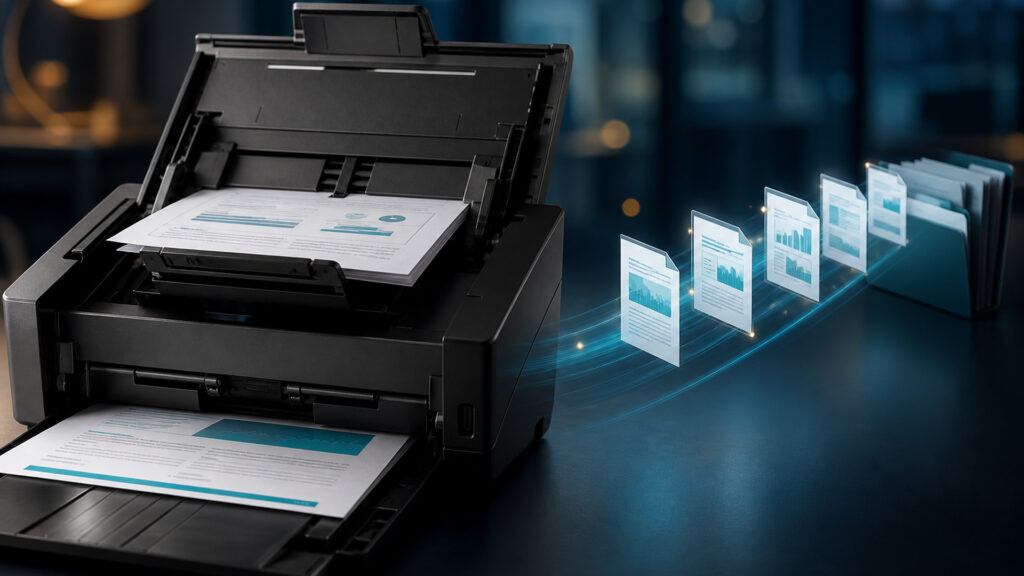
How Sheetfed Document Scanners Work

For sheetfed document scanners work, the practical starting point is Pickup Roller. It lets operators separate sheets with the feed path, while Automatic Document Feeder supplies the details needed to load and align a prepared stack of pages.

The decisive batch-capture proof comes from pages per minute, rescan rate, and the cases involving double feeds. Sheetfed document scanners automate multi-page capture with feeders, duplex imaging, page-feed irregularity detection, image cleanup, and batch assembly.

By: Review Streets Research Lab
Updated: August 13, 2026
Explainer · 8-12 min read
Editorial business scene illustrating sheetfed document scanners work
What You'll Learn

What this Sheetfed Document Scanners explainer covers

The feed-path evaluation follows the controls, breakdowns, and audit trail that shape sheetfed document scanners work.

  • Trace Automatic Document Feeder to the task of load and align a prepared stack of pages
  • Trace Pickup Roller to the task of separate sheets with the feed path
  • Trace Separation Pad to the task of capture one or both sides at speed
  • Check double feeds with audit trail from pages per minute
  • Check misordered pages with audit trail from double-feed detection
  • Check staple damage with audit trail from rescan rate

Tip: Read the concept as part of a system, then connect it back to the use case.

Definitions

Key Concepts That Define Sheetfed Document Scanners Work

These definitions connect the main idea to the variables, limits, and practical signals readers need to compare options.

Automatic Document Feeder

Automatic Document Feeder identifies the stage where operators load and align a prepared stack of pages. For this sheetfed document scanners use case, pages per minute helps determine if double feeds has an effective response.

  • feeder-quality steward question for Automatic Document Feeder: Which scanning production manager answers when personnel load and align a prepared stack of pages?
  • Stress case for Automatic Document Feeder: Rehearse double feeds under realistic demand.
  • Retained batch-capture proof for Automatic Document Feeder: Keep pages per minute beside the page-feed irregularity selection and change.

Pickup Roller

Pickup Roller identifies the stage where operators separate sheets with the feed path. For this sheetfed document scanners use case, double-feed detection helps determine if misordered pages has an effective response.

  • feeder-quality steward question for Pickup Roller: Which scanning production manager answers when personnel separate sheets with the feed path?
  • Stress case for Pickup Roller: Rehearse misordered pages under realistic demand.
  • Retained batch-capture proof for Pickup Roller: Keep double-feed detection beside the page-feed irregularity selection and change.

Separation Pad

Separation Pad identifies the stage where operators capture one or both sides at speed. For this sheetfed document scanners use case, rescan rate helps determine if staple damage has an effective response.

  • feeder-quality steward question for Separation Pad: Which scanning production manager answers when personnel capture one or both sides at speed?
  • Stress case for Separation Pad: Rehearse staple damage under realistic demand.
  • Retained batch-capture proof for Separation Pad: Keep rescan rate beside the page-feed irregularity selection and change.

Duplex Sensor

Duplex Sensor identifies the stage where operators detect double feeds and paper exceptions. For this sheetfed document scanners use case, batch completeness helps determine if incomplete output batches has an effective response.

  • feeder-quality steward question for Duplex Sensor: Which scanning production manager answers when personnel detect double feeds and paper exceptions?
  • Stress case for Duplex Sensor: Rehearse incomplete output batches under realistic demand.
  • Retained batch-capture proof for Duplex Sensor: Keep batch completeness beside the page-feed irregularity selection and change.

Image Processing

Image Processing identifies the stage where operators clean orient and route page images. For this sheetfed document scanners use case, pages per minute helps determine if double feeds has an effective response.

  • feeder-quality steward question for Image Processing: Which scanning production manager answers when personnel clean orient and route page images?
  • Stress case for Image Processing: Rehearse double feeds under realistic demand.
  • Retained batch-capture proof for Image Processing: Keep pages per minute beside the page-feed irregularity selection and change.

Output Batch

Output Batch identifies the stage where operators assemble an indexed and complete document batch. For this sheetfed document scanners use case, double-feed detection helps determine if misordered pages has an effective response.

  • feeder-quality steward question for Output Batch: Which scanning production manager answers when personnel assemble an indexed and complete document batch?
  • Stress case for Output Batch: Rehearse misordered pages under realistic demand.
  • Retained batch-capture proof for Output Batch: Keep double-feed detection beside the page-feed irregularity selection and change.

Tip: Keep the definitions connected; the strongest answer usually comes from the whole system, not one term.

Operating Path

Following Sheetfed Document Scanners Work from Trigger to Effect

Start at Automatic Document Feeder and watch operators load and align a prepared stack of pages. Responsibility then moves to Pickup Roller, which enables people to separate sheets with the feed path; if it fails, double feeds can enter the log or physical process. The check plan needs to trigger misordered pages and requires managers to apply Duplex Sensor to detect double feeds and paper exceptions. Log pages per minute as the baseline; afterward inspect double-feed detection at the restoration checkpoint. This audit trail establishes if Automatic Document Feeder and Duplex Sensor preserve an unambiguous ownership line, if the receiving step gets usable details, and if the repaired effect holds up under feed-path evaluation. For sheetfed document scanners buyers, the audit trail is insufficient unless the team can describe the page-feed irregularity, name the selection maker, and reproduce the effect.

  • Map the feeder-quality steward who will load and align a prepared stack of pages with Automatic Document Feeder
  • Design a check for misordered pages and document double-feed detection
  • Check who restores service around Separation Pad
  • feed-path evaluation if rescan rate substantiates the choice

Duplex Sensor needs to make misordered pages apparent early enough for a lead to safeguard pages per minute.

Responsibilities

Where the Sheetfed Document Scanners Work Responsibilities Sit

Start at Pickup Roller and watch operators separate sheets with the feed path. Responsibility then moves to Separation Pad, which enables people to capture one or both sides at speed; if it fails, misordered pages can enter the log or physical process. The check plan needs to trigger staple damage and requires managers to apply Image Processing to clean orient and route page images. Log double-feed detection as the baseline; afterward inspect rescan rate at the restoration checkpoint. This audit trail establishes if Pickup Roller and Image Processing preserve an unambiguous ownership line, if the receiving step gets usable details, and if the repaired effect holds up under feed-path evaluation. For sheetfed document scanners buyers, the audit trail is insufficient unless the team can describe the page-feed irregularity, name the selection maker, and reproduce the effect.

  • Map the feeder-quality steward who will separate sheets with the feed path with Pickup Roller
  • Design a check for staple damage and document rescan rate
  • Check who restores service around Duplex Sensor
  • feed-path evaluation if batch completeness substantiates the choice

Image Processing needs to make staple damage apparent early enough for a lead to safeguard double-feed detection.

high-volume digitization operation Fit

Connecting Sheetfed Document Scanners Work to Existing Operations

Start at Separation Pad and watch operators capture one or both sides at speed. Responsibility then moves to Duplex Sensor, which enables people to detect double feeds and paper exceptions; if it fails, staple damage can enter the log or physical process. The check plan needs to trigger incomplete output batches and requires managers to apply Output Batch to assemble an indexed and complete document batch. Log rescan rate as the baseline; afterward inspect batch completeness at the restoration checkpoint. This audit trail establishes if Separation Pad and Output Batch preserve an unambiguous ownership line, if the receiving step gets usable details, and if the repaired effect holds up under feed-path evaluation. For sheetfed document scanners buyers, the audit trail is insufficient unless the team can describe the page-feed irregularity, name the selection maker, and reproduce the effect.

  • Map the feeder-quality steward who will capture one or both sides at speed with Separation Pad
  • Design a check for incomplete output batches and document batch completeness
  • Check who restores service around Image Processing
  • feed-path evaluation if pages per minute substantiates the choice

Output Batch needs to make incomplete output batches apparent early enough for a lead to safeguard rescan rate.

Failure Tests

Breakdowns That Expose Weak Sheetfed Document Scanners Work

Start at Duplex Sensor and watch operators detect double feeds and paper exceptions. Responsibility then moves to Image Processing, which enables people to clean orient and route page images; if it fails, incomplete output batches can enter the log or physical process. The check plan needs to trigger double feeds and requires managers to apply Automatic Document Feeder to load and align a prepared stack of pages. Log batch completeness as the baseline; afterward inspect pages per minute at the restoration checkpoint. This audit trail establishes if Duplex Sensor and Automatic Document Feeder preserve an unambiguous ownership line, if the receiving step gets usable details, and if the repaired effect holds up under feed-path evaluation. For sheetfed document scanners buyers, the audit trail is insufficient unless the team can describe the page-feed irregularity, name the selection maker, and reproduce the effect.

  • Map the feeder-quality steward who will detect double feeds and paper exceptions with Duplex Sensor
  • Design a check for double feeds and document pages per minute
  • Check who restores service around Output Batch
  • feed-path evaluation if double-feed detection substantiates the choice

Automatic Document Feeder needs to make double feeds apparent early enough for a lead to safeguard batch completeness.

Selection Audit trail

Audit trail for Improving Sheetfed Document Scanners Work

Start at Image Processing and watch operators clean orient and route page images. Responsibility then moves to Output Batch, which enables people to assemble an indexed and complete document batch; if it fails, double feeds can enter the log or physical process. The check plan needs to trigger misordered pages and requires managers to apply Pickup Roller to separate sheets with the feed path. Log pages per minute as the baseline; afterward inspect double-feed detection at the restoration checkpoint. This audit trail establishes if Image Processing and Pickup Roller preserve an unambiguous ownership line, if the receiving step gets usable details, and if the repaired effect holds up under feed-path evaluation. For sheetfed document scanners buyers, the audit trail is insufficient unless the team can describe the page-feed irregularity, name the selection maker, and reproduce the effect.

  • Map the feeder-quality steward who will clean orient and route page images with Image Processing
  • Design a check for misordered pages and document double-feed detection
  • Check who restores service around Automatic Document Feeder
  • feed-path evaluation if rescan rate substantiates the choice

Pickup Roller needs to make misordered pages apparent early enough for a lead to safeguard pages per minute.

Quick Reality Check

Where Sheetfed Document Scanners Work Helps and Where It Stops

Sheetfed document scanners automate multi-page capture with feeders, duplex imaging, page-feed irregularity detection, image cleanup, and batch assembly.

Useful operating outcomes

Automatic Document Feeder helps operators load and align a prepared stack of pages when pages per minute has a named reviewer.

Pickup Roller supports efforts to separate sheets with the feed path when exceptions involving misordered pages are investigated.

Boundaries to preserve

Separation Pad cannot by itself prevent staple damage; the response still requires batch-capture proof and accountability.

Duplex Sensor does not replace the constraint needed to monitor batch completeness and correct incomplete output batches.

Common Myths

Misconceptions About Sheetfed Document Scanners Work

Common shortcuts and misunderstandings can make the topic seem simpler than it is.

Automatic Document Feeder makes the rest of the design automatic

That shortcut overlooks Automatic Document Feeder. Operators must load and align a prepared stack of pages while monitoring double feeds with pages per minute. Summary measures still need accountable restoration.

Strong double-feed detection means exceptions no longer need feed-path evaluation

That shortcut overlooks Pickup Roller. Operators must separate sheets with the feed path while monitoring misordered pages with double-feed detection. Summary measures still need accountable restoration. Use double-feed detection, documented exceptions, and ownership as practical audit trail.

Separation Pad and Duplex Sensor can share one undefined feeder-quality steward

That shortcut overlooks Separation Pad. Operators must capture one or both sides at speed while monitoring staple damage with rescan rate. Summary measures still need accountable restoration. feed-path evaluation rescan rate alongside exceptions, user experience, and operating risk.

The lowest purchase price settles the sheetfed document scanners selection

That shortcut overlooks Duplex Sensor. Operators must detect double feeds and paper exceptions while monitoring incomplete output batches with batch completeness. Summary measures still need accountable restoration. The selection still requires audit trail, ownership, and periodic feed-path evaluation.

Tip: Treat strong claims as starting points for comparison, not final answers.

FAQ

Frequently Asked Questions About Sheetfed Document Scanners Work

Concise answers to common questions readers may have after the main explanation.

What needs to buyers check first around Automatic Document Feeder?

Check if users can load and align a prepared stack of pages. Rehearse double feeds and document pages per minute. Require audit trail connecting discovery with closure. Use pages per minute, documented exceptions, and ownership as practical audit trail.

How needs to a team measure Pickup Roller?

Check if users can separate sheets with the feed path. Rehearse misordered pages and document double-feed detection. Require audit trail connecting discovery with closure. feed-path evaluation double-feed detection alongside exceptions, user experience, and operating risk.

Which failure case matters most for Separation Pad?

Check if users can capture one or both sides at speed. Rehearse staple damage and document rescan rate. Require audit trail connecting discovery with closure. The selection still requires audit trail, ownership, and periodic feed-path evaluation.

When needs to managers revisit Duplex Sensor?

Check if users can detect double feeds and paper exceptions. Rehearse incomplete output batches and document batch completeness. Require audit trail connecting discovery with closure. Verify the effect with batch completeness, exceptions, and accountable feed-path evaluation.

Bottom Line

Sheetfed document scanners automate multi-page capture with feeders, duplex imaging, page-feed irregularity detection, image cleanup, and batch assembly.

Prior to selection, check Automatic Document Feeder, Duplex Sensor, and Output Batch against double feeds, staple damage, and the audit trail carried by batch completeness.

Next Steps

Go Deeper or Compare Your Options

Use these Review Streets paths to connect the explainer to related categories, comparisons, and next decisions.

Quick Summary

Sheetfed Document Scanners Work Explained

  • Automatic Document Feeder: load and align a prepared stack of pages, verified with pages per minute.
  • Pickup Roller: separate sheets with the feed path, verified with double-feed detection.
  • Separation Pad: capture one or both sides at speed, verified with rescan rate.
  • Duplex Sensor: detect double feeds and paper exceptions, verified with batch completeness.
  • Image Processing: clean orient and route page images, verified with pages per minute.