
Step Height
Step height is how far the user must lift the foot or body during each step.
- Example: a deeper step on a full stair climber
- Check: notice knee and hip comfort
- Limit: higher steps can fatigue users quickly
Stair climber machines work by creating a repeated climbing motion that asks the user to step against speed, resistance, or moving stairs. Instead of a flat stride, the workout is built around lifting the body through a climbing pattern again and again.
The machine may use revolving steps, pedals, or a compact stepping mechanism, but the practical test is the same: the step height, cadence, hand support, foot placement, and frame stability have to support controlled climbing.
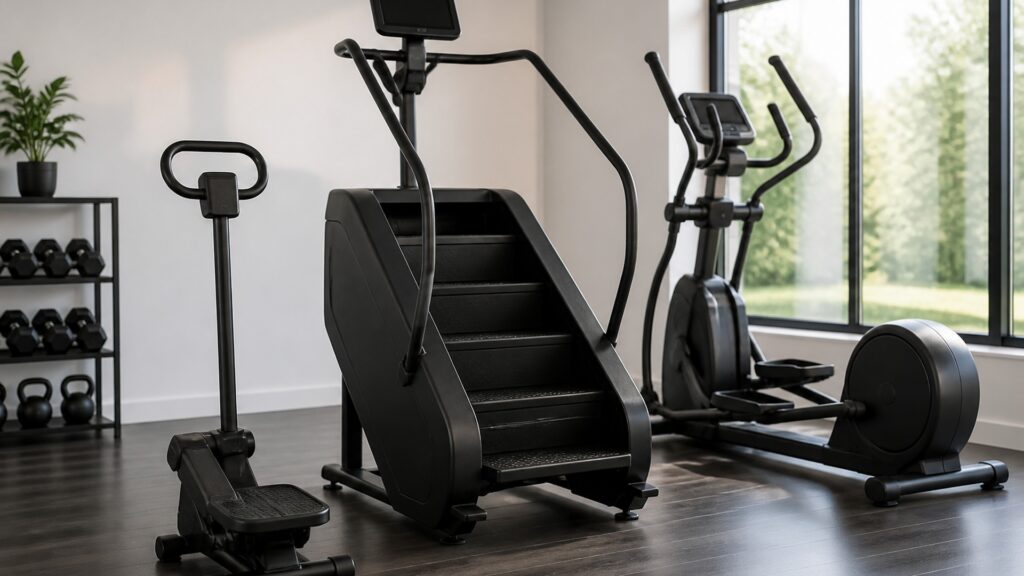
A practical look at step motion, resistance, posture, handrail use, and safety checks.
Tip: Judge the machine at the pace and step height the user will actually repeat.
These concepts explain how stair climbers create effort and where fit matters.
Step height is how far the user must lift the foot or body during each step.
Cadence is the stepping rate during the workout.
Resistance or speed controls how demanding the stepping motion feels.
Handrail use is how the user uses support for balance during climbing.
Foot placement is how securely and comfortably the foot lands on each step or pedal.
Frame stability is how steady the machine feels during repeated steps.
Tip: The step motion should feel controlled before the workout feels intense.
A stair climber creates effort by asking the user to keep stepping upward or through a stair-like path. That repeated lift is what separates it from smoother stride machines.
The climbing pattern defines the workout.
The workout gets harder when the steps move faster, resistance rises, or the user maintains more upright posture. Leaning heavily on rails can make the session easier but less representative.
Intensity should come from controlled stepping.
Step height and pedal size affect the knees, hips, ankles, and calves. A machine that feels fine briefly may feel awkward after several minutes.
Comfort over time matters more than a quick first impression.
Repeated stepping creates motion through the whole machine. A stable frame, predictable pedals or steps, and good mounting space make the workout easier to control.
A stable machine makes climbing feel safer and smoother.
A stair climber can support short cardio bursts, warmups, conditioning, or longer climbing sessions. The right model depends on the role and the user's tolerance for step intensity.
The machine works when the climbing motion is repeatable.
Stair climbers can create strong cardio demand, but fit and control matter.
The user wants climbing-style cardio and lower-body effort.
Step height, rails, and pace support controlled movement.
The step feels too high, fast, or unstable.
The user has to lean heavily to keep going.
The machine is simple in concept, but fit changes the experience.
Harder effort helps only when the user stays controlled.
Light support can help balance, but heavy leaning changes the workout.
Step height, speed, frame design, and support vary widely.
Comfort and stability often reveal themselves after several minutes.
Tip: Test the full stepping experience, not just the console settings.
Short answers about stepping motion, resistance, posture, and fit.
They repeat a climbing motion that raises leg and cardiovascular demand.
Test step height, cadence, rail support, foot placement, and frame stability.
Yes, because climbing effort can become challenging quickly.
Use rails for balance, but avoid leaning heavily if the goal is true climbing effort.
Stair climbers work best when step motion, posture, and pace stay controlled.
Stair climber machines work by turning repeated climbing motion into cardio and lower-body effort.
The best fit depends on step height, cadence, support, stability, and whether the user can repeat the motion comfortably.
Use these Review Streets paths to compare related categories and practical next decisions.
Compare stair-climbing cardio categories.
Review smaller stair-machine options.
Compare more home cardio equipment.
Choose a retailer
Prices checked regularly. We may earn a commission at no cost to you.