
Assisted Range
Assisted range is movement made easier by a strap, band, bar, or support surface.
- Example: using a stretching strap for hamstring range
- Check: keep the stretch controlled
- Limit: assistance should not force pain
Stretching tools work by helping the user hold, reach, support, or control a stretch more easily. A strap, band, block, wheel, or mobility stick does not create flexibility by itself; it gives the user better leverage and positioning.
The useful differences come from support, grip, length, resistance, surface shape, and how well the tool fits the movement. The goal is controlled range, not forcing the body into a position it cannot manage.
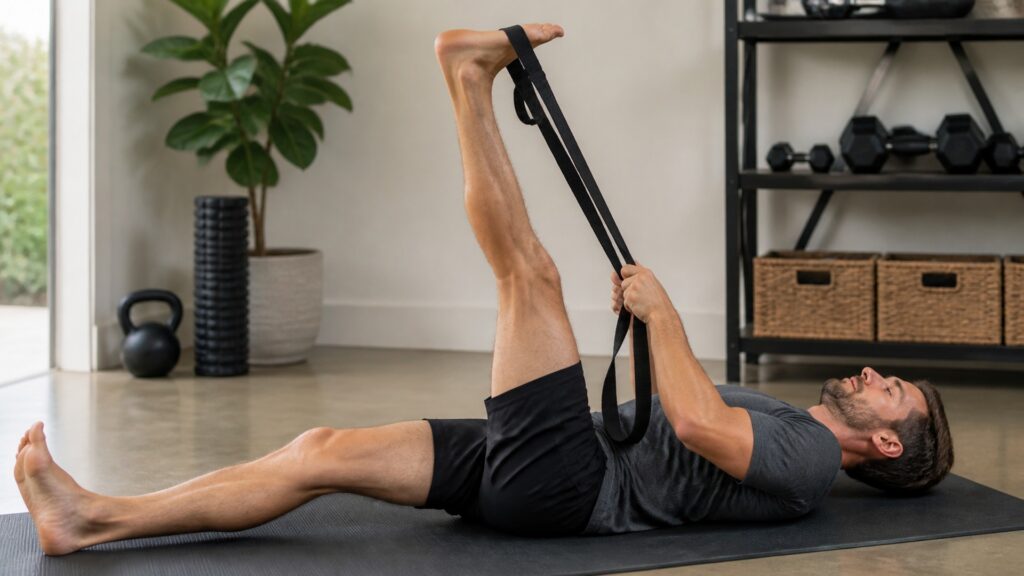
A practical explanation of leverage, support, range, and control.
Tip: Use a stretching tool to make a position easier to control, not to overpower a limit.
These concepts explain how stretching tools support position, leverage, range, and control.
Assisted range is movement made easier by a strap, band, bar, or support surface.
Leverage is how a tool helps the user apply or reduce force during a stretch.
Position support helps the body stay aligned during mobility work.
Tension control is the ability to increase or decrease stretch intensity.
A mobility routine is the repeated pattern where stretching tools are used.
Safety boundary is the point where useful stretch becomes strain or pain.
Tip: A stretching tool should make a position easier to control, not force the body into range.
Most stretching tools either help the user reach a position, hold a limb, support the floor, or adjust tension. The tool changes access to the stretch.
The tool should improve control.
A tool can make a stretch feel easier to access, but it can also make it easier to pull too hard. Good use keeps tension gradual.
Control matters more than depth.
A strap helps reach. A block supports alignment. A wheel changes extension positions. A mobility stick can guide rotation or shoulder work.
The best tool depends on the position.
A tool is most useful when it fits a short routine the user can repeat without fuss. Complicated setups tend to disappear quickly.
Repeatable control beats occasional force.
The right stretching tool should make the movement easier to understand and safer to hold. If it mainly encourages yanking or bracing, it is not helping.
A good tool makes stretching calmer and more precise.
Stretching tools can improve control, but they do not override the body's limits.
They make positions easier to reach, hold, or modify.
They can support repeatable mobility routines.
They cannot force safe flexibility.
They do not replace care for persistent pain or injury.
Assistance is useful only when it stays controlled.
More leverage can also make it easier to overpull.
Progress depends on routine, tolerance, and consistency.
Sharp pain or guarding is a reason to back off.
Different positions need different forms of support.
Tip: Use tools to improve control, not to win a range contest.
Short answers about straps, blocks, bands, and mobility aids.
It helps the user reach, support, or control a position more easily.
Straps are usually better for stable reach, while bands add stretch and tension.
No. It may feel strong, but sharp pain is a stop sign.
They can support a consistent routine, but they do not create change by themselves.
Choose a tool that improves control and makes the routine easier to repeat.
Stretching tools work by adding leverage, support, or reach so the user can control a stretch more easily.
The best tool matches the position, keeps tension gradual, and helps the user repeat mobility work without forcing range.
Use these Review Streets paths to compare related fitness categories and practical buying decisions.
Explore the category before comparing specific tools.
Compare related recovery and mobility tools.
Review the related category before deciding.
Choose a retailer
Prices checked regularly. We may earn a commission at no cost to you.