
Seal
The seal is the soft edge that sits against the face to keep water out.
- Example: a gasket forming light suction around the eye socket
- Check: press goggles gently to test short suction
- Limit: a seal that is too tight can leave pressure marks
Swim goggles work by creating a seal around the eyes so swimmers can see underwater while keeping pool or open-water irritation away from the eyes. The lenses, gasket, bridge, and strap all work together to hold position without needing painful pressure.
Good goggles fit the face, match the light conditions, and stay comfortable through turns, breathing, and repeated laps. The best pair is the one that seals with gentle tension and gives clear vision for the setting.
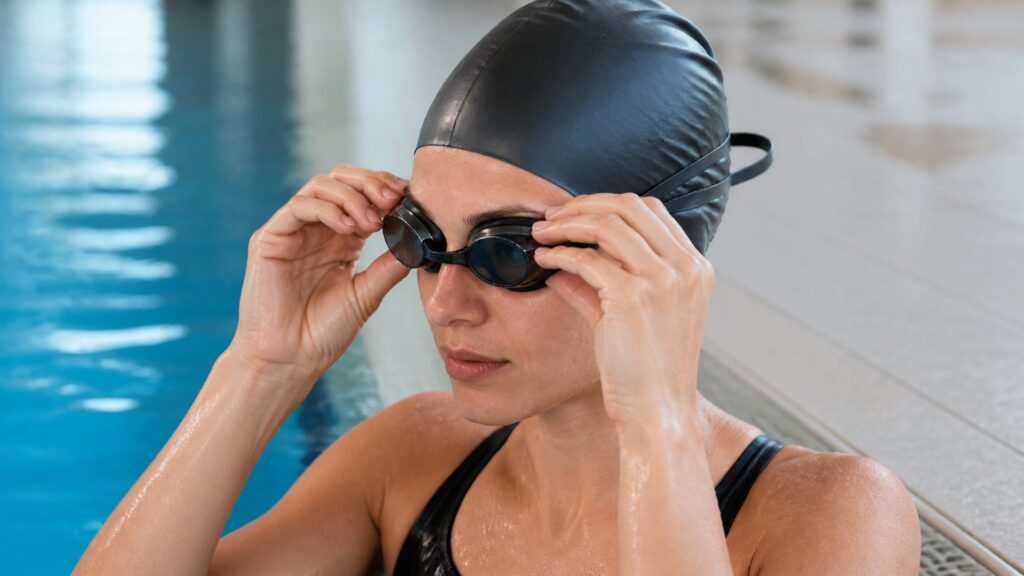
A practical explanation of gasket fit, lens shape, nose bridge, strap tension, tint, anti-fog care, and comfort.
Tip: A good goggle seal should come from fit first and strap tension second.
These terms explain how goggles create clear vision, comfort, and a reliable seal.
The seal is the soft edge that sits against the face to keep water out.
Lens fit is how the lens shape lines up with the eyes, brow, and cheekbones.
The bridge is the nose connection that sets lens spacing.
Strap tension is how firmly the strap holds the goggles in place.
Anti-fog treatment helps reduce lens fogging during swims.
Tint is lens shading used for brightness, glare, or visibility conditions.
Tip: The right equipment choice depends on how resistance is created, adjusted, and repeated.
The soft edge of the goggle should sit evenly against the face. A quick gentle press should create brief suction before the strap is tightened.
Seal comes from face fit.
The bridge controls how the two lenses sit around the nose. If spacing is wrong, one side may leak or press too hard.
Bridge fit can make or break the seal.
The strap should keep goggles in place, but overtightening can distort the gasket and cause leaks.
Strap tension should be firm, not harsh.
Clear, smoke, tinted, mirrored, and prescription lenses serve different light and vision needs.
Lens choice should match the setting.
Many goggles use a delicate anti-fog coating inside the lens. Rough wiping can shorten its life.
Good care keeps visibility clearer.
Goggles improve vision and comfort, but only when fit and care are right.
They protect eyes from irritation and help swimmers see underwater.
They support confidence during laps, turns, and open-water sighting.
Poor fit can leak even with tight straps.
Anti-fog coatings and straps wear out over time.
Leaks are usually a fit problem, not a tightening problem.
Overtightening can distort the gasket and make leaks worse.
Face shape affects seal and comfort.
Dark tint can be poor for dim indoor pools.
Coatings wear down and need gentle care.
Tip: Fit, lens choice, and care matter more than strap force.
Short answers for practical equipment and training decisions.
They use a soft gasket seal around the eyes held in place by the bridge and strap.
Leaks usually come from poor face fit, bridge spacing, worn gaskets, or overtightened straps.
Use clear lenses indoors and tinted or mirrored lenses for bright outdoor light.
Rinse gently, avoid rubbing the inside lens, and let them air dry.
Choose goggles that seal gently, match the light, and stay comfortable while swimming.
Swim goggles work by sealing around the eyes and giving swimmers clearer underwater vision.
The best goggles fit the face, match the light, and stay clear with gentle care.
Use these Review Streets paths to compare related categories and practical next decisions.
Explore swim goggles for pool and open-water use.
Compare related pool tools and accessories.
Browse swimming gear categories.
Choose a retailer
Prices checked regularly. We may earn a commission at no cost to you.