
How Table Saws Work

Table saws are often described in simple terms—motor, blade, and table—but their operation is a coordinated system of mechanical alignment, controlled force, and guided material movement. Misunderstandings typically arise from focusing on the spinning blade alone, rather than the relationship between the motor, arbor assembly, fence system, and work surface that governs how cuts are executed.

This explainer walks through the internal mechanics and functional roles of each component, from power transfer and blade rotation to material support and directional guidance. By the end, the reader will understand how these systems interact to produce controlled, repeatable cutting actions and why precise alignment and stability are central to how table saws function.

By: Review Streets Research Lab
Updated: April 19, 2026
Explainer · 8–12 min read
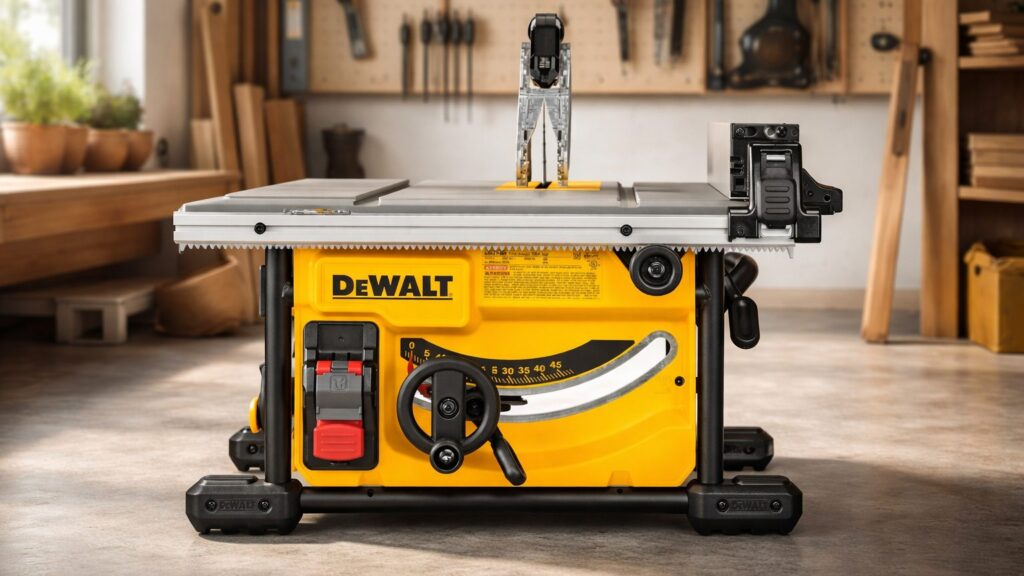
DeWalt DWE7485 beginner table saw
What You’ll Learn

How Table Saws Work

A structured breakdown of internal systems and interactions, clarifying how power, alignment, and guidance combine to produce controlled, repeatable cutting behavior.

  • How the motor transfers rotational force through the arbor to drive the blade
  • What the arbor assembly does to stabilize and accurately position the blade
  • How the table surface supports material and maintains consistent cutting reference planes
  • Why the fence system controls direction, alignment, and repeatable cutting paths
  • How blade height and tilt mechanisms adjust cutting depth and angle precisely
  • What causes vibration, deflection, or misalignment during material feed and cutting
  • How feed rate and material resistance influence cutting load and system behavior

Tip: Think of the system as a controlled path of force and guidance, where stability and alignment determine how accurately material moves through the cut.

Definitions

Key Parts That Make a Table Saw Work

Understanding how each component contributes to motion, stability, and guidance reveals how the system produces controlled, repeatable cutting behavior.

Motor

The motor generates rotational force that drives the blade through the arbor assembly. Its output determines how consistently the system maintains speed under cutting resistance.

  • Power delivery: Supplies continuous rotation to overcome material resistance
  • Speed stability: Maintains blade rotation under changing load conditions
  • Heat generation: Increases with sustained load and affects efficiency

Arbor Assembly

The arbor assembly holds and rotates the blade while maintaining alignment with the table and fence. It transfers motor force into stable, controlled blade motion.

  • Alignment: Keeps the blade square to the table and cutting path
  • Stability: Reduces vibration that can affect cut accuracy
  • Mounting: Secures the blade firmly to prevent movement under load

Table Surface

The table provides a flat reference plane that supports material as it moves through the blade. Its consistency directly affects how accurately cuts follow intended paths.

  • Flatness: Ensures material remains level during cutting
  • Friction: Influences how smoothly material feeds forward
  • Reference plane: Establishes consistent positioning for repeatable cuts

Fence System

The fence guides material parallel to the blade, controlling direction and maintaining consistent spacing. It defines the path material follows during each cut.

  • Parallel alignment: Keeps cuts straight relative to the blade
  • Locking mechanism: Prevents movement during material feed
  • Repeatability: Allows consistent positioning across multiple cuts

Blade

The blade converts rotational energy into cutting action through its teeth. Its interaction with material determines how efficiently and cleanly cuts are formed.

  • Tooth geometry: Shapes how material is removed during cutting
  • Rotation speed: Affects cutting smoothness and resistance
  • Load response: Changes based on material density and feed rate

Adjustment Mechanisms

Height and tilt systems position the blade relative to the table, controlling depth and angle of cut. These adjustments define how the blade engages the material.

  • Height control: Sets how deeply the blade enters the material
  • Tilt adjustment: Changes the blade angle for angled cuts
  • Locking systems: Hold settings steady during operation

Tip: Think of the system as force moving through aligned components, where stability and guidance determine how accurately material passes the blade.

Power Path

How Rotational Force Moves Through a Table Saw

A table saw operates through a continuous path of transferred force, from the motor to the blade and into the material. Understanding that sequence explains how the system maintains cutting motion under resistance.

  • The motor generates rotational force that drives the cutting system
  • The drive components transfer that force to the arbor assembly
  • The arbor holds the blade in stable, controlled rotation
  • The blade converts rotational energy into material-cutting action
  • The table and fence keep material aligned as force is applied

When any part of this path loses alignment or stability, cutting behavior becomes less controlled and less consistent.

Motors

How the Motor Sustains Blade Speed Under Load

The motor is responsible for maintaining blade rotation as cutting resistance changes. Its role is not only to start motion, but to keep that motion steady as material enters the cut.

  • Initial rotation begins when the motor brings the blade up to operating speed
  • Load response determines how well the system resists slowing during a cut
  • Heat buildup increases as resistance rises and affects overall efficiency

In real cutting behavior, steady motor output is what keeps the blade moving predictably through changing material resistance.

Gearing

Why the Arbor System Matters More Than Rotation Alone

Rotation by itself does not create an accurate cut; that motion must be held in a stable, aligned path. The arbor system determines how cleanly motor force becomes usable blade movement.

  • It secures the blade so rotational force stays centered and controlled
  • It maintains alignment between the blade, table surface, and fence path
  • It reduces unwanted movement that can introduce vibration into the cut

A stable arbor system allows rotational force to become consistent cutting action rather than uneven mechanical movement.

Heat Management

Why Cutting Resistance Changes System Temperature and Efficiency

As a table saw cuts, friction and sustained load generate heat throughout the system. That temperature rise affects how efficiently force is transferred and how steadily components continue to operate.

  • Motor temperature increases as material resistance demands more continuous output
  • Blade friction adds heat where the teeth contact the material
  • Extended load can reduce efficiency across rotating and supporting components

As heat builds, the system may continue to function, but its mechanical behavior becomes less stable and less efficient.

User Control

How the Table, Fence, and Feed Path Govern Material Movement

Cutting accuracy depends on more than blade motion, because the material itself must travel in a controlled path. The table surface and fence system establish the reference points that guide that movement.

  • A flat table keeps the material supported on a stable reference plane
  • The fence holds a consistent parallel relationship between material and blade
  • Feed direction determines how evenly material enters and passes through the cut

When support, guidance, and feed path remain consistent, the cutting system behaves in a more predictable and repeatable way.

Quick Reality Check

Where Table Saws Stay Controlled — and Where Limits Appear

A quick balance of how table saw systems maintain accuracy, and where alignment, load, and heat begin to affect cutting behavior.

Where the System Stays Stable

Table saws work most predictably when the motor, arbor, table, and fence remain aligned under a steady cutting load.

When material stays flat and feed pressure remains consistent, the blade can maintain speed and follow a controlled cutting path.

Where Mechanical Limits Show

Control begins to break down when resistance, friction, or misalignment disrupts how force moves through the blade and support system.

Dense material, uneven feed, or rising heat can slow blade rotation and make the cut less smooth or consistent.

Common Myths

Misconceptions About How Table Saws Work

Table saws are often reduced to simple blade speed or motor size, when their actual behavior depends on several connected mechanical systems.

The blade does all the work

The blade cuts the material, but it only works properly when the motor, arbor, table, and fence keep that motion stable and aligned. Cutting behavior comes from the system supporting the blade, not the blade alone.

More blade speed always means better cutting

Higher rotation speed does not guarantee smoother or more controlled cutting. Stability, tooth engagement, feed rate, and alignment determine whether that speed becomes clean material removal or added friction.

The fence only sets cut width

The fence does more than mark distance from the blade. It establishes a parallel reference that guides material consistently, which directly affects whether the cut tracks straight through the system.

Motor power alone determines performance

Motor output matters, but it is only one part of the cutting system. Blade condition, arbor stability, material resistance, and feed behavior all shape how effectively rotational force becomes cutting action.

Any flat table guarantees accurate cuts

A flat surface helps, but accuracy depends on the relationship between the table, blade, and fence. If those reference points are not aligned, material can still move through the cut inconsistently.

Tip: Think of a table saw as a guided force system, where cutting quality depends on how well motion, alignment, and material support stay synchronized.

FAQ

Frequently Asked Questions About How Table Saws Work

Clear answers to common questions about how power, alignment, and material movement interact within the table saw system.

What actually determines how a table saw cuts through material?

Cutting behavior comes from how rotational force, blade sharpness, alignment, and feed rate interact. The motor drives the blade, but the table and fence control how material enters the cut, which determines whether the process stays smooth and consistent.

Does a faster spinning blade always cut more cleanly?

Higher speed alone does not guarantee cleaner cuts. Blade stability, tooth geometry, and controlled material feed determine how effectively the blade removes material without tearing or creating excess friction.

Why does the blade sometimes slow down during a cut?

Blade speed drops when material resistance exceeds the system’s ability to maintain rotation. This can come from dense material, aggressive feed rate, or increased friction, which forces the motor to work harder to sustain motion.

What role does the fence play during cutting?

The fence establishes a consistent reference that keeps material moving parallel to the blade. Without that alignment, the material can drift, causing uneven cuts or increased friction as the blade engages inconsistently.

Why is blade alignment with the table so important?

Alignment ensures the blade cuts along a predictable path relative to the table surface. If the blade is not square or parallel, material can bind or shift, disrupting how force is applied during the cut.

What causes vibration or rough cutting behavior?

Vibration often comes from instability in the arbor assembly, uneven blade rotation, or inconsistent material support. These factors interrupt smooth force transfer, leading to less controlled and less uniform cutting motion.

How does feed rate affect cutting performance?

Feed rate determines how quickly material enters the blade. Too fast increases resistance and slows rotation, while too slow can increase friction, so balanced movement helps maintain steady cutting conditions.

Why does cutting performance change over longer use?

As cutting continues, heat builds in the motor and blade while friction increases at the cutting edge. These changes affect efficiency and can alter how smoothly the system maintains rotation and material movement.

Tip: When cutting behavior changes, trace the system—power, alignment, and material feed—to identify where force or control is being disrupted.

Bottom Line

Table saws work through aligned force, guided material movement, and stable rotation. The motor, arbor, blade, table, and fence interact to control how force is transferred and how material passes through the cut.

Once that system becomes clear, it is easier to interpret cutting behavior as the result of alignment, load, and support rather than isolated blade motion.

Next Steps

Go Deeper or Explore the Category Further

Now that the system is clearer, these pages extend that understanding into broader category overviews, decision frameworks, and side-by-side analysis.

Table Saw Lists

A broader category overview that organizes table saws by common use cases, formats, and practical priorities for continued exploration.

Table Saw Comparisons

Focused comparison pages that examine how different table saw formats and design choices affect control, capacity, and day-to-day working behavior.

Table Saw Buying Guides

Structured guidance that explains which table saw characteristics matter most, how they relate, and how to interpret them with more confidence.

Quick Summary

How Table Saws Work

  • Table saws cut through coordinated force, alignment, and guided material movement
  • The motor drives blade rotation, but stability determines usable cutting behavior
  • The arbor assembly keeps blade motion centered, controlled, and mechanically consistent
  • The fence and table establish the reference path material follows
  • Heat, friction, and feed rate influence how smoothly cuts progress