
Overlapping Passes
Multiple swipes that cross the same zone so the deposited film is less patchy.
- Purpose: Builds amount
- Pattern: Horizontal and vertical passes help
- Limit: Still needs enough pressure
Applying a sunscreen stick correctly is less about speed and more about coverage. The stick format makes sunscreen easy to carry, but each pass deposits a limited amount of product, and curved facial zones can be missed if the swipe pattern is too casual.
A reliable routine uses multiple overlapping passes, light blending, and a quick check of easy-to-miss areas. That keeps the convenience of a stick without pretending one invisible swipe equals the tested protection on the label.
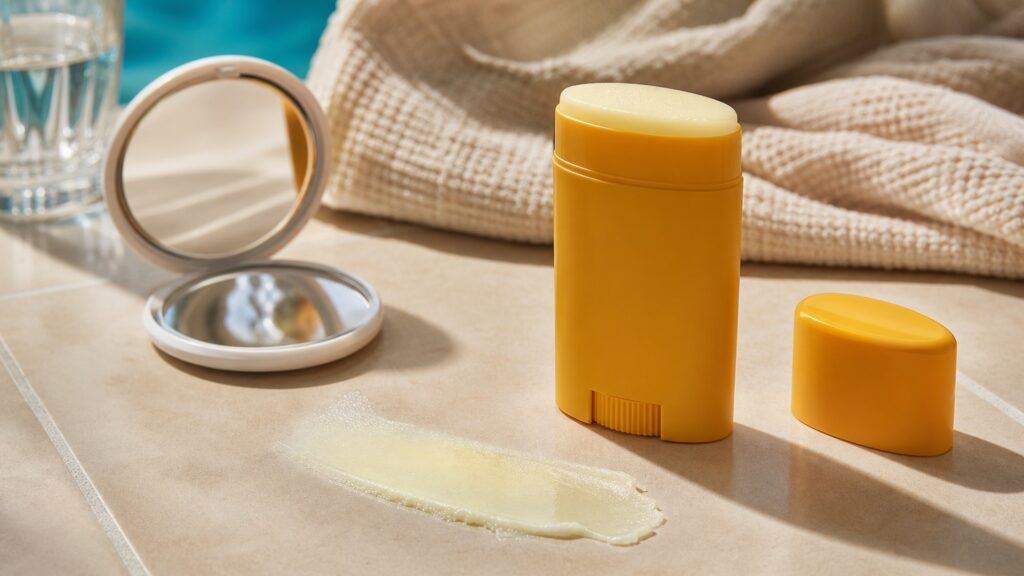
A practical application sequence for passes, pressure, blending, missed zones, and reapplication.
Tip: Read the concept as part of a system, then connect it back to the use case.
These definitions connect the main idea to the variables, limits, and practical signals readers need to compare options.
Multiple swipes that cross the same zone so the deposited film is less patchy.
The gentle force used to transfer product from stick to skin.
A final review of edges and contours after application.
Light rubbing after swiping to connect the film.
How firm or melty the sunscreen feels during application.
A condition that signals the film should be renewed.
Tip: Keep the definitions connected; the strongest answer usually comes from the whole system, not one term.
Each swipe leaves a stripe of product. Reliable application means making those stripes overlap until the zone is covered evenly, especially on curved or high-exposure areas.
The protection comes from a continuous film, not from the stick touching skin once.
A firm stick may need slower passes and slightly more pressure, while a soft stick may transfer faster but smear. The user has to respond to the formula instead of assuming every stick behaves the same.
Correct application adjusts to the stick's transfer, not just the label instructions.
Sticks are often used on the face, which has contours that interrupt contact. The nose bridge, nostrils, temples, ears, jawline, and hairline need deliberate coverage.
A zone checklist prevents a convenient stick from becoming patchy protection.
Sunscreen sticks are popular for reapplication, but top-ups still need enough product. Sweat, water, towels, and rubbing remove sunscreen unevenly, so reapply to the full exposed zone.
Reapplication works only when it rebuilds the film.
Use the stick deliberately: pass, overlap, blend, check, and maintain. This sequence keeps the format easy without reducing it to a token swipe.
Reliable sunscreen stick use is a pattern, not a single motion.
A sunscreen stick can protect well when applied generously, but casual swiping creates thin and missed areas.
Overlapping passes build a more continuous film.
Blending and zone checks reduce streaks around facial contours.
Large body areas are time-consuming to cover thoroughly.
Invisible finish can make it hard to see whether enough product was deposited.
Common shortcuts and misunderstandings can make the topic seem simpler than it is.
One swipe is usually just contact, not full coverage. Multiple passes are the safer habit.
Light blending can connect stripes and reduce gaps. The goal is to even the film, not scrub it off.
Feel is not a reliable measurement. Coverage pattern and repeated passes matter more.
Sweat, water, and touch remove sunscreen unevenly, so top-ups still need deliberate coverage.
Tip: Treat strong claims as starting points for comparison, not final answers.
Concise answers to common questions readers may have after the main explanation.
Use multiple overlapping passes across each exposed zone rather than relying on a single swipe.
Light blending can help even the film, especially where stripes or gaps are visible.
Yes, but use care around eyes and cover contours like nose sides, ears, hairline, and jaw.
They can work, but lotion is usually faster and easier for large areas.
Reapply after sweat, water, towel drying, rubbing, or extended outdoor exposure, following the product directions.
Sunscreen stick protection depends on deliberate application: multiple passes, light blending, and missed-zone checks.
Use sticks for convenient targeted coverage, but do not let the format turn proper sunscreen amount into one quick swipe.
Use these Review Streets paths to connect the explainer to related categories, comparisons, and next decisions.
Explore Review Streets coverage in Skincare for related sunscreen context and product paths.
Explore Review Streets coverage in Sun Protection for related sunscreen context and product paths.
Explore Review Streets coverage in Sunscreen Sticks for related sunscreen context and product paths.
Choose a retailer
Prices checked regularly. We may earn a commission at no cost to you.