
How to Choose a Mattress
Selecting a mattress involves more than matching comfort preferences; it requires understanding how support, pressure relief, and sleep position interact over long periods of use. Materials, construction methods, and firmness levels vary widely, and individual factors such as body weight, temperature regulation, and motion sensitivity can significantly influence performance. What appears similar on the surface often differs in durability, responsiveness, and spinal alignment, making the decision more nuanced than it initially seems.
This guide outlines the core factors that define mattress performance, including material types, support systems, firmness scales, and edge stability. It clarifies common terminology, highlights key tradeoffs between comfort and support, and explains how different designs respond to various sleep needs. By the end, readers will have a structured framework for evaluating options and selecting a mattress that aligns with their specific requirements and long-term comfort expectations.
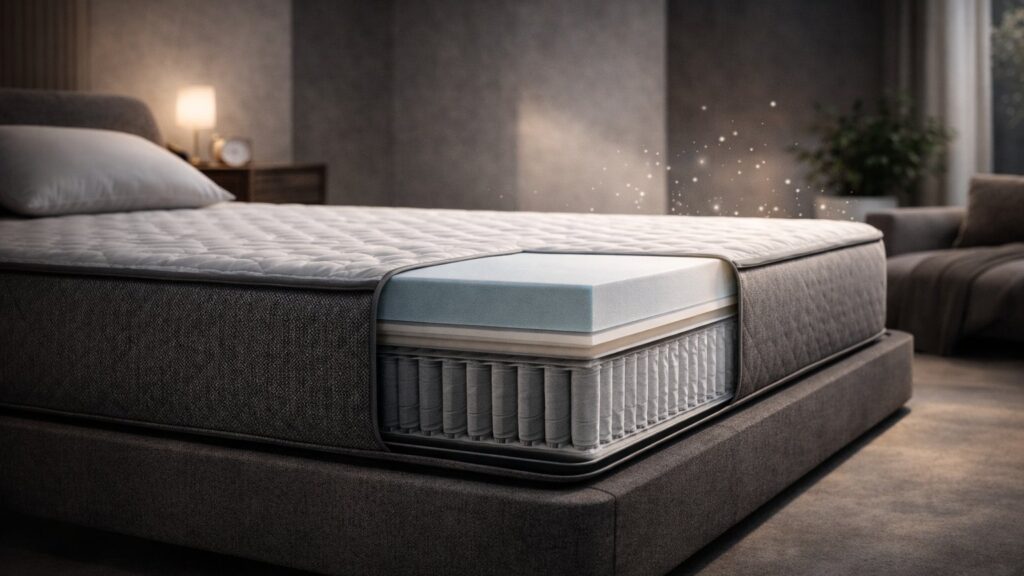
Buying framework
How to think about buying a mattress
Most mattresses can feel comfortable for a few minutes. The differences that matter over time show up in support, pressure relief, temperature behavior, and how consistently the surface maintains alignment through the night—not just initial softness. Use this framework to identify what truly affects sleep quality before narrowing options.
Support defines long-term comfort: Proper spinal alignment depends on how the mattress distributes weight and resists sagging, especially across the hips and shoulders during extended use.
Firmness is relative, not absolute: The same firmness level can feel different based on body weight, sleep position, and material response, making personal context more important than labels.
Materials shape performance: Foam, latex, and innerspring constructions differ in responsiveness, airflow, and pressure relief, each introducing distinct tradeoffs in feel and durability.
Temperature regulation varies by design: Breathability, heat retention, and airflow depend on materials and structure, which can affect comfort consistency across different climates and sleep habits.
Motion and edge behavior affect usability: Isolation of movement and edge stability influence shared sleep surfaces and how much of the mattress can be used comfortably.
Who this is for
Choose the mattress that matches how you actually sleep
The right mattress depends on how you sleep, how long you spend in bed, and how your body interacts with the surface over time. Use these profiles to identify the support, materials, and features that align with your needs.
Side sleepers & pressure-sensitive users: spend extended time on shoulders and hips, often in consistent positions throughout the night. Priorities include pressure relief, contouring, and maintaining alignment without creating sharp pressure points. What matters most is how evenly the surface distributes weight across contact areas.
Back and stomach sleepers: rely on stable, even support to keep the spine in a neutral position during longer sleep cycles. Priorities include firmness consistency, resistance to sagging, and support through the midsection. What matters most is preventing excessive sink that can disrupt alignment.
Combination sleepers: change positions throughout the night, requiring a surface that adapts quickly without resistance. Priorities include responsiveness, ease of movement, and balanced support across multiple positions. What matters most is how easily the mattress allows repositioning without feeling restrictive.
Hot sleepers & temperature-sensitive environments: experience discomfort from heat buildup over long sleep periods. Priorities include airflow, breathable materials, and temperature neutrality across the surface. What matters most is how effectively the mattress dissipates heat during consistent use.
Couples & shared sleepers: use the mattress across different sleep styles and movement patterns. Priorities include motion isolation, edge support, and consistent performance across the full surface. What matters most is minimizing disturbance while maintaining usable space on both sides.
What to pay attention to
Which mattress specs actually matter
Mattress specifications can appear straightforward, but many terms are loosely defined or interpreted differently. The factors that affect real-world sleep quality often relate to how materials behave over time—not just how they feel at first contact. These are the details that influence nightly comfort and long-term support.
Specs that affect feel
Surface softness, responsiveness, and contouring determine how the mattress feels against your body during use.
Specs that affect capability
Support structure, material durability, and airflow determine how the mattress performs over time and across different sleep conditions.
Firmness scale: Labels like soft, medium, or firm are not standardized and can feel different depending on materials and body weight. Focus on how the mattress maintains alignment rather than relying on the label alone.
Material composition: Foam, latex, and coil systems each influence responsiveness, contouring, and airflow. The way these materials are layered often matters more than the presence of any single component.
Pressure relief behavior: How the surface distributes weight across shoulders, hips, and back affects comfort during extended use. Uneven pressure distribution can lead to discomfort even if the mattress initially feels soft.
Edge support: Reinforcement along the perimeter affects how much of the surface feels usable and stable. Weaker edges can compress noticeably under weight, especially when sitting or sleeping near the sides.
Temperature regulation: Breathability depends on materials and construction, influencing how heat is retained or dissipated overnight. Dense foams and limited airflow can lead to heat buildup in certain environments.
Often overhyped: layer counts, branded foam names, and cooling claims that don’t consistently reflect long-term performance or measurable comfort differences.
Avoid these traps
Common mistakes people make when buying a mattress
Most dissatisfaction with a mattress comes from mismatched expectations about comfort, support, and long-term use. These are the most common mistakes we see—and how to think about them before making a decision.
Choosing based on initial feel alone: A mattress can feel comfortable for a few minutes but behave differently over a full night. Short-term softness or firmness doesn’t always reflect how well it maintains support and alignment over time.
Assuming firmness labels are consistent: Terms like soft, medium, and firm vary widely across constructions and materials. Relying on these labels without considering body type and sleep position often leads to mismatched expectations.
Focusing on one material type: Prioritizing foam, latex, or coils alone overlooks how layered construction shapes overall performance. The interaction between materials typically matters more than any single component.
Overlooking long-term support: A mattress that feels comfortable initially may not maintain its structure with regular use. Ignoring durability and support consistency can lead to gradual discomfort over time.
Ignoring temperature and airflow: Heat retention varies significantly depending on materials and construction. Overlooking this factor can affect sleep quality, especially for those sensitive to temperature changes.
Assuming all surfaces perform the same for shared use: Motion transfer and edge stability can vary across designs. Not considering how the mattress behaves with multiple sleepers can lead to disrupted rest and reduced usable space.
Decision guidance
Which type of mattress is right for you
The right mattress depends more on how you sleep each night than on surface-level descriptions or labels. Use this to match mattress type and feel to your typical sleep patterns—not occasional or idealized scenarios.
Choose a softer, contouring surface if: you primarily sleep on your side or experience pressure around shoulders and hips during extended rest. Softer constructions allow deeper compression at key contact points, which can improve comfort over longer sleep cycles. The tradeoff is reduced support for midsection alignment if the surface allows too much sink.
Choose a firmer, more supportive surface if: you sleep on your back or stomach and need consistent alignment across the spine. Firmer designs resist excessive compression, helping maintain posture through the night. The tradeoff is less contouring, which may feel less forgiving in pressure-sensitive areas.
If you change positions frequently: look for a balanced feel with moderate responsiveness that allows easy movement without resistance. Surfaces that adapt quickly to shifting weight help maintain comfort across multiple positions. Extremely soft or highly dense constructions can make repositioning feel slower or restricted.
Match materials to your environment: if you tend to sleep warm or live in a warmer climate, prioritize breathable constructions that allow airflow. Denser materials can retain more heat, while open or layered designs tend to feel more temperature-neutral. The right choice depends on how sensitive you are to heat during longer sleep periods.
When a standard mattress may not be enough: if you have highly specific support needs or frequently experience discomfort regardless of surface type, consider adjusting the sleep setup with toppers or specialized bases. In some cases, the mattress alone isn’t the only factor influencing sleep quality.
Ownership & compatibility
What you’re really buying into long term
A mattress isn’t just a one-time purchase. Long-term satisfaction depends on how materials age, how well the structure maintains support, and how easily it fits into your broader sleep setup over months and years of use.
Material longevity and wear patterns: Different constructions break in and age at different rates, which can change firmness and support over time. Understanding how materials compress or recover helps set realistic expectations for long-term comfort.
Compatibility with your bed setup: Mattress performance is influenced by the base or frame underneath it. Slatted frames, solid platforms, and adjustable bases can each affect support consistency and overall feel.
Maintenance and care requirements: Rotating the mattress, using protective covers, and managing moisture all play a role in preserving structure. Small habits can reduce uneven wear and extend usable lifespan.
Edge and surface durability: Areas that see repeated pressure—like edges or common sleep positions—tend to wear first. Reinforcement and construction quality influence how well the mattress holds its shape in these high-use zones.
Long-term replacement considerations: All mattresses gradually lose performance, even if they remain usable. Replacement timing is typically driven by changes in support and comfort rather than visible damage, making long-term expectations an important part of ownership.
FAQ
Mattress buying guide FAQ
Quick answers to the questions people ask most when choosing a mattress—focused on real use, not surface-level labels.
Do I need a soft or firm mattress?
What’s the difference between foam, latex, and innerspring mattresses?
How important is firmness for a mattress?
How thick should a mattress be?
Do I need a box spring or special base?
Will a mattress sleep hot?
Is motion isolation important?
What features actually matter day to day?
How long should a mattress last?
Bottom line
The simplest way to pick the right mattress
Most mattresses can feel comfortable at first. The right one is the one that keeps your body supported, aligned, and comfortable throughout the entire night—not just the first few minutes.
If you want the easiest long-term experience: choose a construction that maintains consistent support and fits your existing bed setup, with materials that age predictably over time.
If comfort and pressure relief matter most: prioritize how the surface distributes weight across your body, especially around shoulders and hips, rather than relying on firmness labels alone.
If you need consistent support: lean toward designs that resist excessive sink and maintain alignment, particularly if you sleep on your back or stomach for most of the night.
If you share the bed or move frequently: consider how the mattress handles motion, edge stability, and ease of repositioning across the full surface.
Final check: before deciding, think about how you sleep most nights—your position, sensitivity to pressure or heat, and how often you move. Choose the mattress that supports those patterns consistently, and long-term comfort usually follows.
Reading Shortcuts
Jump to the sections that matter most for choosing the right mattress.
Decision Reminders
A quick checklist before you commit to a mattress and sleep setup.
- Focus on overnight support, not first feel: initial comfort can fade if the mattress doesn’t maintain alignment through the night.
- Match firmness to your sleep position: side sleepers need pressure relief, while back and stomach sleepers need consistent support.
- Materials change how it behaves: foam, latex, and coils differ in responsiveness, airflow, and how they handle movement.
- Consider how it sleeps, not just how it feels: temperature regulation and breathability affect comfort over long sleep periods.
- Account for shared use: motion transfer and edge support matter more when two people use the same surface.
- Think in years, not days: durability and how materials age will shape long-term comfort more than short-term impressions.
Glossary Snippets
Quick translations for the terms that confuse buyers most.
When to Use a Top 10 Review
If you want the fastest shortlist, this is the format that gets you to a confident pick.
- You’re not sure which type fits your sleep: It organizes mattress categories and explains how each one performs in real use.
- You want a quick shortlist: It narrows a wide field into a manageable set of options based on common sleep needs.
- You want clear “best for” categories: Labels like Best for Side Sleepers or Best for Back Support help map options to use cases.
- You want a structured starting point: It highlights tradeoffs in materials, feel, and support without requiring deep research first.
Already down to 2–3 options? A Comparison is usually faster than reading full reviews.
When to Use a Comparison
Best when you’re choosing between specific models and want the clearest tradeoffs.
- You’re down to 2–3 finalists: side-by-side differences in feel, support, and temperature are easier to evaluate directly.
- You care about how it feels overnight: responsiveness, pressure relief, and motion behavior show up clearly in head-to-head views.
- You want a winner by category: firmness feel, edge support, motion isolation, and overall usability are broken out clearly.
- You need the fastest decision: a Comparison simplifies tradeoffs once your shortlist is already defined.
Still exploring? Start with a Top 10 to find the right “type” of mattress first.