
How to Choose a Travel Bags & Backpack for Packing Fit
A rigid folder can have room inside a travel bag and still catch at the opening. Before buying, work out how the folder will go in, where it will sit and how you’ll get it back out. Compare a front panel and a roll top using the folder and contents you actually carry.
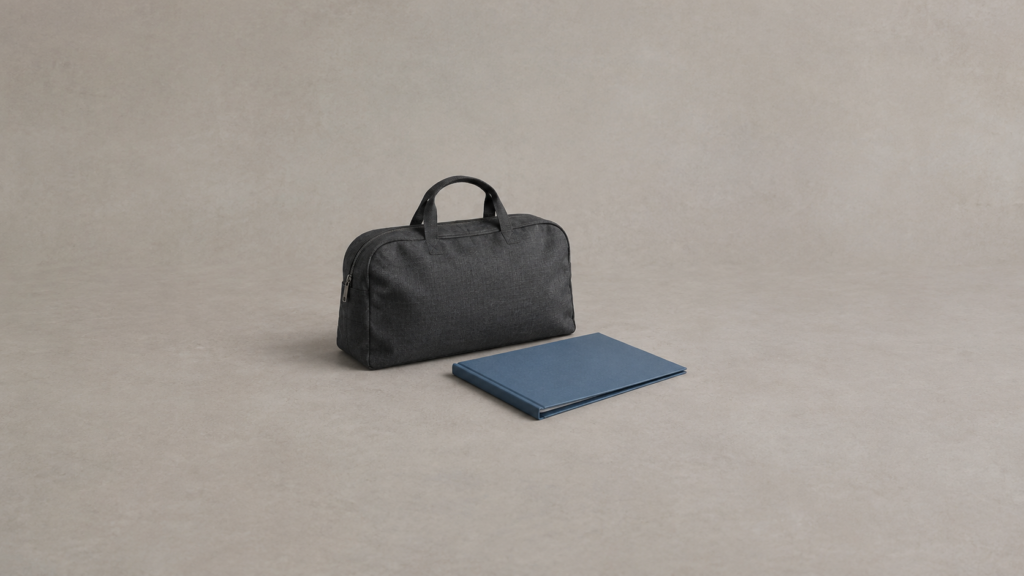
Buying framework
Follow the folder from entry to exit
Start with the rigid folder that has to travel and the compartment you’ll put it in. A usable fit covers getting it through the opening, closing the bag with it stowed and taking it back out.
Pick its storage spot: Decide where the folder belongs before looking at bag dimensions. A route to the main compartment only helps if you can reach the spot you’ve chosen inside it.
Allow for the leading corner: Picture the whole edge crossing the opening. One corner can slip through while the opposite corner still catches at the end of the zipper.
Include normal closure: Once the folder is inside, see whether it sits clear of the area that has to zip or roll shut. A spine left in the closure’s way makes the arrangement impractical for travel.
Choose the retrieval moment: Think about the first place you’ll need the folder. That tells you whether the rest of the contents must stay in the bag or can come out first.
Look for direct evidence: Start with usable measurements for the exact opening when they’re available. A hands-on check with the intended load can settle questions about movement that a measurement leaves open.
Who this is for
When the folder has to come out
At a check-in desk, the folder may need to come out while everything else stays packed. At your room, setting a layer aside first may be part of unpacking.
Documents at a counter: If you’ll hand over paperwork while standing at a counter, look for a route that leaves the rest of your load where it is. Use whatever bag position you can realistically manage there.
Unpacking in your room: If the folder stays packed until you arrive, a deliberate removal sequence can work. You can lift out what lies over it first, provided the folder then clears the opening freely.
Folder against the back wall: You may want the folder flat against the back of the main compartment. Look for enough room to lift the leading edge or pivot the far corner when the adjacent contents are in place.
A dedicated document sleeve: If you want the folder in a sleeve every time, pay attention to the transition from the main opening into the sleeve. The bag must give you room to pull the folder far enough to free it again.
A fuller bag on some legs: If a bulky layer comes along on only part of the trip, use that fuller arrangement for any stop where you still need the folder. The added layer can take up the space you used to turn it.
What to pay attention to
Opening details that matter for a rigid folder
Look for the maker’s description of the route into the main compartment. For the two designs here, that description identifies how each opens, and the usable clearance for either design remains unknown.
Opening construction and usable clearance
Use the maker’s description to find where the compartment opens, then look for a usable span and shape at that exact entry.
Folder shape and packed movement
Work from the rigid outline and thickness you’ll actually carry, including the space the far corner needs as you turn it.
J-zip front panel: One design uses a large front panel opened by a J-shaped zipper. The panel exposes the main compartment from the front, and its clear span for the folder still needs to be established.
Roll-top entry: The other design opens at the top in its rolled closure mode. Release the metal hook and unroll the closure to see the opening in its ordinary fully open position.
Clear span and shape: Look for the unobstructed span at the tightest part of the fully opened route. The seam or the point where the zipper stops can determine where a hard corner meets the opening.
Complete folder dimensions: Measure the length, widest edge and thickest point of the folder you’ll carry. Include anything that sticks out, such as tabs or a protective cover.
Room beyond the opening: A short edge may go in first if the far corner has room to swing into place. A measurement across the opening alone leaves that turning space unresolved.
A second entrance at the sleeve: Both designs list a document sleeve, one inside a removable insert. If the sleeve is your chosen spot, verify its entrance separately and leave the insert in the configuration you’ll use.
Avoid these traps
Why an easy-looking fit can fail
A spec can describe the bag accurately and still leave the folder’s passage unresolved. Pay attention to what a number or demonstration actually shows.
Buying by liters: A capacity figure tells you how much space the bag holds. A folder can still catch at the entrance even if there’s ample room for it inside.
Using outside width as opening width: The broadest part of the bag may be well below the mouth or beyond a seam. Using that number for the opening can make a plausible candidate look like a confirmed fit.
Matching folder width to zipper length: A J-zip runs along a curve and can turn down the side of a panel. The folder crosses the gap between the edges of the opening, so the length of zipper it took to create that gap cannot settle fit.
Going by the paper size: A sheet-size label refers to what goes into the folder. A cover that extends past the pages or a thick spine can be the first thing to catch.
Stopping after empty-bag insertion: A clear sweep for the folder’s far corner can disappear once your things are in place. Returning to the opening from its stowed position is the useful check for a loaded bag.
Trusting a similar-looking demo: Verify that the demonstration shows the exact bag and compartment you intend to use. A photo without a reliable scale is useful for seeing where the bag opens, while clearance remains an open question.
Decision guidance
Try the same folder through both openings
Suppose you’re choosing between a J-zip front panel and a roll top for the same rigid folder. The designs open in different places, and the available descriptions leave comparative clearance unknown. Use the same contents in corresponding positions and give the folder the same intended spot in both bags.
If the base load fits both: Set up both bags with the planned contents and the folder’s cover as you’ll carry it. If either bag cannot hold the rest of the load, set it aside before judging what stopped the folder at the opening.
If you’re trying the front panel: Unzip the J-shaped front panel as you normally would and guide the folder into the chosen spot. Close the bag, open it again and see whether you can lift the folder out with everything else still in place.
If you’re trying the roll top: Release the hook, unroll the top fully and use the same folder and packing arrangement. A short-edge-first approach counts if you can turn the folder into position, close the top normally and get the folder back out by reversing the move without force.
If you need it on demand: Either bag qualifies if it lets you insert the folder freely, close normally and withdraw it without shifting other contents. If only one does, choose it for that retrieval need. If both fail, keep looking for a route that works with the bag packed.
If unpacking first is workable: A bag can still suit a room-only retrieval if you can lift out the same layer each time and the folder then comes out freely. If neither published details nor a direct check settles the route, treat that bag’s fit as unknown.
Ownership & compatibility
Keep the removal route when you repack
Once you find a workable route, rehearse it through a full opening and closing cycle before the trip. It’s easier to set the folder back in place if you know which edge comes out first.
Repeat the full cycle: Load the bag, close it and open it again in the position you’ll actually use. Note the edge you lift first and where the other corner moves as the folder clears the bag.
Restore the rolled closure: For a hook-and-webbing roll top, follow the full rolling and fastening directions for your exact bag. Leave enough room above the folder for the closure to work normally.
Make room for the roll when needed: If the documented rolled closure fails to roll or fasten as directed, the maker says excess contents or trapped air may be the cause. Its directions call for unrolling the top and removing excess contents or air before reclosing. If you take an item out, treat that as a separate trial with a different load.
Keep the next stop in mind: When repacking, put any layer you have to remove first where you can get to it. If the next stop requires direct access to the folder, try the revised arrangement while you still have space to unpack.
Recheck after a load change: A thicker folder or a removable insert back in the bag can change the movement you practiced. Repeat the removal with the combination you’ll actually carry.
FAQ
Common questions about folder fit
Use these checks when you’re working from a listing or trying your own folder in the bag.
Can I judge the opening from a photo?
Can I bring a cardboard stand-in instead of the folder?
What should I ask the maker to measure?
What if I want to use a document sleeve?
Can I use a bag if the folder only fits at a tilt?
Should I check the bag upright or lying flat?
What if the folder fits empty but sticks when packed?
What if I carry two rigid items together?
What if there’s no room to grip the folder on the way out?
Bottom line
Choose the bag you can get the folder back out of
When space is tight, watch where each corner goes as you draw out the folder. Choose an opening that lets you repeat that move at your stop and close the bag normally once the folder is back.
The object: Use the full rigid folder with its spine, cover and tabs when they travel together.
The opening: Verify that the entry you’re checking leads to your chosen spot. Clear dimensions are most helpful when you know exactly where they apply.
The comparison: Keep the usual load and the folder’s position fixed so you can judge the two entry routes on the same terms.
The travel requirement: Favor a bag that closes normally and lets you retrieve the folder when you need it. Count unpacking first only where you’ll have time and room to do it.
The reason to wait: If you still can’t establish passage in both directions for a folder you must carry, leave that candidate pending a fit check.
Reading Shortcuts
Find the section that helps you measure the opening or plan how to lift the folder out.
Decision Reminders
Run through these checks with the folder and your usual load beside the bag.
- Folder size: Include the spine, tabs and any cover you carry.
- Storage spot: Trace the route to the place the folder will sit.
- Usable opening: Look for the clear span at the tightest part.
- Usual load: Keep the surrounding contents in their planned positions.
- Removal: Close and reopen the bag before trying to lift out the folder.
- Closure: See whether the zip or roll can shut in its usual position.
Bag Opening Glossary
These terms describe where a rigid item enters and what it needs to clear.
When to Use a Top 10 Review
Use a ranked list to find candidates when your folder is fixed and you’re still exploring bag designs.
- Explore the openings: Look for reviews that name the entry into the main compartment.
- Identify candidates: Note which bags use a front panel or a roll top you want to try.
- Pin down the version: Keep the exact bag and compartment in your notes for a fit check.
- Look for missing details: Flag candidates where you still need an opening measurement.
Once two bags look promising, a comparison can help you spot which opening detail is still missing for your folder.
When to Use a Comparison
Use a head-to-head comparison when two travel bags already look plausible for the same rigid folder.
- Match the compartments: Compare how each candidate opens into the spot you intend to use.
- Keep the load fixed: Apply the same folder and surrounding contents to both routes.
- Compare the maneuver: Look at where the folder needs to turn in each bag.
- Settle the remaining question: Use a direct fit check if the published details leave the packed exit unclear.
If you still need a second bag with entry into the right compartment, start with a list to find another candidate.