
How to Choose a Travel Bags & Backpack for Your Trip
If you want your day bag tucked inside the suitcase until check-in, its empty size matters. If it carries your belongings from the first station, pay attention to the design you’ll wear. Start with when the bag goes to work, then use the maker’s specifications to compare the options.
Buying framework
Plan when the day bag goes to work
Look at the trip from departure through the return. A secondary day bag can spend one leg empty in your luggage and the next leg carrying the things you want with you.
Start with the first use: Mark the first time you’ll need the day bag itself. A walk after check-in and a train change where you want your belongings with you put that moment on different sides of arrival.
Give the outing items a place until then: If your bottle and layer can stay in the suitcase until the walk, the day bag can travel empty. If you want them with you from the station, put them on the day bag’s list from departure.
Decide whether the empty bag must go inside: If you want to wheel a single suitcase on that leg, reserve some of its remaining space for the empty day bag. The bag’s stowed form becomes a shopping criterion.
Write down any change of duty: You might pack the day bag inside the suitcase on the way out and carry it on the way back. A purchase for both legs has to account for both arrangements.
Read the specification for the job: For an empty bag that goes inside your luggage, look for a defined stowed configuration. When the bag travels in use, look for the maker’s description of the parts you’ll be carrying it with.
Who this is for
Five ways the day bag fits into a trip
Where you go after arrival can change when you start using the same bag. Match the first leg on which you need it to one of these travel plans.
The traveler heading straight to the hotel: If you go straight to your room and leave the suitcase there, the day bag can stay empty until you head back out. An attached stowing pouch and published packed dimensions give you something concrete to plan around.
The visitor with plans before check-in: If you’re going straight to a gallery after dropping off your suitcase, set aside what you’ll take into the gallery before you hand over the case. The day bag starts work at the drop-off, even if the room opens hours later.
The rail traveler carrying belongings from departure: If your refillable bottle and an extra layer go into the day bag at the first station, that is the bag you’ll use through every change. The back panel and shoulder straps are worth inspecting with those belongings in mind.
The traveler who changes plans on the way home: The day bag might stay empty on the outbound train and carry the same outing items from hotel checkout to the return station. Give that leg the same attention as the one where the bag stays inside the suitcase.
The traveler waiting to confirm a luggage drop: If early luggage storage is uncertain, pencil in two start times for the day bag. The one that applies depends on where you can leave the suitcase and when you next need the contents.
What to pay attention to
Read the specs for the bag you’ll actually use
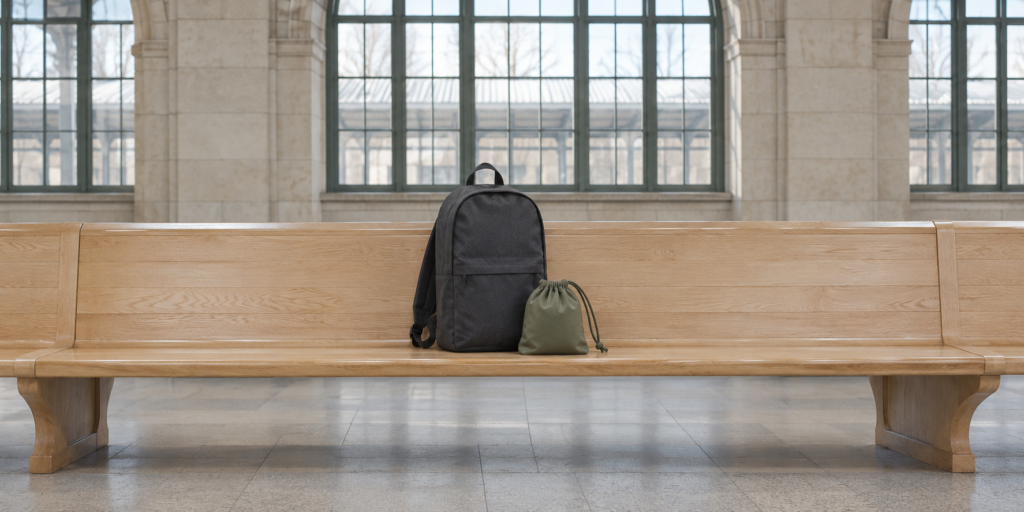
Two documented daypacks share a listed 20 L capacity. The packable example has a specified stowed form, and the structured example provides details about the panel and straps you wear.
Empty stowed form
Use the maker’s description of how the empty daypack packs away and how large it is in that state.
In-use design
Identify the parts that stay with you when the bag is open and carrying your belongings.
Attached stuff sack: The packable example goes into a small sack attached to the bag. If self-stowing is part of your travel plan, look for a maker’s description of where the empty bag goes.
Published packed dimensions: The maker lists the packable example at 5.5 × 10.2 × 18.6 cm when stowed. You can use those outside measurements to estimate the space to set aside in an already packed suitcase.
Listed capacity when open: The packable bag’s 20 L figure describes its nominal capacity for use. For the leg where it travels empty in its sack, use the separate packed measurements.
Mesh-covered foam back panel: The structured example has ridged foam under a mesh cover on the panel against your back. That’s a specific piece of construction to look for when you inspect the bag for use on transfers.
Foam-padded harness: The structured example’s maker also specifies EVA foam padding in the harness, the strap assembly that sits on your shoulders. The product listing describes the panel and harness but gives no separate empty packed size or stowing method.
Intended use: One maker lists travel sightseeing for its packable design. The other describes its structured design for everyday use and travel, giving you a documented use to start from when comparing the two examples.
Avoid these traps
Where a product listing can lead you astray
Pick the figure or feature that answers your actual question about the trip. A label can describe the bag well and still leave the decision about your journey open.
Shopping on the word packable alone: If the listing stops at the label, you may have to improvise how to keep the empty bag folded every time you move on. Look for directions that show how the particular bag packs away.
Budgeting suitcase room in litres: The capacity figure describes the volume of the open bag. If you use it to reserve room in the suitcase, you may set aside space based on a figure that says nothing about the shape you’ll pack.
Forgetting what goes back in the suitcase: When the day bag comes off at the end of a transfer, your suitcase has to take the outing items as well as the empty bag. To check that handoff, put the bottle and layer back in the case first. Then see where the day bag’s closed pouch can go.
Reading matching capacities as matching shapes: Two 20 L bags can have different shapes in use. If the day bag will carry a bottle and a layer together, shop with those specific items in mind.
Choosing by padding alone: A foam specification tells you what the maker put in the bag. If your preference depends on wearing it with your belongings, make that decision with the actual items in the bag.
Buying for the outbound trip alone: An empty pouch can be the deciding detail on the way out, then the bag may spend the entire return leg in use. Look at what happens after checkout before you commit.
Decision guidance
The buying decision on the same rail trip
Imagine two versions of a rail journey to the same hotel with the same stations, rolling suitcase and afternoon walk. Change only when the day bag starts carrying the belongings you’ll take on that walk.
Keep the itinerary and items fixed: The outing starts after hotel check-in in both versions. In each case you take the same refillable bottle and light layer on the afternoon walk.
If the day bag starts at the hotel: Leave the bottle and layer in the same suitcase until check-in and plan to stow the day bag empty inside it. Start with the packable example’s attached sack and published packed dimensions, then check the space in your own packed suitcase.
If the day bag starts at the first station: Move the same bottle and layer to the day bag before boarding and keep them there through the transfers to the hotel. Start by inspecting the construction you’ll wear, such as the back panel and padded harness on the structured example.
When the capacity figure is a tie: Both examples are listed at 20 L. On the hotel-first version the useful difference is the defined empty form, while on the station-first version it’s the specific panel and harness construction you can evaluate.
Let the actual arrangement settle the choice: When the bag has to stow inside your luggage, choose on the strength of a documented empty configuration and try it in your packed case. When it goes to work at the station, put your own items in the day bag and carry it before deciding whether you prefer that design.
Ownership & compatibility
Switch between carrying and stowing
Decide where the contents go before folding the bag away for the next leg. For stowing and care, use directions for your own bag and check whether the maker is speaking about the model or the wider range.
Empty the bag before it goes into its sack: After an outing, transfer the bottle and layer to their planned place for the next leg if the day bag is going back inside the suitcase. Run a hand through the bag for anything you meant to move before you stow it.
Feed the fabric into the pouch: The packable example’s maker covers several pouch-stowing bags in its general guidance, including a dry variant. It describes holding the sack and feeding the fabric in with alternating thumbs. Follow any directions supplied for your particular bag.
Limit contact with rough surfaces and sharp objects: The packable example’s own product page gives this handling advice. Keep it in mind when choosing where to set the bag down or which belongings sit next to it inside the suitcase.
Reset the bag’s job before leaving: At the hotel, move the outing items to the bag that needs to hold them for the next transfer. If the day bag starts the return trip in use, set it out before you close the suitcase.
Give a damp structured bag time to air-dry: In its general backpack care guide, the structured example’s maker advises air-drying out of direct sunlight, either outdoors or in a well-ventilated spot. Follow the care label for your own bag where applicable.
FAQ
Questions about the second bag
Use these answers to resolve the details that can change your plan for the day bag.
Does the packable example come with its stowing pouch?
Is the packable example meant for sightseeing?
Can I use a day bag I already own?
Can I carry a packable daypack between stations?
Can a structured daypack go inside a suitcase when empty?
What if only one listing gives measurements for the empty stowed bag?
Will the listed volume tell me whether my bottle and layer fit together?
When should I plan around an unconfirmed luggage drop?
What if the day bag has different jobs on different legs?
Bottom line
Choose for the first leg that puts the bag to work
Make the choice against your itinerary and the space in the luggage you already plan to take. The bag may spend part of the trip as something you pack and part as something you carry.
Set the start time: Name the stop or transfer when the day bag first needs to hold your belongings.
Mark any empty stretch: Decide whether the empty bag needs to travel inside the suitcase on the outward or return leg.
Read the relevant maker details: Use the stowing method and packed measurements for the empty leg. Look at the listed construction for the leg where you’ll wear the bag.
Try the part the listing leaves open: Put the stowed bag in your own packed suitcase if space decides the purchase. Put your actual belongings in the day bag if your carrying preference decides it.
Buy for the job you’ve assigned it: Choose a self-stowing design when its empty configuration makes your packing plan work. If the bag goes into use at departure, give the design you’ll carry first consideration.
Reading Shortcuts
Find the step you’re working on, from marking the day bag’s first use to comparing the two versions of the rail trip.
Day Bag Decision Reminders
Mark where the bag starts carrying your things and where it needs a spot inside the suitcase, then use those legs to read the product details.
- First use: Name the stop where the day bag goes to work.
- What goes inside: List only what the day bag will carry.
- Empty travel: Decide where the bag goes before you open it for the outing.
- Packed dimensions: Find the figure for the bag in its maker’s stowed configuration.
- In-use construction: Identify the back panel and straps you’ll wear.
- Return duty: Note whether the day bag carries belongings from checkout.
Day Bag Terms
Use these definitions to tell whether a listing is describing the bag tucked away empty or open and ready to carry your belongings.
Build a Travel Day Bag Shortlist
Use category lists to find candidates, then open the maker’s listing for each bag that could meet your stowing or transfer needs.
- Trip assignment: Start here if you are still looking for bags that can travel empty in your suitcase.
- Defined pouch: Look for a model with its own stowing pouch if you need to tuck it away.
- Comparable size: If suitcase space is tight, use the list to find candidates with published stowed measurements.
- Intended use: Keep the actual outing in view as you look for a maker’s stated use.
Use a comparison to check whether both day bags publish measurements for the empty bag inside its own pouch. Those figures belong together when you’re planning the suitcase leg.
Compare Day Bag Construction
Put your shortlisted bags side by side and match each maker’s documented features to the bag’s job on your travel day.
- Stowing method: If two candidates offer pouch stowage, compare how each maker describes packing it away.
- Empty size: Use packed measurements for any candidate that publishes them.
- Back and shoulders: If both bags are on your shortlist for transfers, compare their documented back panels and harnesses.
- Unanswered question: Make a note of the exact arrangement you’ll need to try with your belongings.
Use a list to look for a daypack with an attached sack if your current candidates only show the bag open. That gives you a model whose empty form you can check before it goes in the suitcase.