
How to Choose a Travel Clothing & Footwear for Daily Travel Use
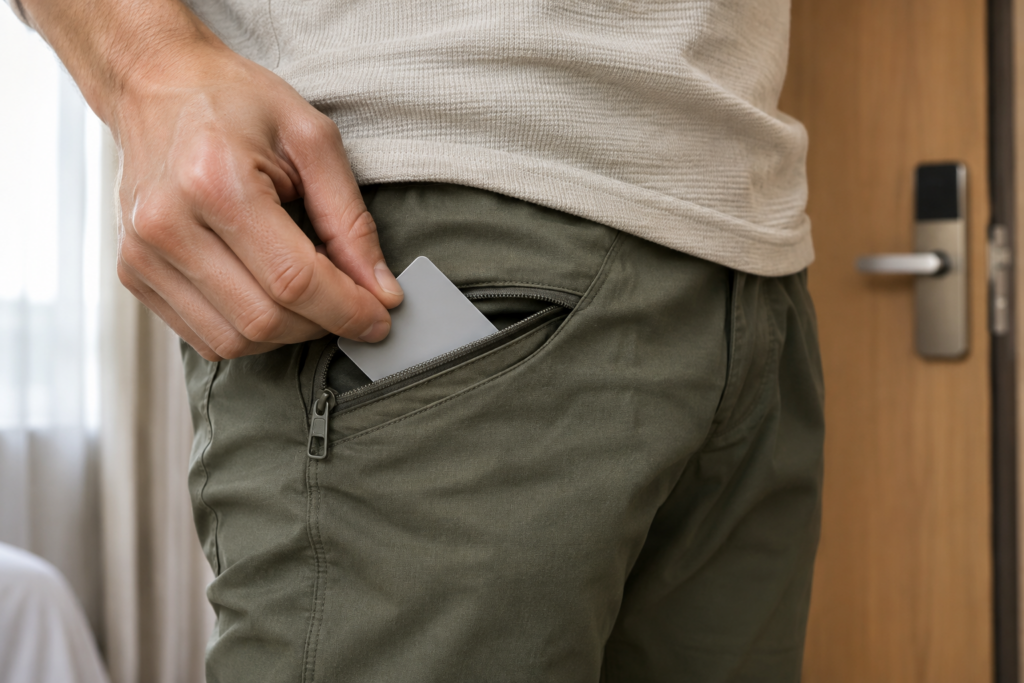
When you get back to your hotel room, you want to know where your key card is and how you’ll get it out. If you’re choosing travel trousers for everyday outings, compare where the pockets open and how they close. Then try the exact opening with the card you’ll carry.
Buying framework
Start with the moment you need the card
A pocket becomes a buying criterion when you know what you want to do with it. Start at the room door and work back to the moment you put the key card away.
Pick one job for the pocket: Picture taking out a hotel key card when you come back to your room. That gives you a specific task to use when looking at travel trousers.
Name the opening you would use: Write down the pocket location and its closure together. A zipper elsewhere on the same garment leaves you with a different opening to use.
Decide whether you want to close it: If closing the pocket after you put the card away matters, look for a zipper on the opening you would choose. If you prefer a drop-in opening, make that part of the search.
Count the steps you plan to take: Think through how you would put the card away before leaving and get it out when you get back. The opening you choose determines whether operating a zipper belongs in that routine.
Shortlist from the listing: Once a listing shows the position and closure you want, you have a reason to try that garment. Make the final choice after handling your own card in the pocket.
Who this is for
Find the pocket that suits your habits
Some travelers know where they want the card to go. Others know they want a zipper and have room to try a few positions.
You want to zip the pocket every time: Shortlist any clearly named zippered pocket. Once you have the trousers on, use the card to decide where you prefer to reach.
You already use an open front pocket: If your habit is to drop the card into a front pocket as you leave the room, a listed front drop-in pocket fits that plan on paper. Try the opening before expecting the same handling as your current trousers.
You prefer a hand pocket with a zipper: Look for a listing that calls the hand pockets zippered. That wording is useful when you want to keep the hand-pocket position and add a closure to the routine.
You are open to a rear or leg zipper: Start with whichever position you would normally look for at the door. If neither position feels familiar, try both with the same card before giving either one priority.
You are shopping online first: Save the exact listing and note the pocket you mean before asking the seller about it. An answer about that opening can narrow your options while you wait to try the garment.
What to pay attention to
Read the pocket details one opening at a time
Product descriptions can tell you where an opening is and how it closes. Read those details separately so you can see which part of the layout would change between candidates.
Pocket position
Use the maker’s location words to identify the part of the garment you would reach toward.
Pocket closure and opening
Look for the closure named on that particular entry, then check what the listing says about the room available.
Front and right rear: One pair of trousers lists two front drop-in pockets and puts its listed zipper on a separate right-rear pocket. On that garment, moving from a front opening to the rear changes both position and closure.
Hand pocket and right leg: The other listing uses the term hand pockets and separately names a pocket on the right leg. The hand-pocket label leaves the exact placement and angle of those openings unspecified.
Same closure in more than one position: The two hand pockets and the right-leg pocket in that second layout all have zippers. You can shortlist a different position within the garment and keep your closure preference.
What drop-in describes: In the first layout, the front opening is listed as drop-in. The planned motion is to slide the card through that opening, provided your card passes through it.
What a zipper adds: If you prefer to keep the pocket zipped, getting the card out at the room door starts with a pull on the slider. When the card goes back in, you’ll move the slider again.
Clear opening and room inside: The opening is where the card must pass, and the pocket interior is where it must sit. These listings leave both dimensions and actual card fit to be confirmed.
Avoid these traps
Where pocket listings can lead you astray
A feature can be accurately listed and still send you toward the wrong opening. These are the points where a plausible reading of the page can turn into a poor purchase.
Giving every pocket the listed zipper: A general mention of a zipper can leave you expecting it on the opening you use most. Find the wording that attaches the closure to a named pocket before counting it toward your requirements.
Shopping by pocket count: Both example garments list three pockets, yet they place their zippers differently. A count can make two layouts look interchangeable even when they meet different preferences.
Borrowing details from a similar style: A photo from a related style can send you looking for an opening that the item in your cart may lack. Use feature text and photos for the exact version you plan to try.
Assuming any pocket will take the card: The card needs to pass through the entrance as well as rest inside. If you have to flex the card to get it through during a try-on, keep looking for an opening you can use as planned.
Predicting reach from the position name: A rear or leg label tells you where to look on the garment. It leaves questions about how your hand gets there and how the motion feels for your own try-on.
Ending the trial as soon as the card goes in: Getting the card into a front drop-in pocket tells you little about drawing it out of a right-rear zip. Try taking the card out and putting it back with the trousers on, then sit with it stowed to see how that position feels.
Decision guidance
Compare both layouts on the same café outing
Imagine walking from your hotel to a café, sitting for coffee and heading back to your room. Compare how you would handle the key card on that outing with each pocket layout.
Set up the same trip for each garment: Use one hotel key card in both versions of the outing. Put it away before you leave the hotel and plan to take it out at the room door when you return.
If the closure determines the choice: In the layout with two front drop-in pockets, choose one of the front openings to try if you want an open entry. If a zipper is part of your plan, the documented option on that pair is at the right rear.
If you want to keep the zipper and change position: In the other layout you can choose a zippered hand pocket or the pocket on the right leg, which also zips. Try the position you favor first and keep the other as a candidate if the motion feels awkward in wear.
If you can try the trousers on: Use the card you plan to carry and run through what you would do before leaving and at the door. If you want to check the seated part of the outing, sit briefly with the card in the chosen pocket and see how it feels to you.
If neither layout works in wear: Keep shopping if the card is awkward to get through the available opening or you would skip a closure step that matters to you. You can use the same outing to judge the next promising layout.
Ownership & compatibility
Make the chosen pocket part of your routine
Once you have a pocket you are comfortable using, give the card a regular home in that garment. Follow the same sequence when you leave the hotel and when you return.
Choose the pocket before stepping out: Before leaving the room, use the opening you tried with the card in wear. If you tested a zippered hand pocket, carry the card there for this outing so you can judge that reach all the way to the room door.
Get the card through the opening: With the trousers on, slip the actual card into the selected pocket and take it back out. Pay attention to how you hold the card as it passes the edge of the opening.
Build in the closure you want to use: If you intend to leave the pocket zipped, close it when you put the card away. Rehearse opening it as part of getting the card back, so you practice the same motion you intend to use later.
Keep track of the pocket during coffee: Leave the card in its chosen pocket through the coffee stop. Back at the room door, see whether you remember which opening to reach for.
Finish by putting the card back: After opening the door, slide the card back into its chosen pocket. If you have decided to keep the opening zipped, close it again to complete the routine.
FAQ
Questions to settle before you choose a pocket
These answers can help when a listing leaves you with a detail to verify.
Where on a product page should I look for the pocket layout?
What does drop-in mean for these trousers?
Does the same closure make two pockets equivalent?
What if I cannot tell which pocket a zipper belongs to in the photos?
What should I ask for if the listing gives no opening size?
How do I tell whether a pocket will feel right while I sit?
How can I compare two zippered positions fairly?
When should an online option stay provisional?
What should I do during a complete try-on?
Bottom line
Choose one pocket you’ll keep using
The purchase comes down to the opening you would actually use on the way out and back. Choose the trousers once that pocket suits the routine you want at the room door.
Choose where you’ll reach: At the room door, choose the position you’d be willing to reach for on every return.
Put the opening ahead of the count: Give priority to a documented pocket in the location you want to try.
Make your closure preference count: If closing the opening matters every time you stow the card, keep only candidates that offer a zipper in a position you would use.
Use the card that will travel with you: Pick the garment after the card passes through the entry and you can take it out in wear.
Include the return in the decision: If reaching behind you at the room door makes the rear zipper awkward, try a zippered hand or leg pocket if closure still matters. Choose one only if you’re comfortable carrying the card there through the café stop as well.
Reading shortcuts
Jump to the pocket detail or buying decision you’re working through.
Decision reminders
Keep these details in view when you narrow your trouser options.
- Locate the exact opening: Find where it sits on the garment.
- Check its closure: Identify which entry the zipper operates.
- Keep the same item: Use one hotel key card in each try-on.
- Check the actual opening: See whether the card passes through freely.
- Try the return sequence: Put the card back after taking it out.
- Confirm the exact style: Match the features to the trousers you would buy.
Pocket glossary
Five terms to recognize in a trouser listing.
Browse travel clothing lists
Explore the category when you’re still gathering trousers to look at.
- Start with a few candidates: Note which listings describe the pockets.
- Mark the opening you want: Save options with a named position.
- Look for your preferred closure: Use it to narrow the garments worth a closer look.
- Flag details to follow up: Set aside listings that leave the chosen entry unclear.
When two layouts are still in the running, use a comparison to weigh the pocket positions and closures.
Explore travel clothing comparisons
Use a side-by-side view when you already have specific candidates in mind.
- Line up the pocket locations: See where the card would go on each garment.
- Compare one closure at a time: Match each zipper to the opening it operates.
- Separate position from closure: Look at two zippered options to focus on where they sit.
- Decide what to try on: Pick the opening you want to handle with your card first.
If you’re still gathering candidates, browse a list to find more garments worth a closer look.