
How to Choose an Air Purifier
Air purifiers serve a wide range of environments, from small bedrooms to large open living spaces, addressing concerns such as allergens, airborne particles, odors, and indoor pollutants. Despite their straightforward purpose, selecting the right unit involves more complexity than it initially suggests. Variations in filtration technology, room size compatibility, airflow capacity, and operating characteristics can significantly affect performance and long-term suitability for different living conditions.
This guide outlines the key factors that shape an informed decision, including filter types, clean air delivery metrics, coverage calculations, noise considerations, and maintenance requirements. It clarifies essential terminology and highlights practical tradeoffs so readers can evaluate options with a structured approach. By the end, readers will understand how to align specifications with their specific environment and usage priorities.
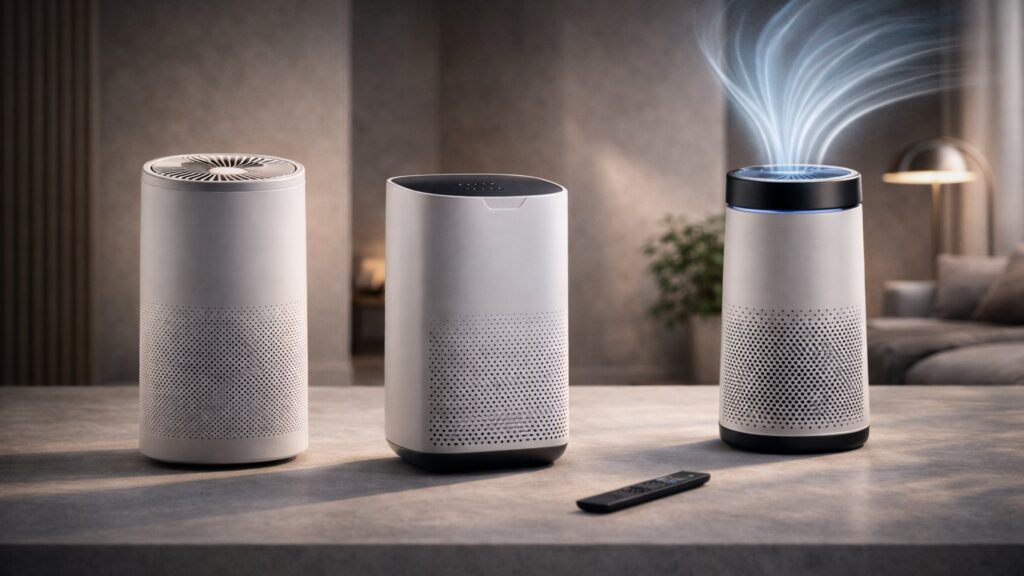
Buying framework
How to think about buying an air purifier
Most air purifiers can improve indoor air quality, but the differences that shape ownership are usually tied to filtration type, room sizing, noise behavior, and maintenance demands rather than headline claims alone. Use this framework to identify which factors matter most in your space before narrowing down the field.
Match the unit to the room: Coverage claims only matter when they reflect your actual space, ceiling height, and air quality goals. An undersized purifier may run constantly without delivering the level of air cleaning you expect.
Filter type determines purpose: Mechanical particle filtration, gas-phase filtration, and washable pre-filters address different problems. Think first about whether you are targeting dust, allergens, smoke, odors, or a combination of indoor pollutants.
Noise affects real-world use: A purifier that performs well at high speed may be less practical in bedrooms, offices, or shared living areas if it is too loud to run consistently. Daytime and nighttime use often call for different operating tradeoffs.
Maintenance shapes long-term ownership: Filter replacement intervals, cleaning routines, and access to internal components all influence convenience over time. A unit with more demanding upkeep can become less effective if maintenance is delayed.
Controls should fit the environment: Display brightness, fan settings, air quality sensors, and auto modes affect how easily the purifier integrates into daily life. The right feature set depends on whether you want more manual control, quieter operation, or simpler day-to-day management.
Who this is for
Pick the air purifier that matches how you actually live
The right air purifier depends on your environment, how consistently you run it, and what you’re trying to reduce in the air. Use these profiles to align room size, filtration needs, and daily operation with how the space is actually used.
Bedrooms & sleep-focused spaces: prioritize low noise at night, dimmable displays, and steady low-speed performance. For overnight use in smaller rooms, consistent quiet operation and minimal light disturbance matter most.
Living areas & shared spaces: prioritize room coverage, airflow, and adaptable fan speeds. In open layouts with varying activity levels, the ability to adjust output while maintaining acceptable noise levels matters most.
Allergy and particle control: prioritize high-efficiency particle filtration, sealed construction, and consistent runtime. For spaces with dust, pollen, or pet dander, filtration performance and proper room sizing matter most.
Odors, smoke, and indoor pollutants: prioritize gas-phase filtration, airflow rate, and filter replacement frequency. In environments with lingering smells or airborne chemicals, the type and capacity of filtration matter most.
Whole-home or multi-room use: prioritize portability, multiple units, or strategic placement across rooms. For broader coverage beyond a single space, how you distribute air cleaning and manage operation across areas matters most.
What to pay attention to
Which air purifier specs actually matter
Spec sheets can make air purifiers look very different, but many numbers are presented without clear context or consistent standards. These are the specifications that shape real-world use — and the ones that often have less impact than they appear at first glance.
Specs that affect feel
Noise levels, airflow settings, display behavior, and controls determine how the purifier fits into daily use.
Specs that affect capability
Room coverage, airflow rate, and filtration type determine how effectively the unit can clean the air in your space.
Noise levels: Performance is often tied to higher fan speeds, but louder operation can limit how often you run the unit. Real-world effectiveness depends on finding a balance between airflow and acceptable noise.
Airflow and coverage: Coverage ratings only work when matched to your room size and layout. Open spaces, high ceilings, and obstacles can reduce how effectively air circulates through the purifier.
Filter type and layering: Particle filters, carbon filters, and pre-filters each address different pollutants. The combination and thickness of these layers determine what the purifier can realistically handle.
Fan speed control: Multiple speed settings and auto modes affect how the purifier adapts throughout the day. Limited control can make it harder to balance noise, energy use, and air cleaning needs.
Filter lifespan and access: Replacement intervals and ease of access shape long-term use. More frequent or complicated maintenance can reduce consistency if filters are not changed on time.
Often overhyped: maximum room size claims, air quality indicators without clear calibration, and single-point performance numbers that don’t reflect sustained, everyday operation.
Avoid these traps
Common mistakes people make when buying an air purifier
Most dissatisfaction with an air purifier comes from mismatching the unit to the space or the type of air quality issue. These are the most common mistakes we see—and how to avoid them before you buy.
Choosing based on maximum room size claims: Coverage numbers are often based on ideal conditions that don’t reflect real layouts, ceiling heights, or airflow obstacles. Treat these figures as a guideline rather than a guarantee, and consider how air actually moves in your space.
Focusing only on particle filtration: Many assume all air purifiers address every air quality issue, but particle filters and gas-phase filters serve different purposes. Understanding whether you’re targeting dust, allergens, or odors changes how the unit performs in practice.
Ignoring noise at usable settings: Performance often improves at higher fan speeds, but louder operation can limit how consistently the purifier is used. If a unit is too noisy for daily environments, it may run less often than intended.
Assuming one unit covers an entire home: Air purifiers are typically designed for individual rooms, not whole-home circulation. Expecting a single unit to manage multiple spaces can lead to uneven results and overlooked problem areas.
Overlooking maintenance requirements: Filters need regular replacement and access to the unit should be straightforward. If upkeep feels inconvenient, performance can decline over time as maintenance is delayed.
Relying too heavily on air quality indicators: Built-in sensors can be helpful, but they may not capture all pollutants or reflect conditions accurately in every situation. Use them as a reference point rather than the sole measure of performance.
Decision guidance
Which type of air purifier is right for you
The right air purifier depends more on how you use your space than on headline specifications. Use this to match filtration type, size, and operating style to your real environment—not occasional conditions.
Choose a compact unit if: you’re cleaning air in smaller rooms like bedrooms or offices and care about quiet, consistent operation. Compact purifiers are easier to place, less intrusive, and better suited for running continuously in close proximity, especially overnight.
Choose a higher-capacity unit if: you’re working in larger or open spaces where airflow and coverage matter more than footprint. These units handle greater air volume but are typically louder at higher settings and may require more thoughtful placement.
If you’re deciding between filter types: match the filtration approach to the primary issue in your environment. Particle-focused filtration supports dust and allergen control, while additional gas-phase filtration becomes more relevant when odors or airborne chemicals are a concern.
Match the purifier to your daily use pattern: if you plan to run it continuously, prioritize stable low-speed performance and acceptable noise levels. If use is more occasional, flexibility in fan speeds and faster air turnover may matter more than constant operation.
When an air purifier isn’t the full solution: if your main concern is ventilation, humidity control, or persistent indoor sources, an air purifier works best alongside airflow improvements or source reduction rather than as a standalone fix.
Ownership & compatibility
What you’re really buying into long term
An air purifier isn’t just a one-time purchase. Long-term ownership is shaped by filter replacements, maintenance routines, and how consistently the unit fits into your daily environment over time.
Filter replacement cycles: Most purifiers rely on consumable filters that need periodic replacement. Replacement frequency depends on usage, air quality conditions, and filter type, and becomes a recurring part of ownership.
Ongoing maintenance routine: Pre-filters may require cleaning, and internal components should be accessed easily for upkeep. Units that are harder to maintain can see reduced effectiveness if maintenance is delayed.
Placement and space compatibility: Air purifiers need adequate clearance and airflow around them to function properly. Long-term use depends on whether the unit fits naturally into your room without being obstructed.
Controls and usability over time: Interfaces, indicators, and adjustment settings influence how often you interact with the purifier. Simpler, intuitive controls tend to reduce friction in daily use.
Total cost of ownership: Filter replacements, energy use, and maintenance all contribute over time. Ongoing consumables often outweigh small differences in upfront cost, especially with continuous use.
FAQ
Air purifier buying guide FAQ
Quick answers to the questions people ask most when choosing an air purifier—focused on real use, not spec-sheet claims.
Do I need an air purifier for every room?
What’s the difference between HEPA and other filters?
How important is room size when choosing an air purifier?
How loud are air purifiers during normal use?
How often do filters need to be replaced?
Do air purifiers remove odors and smoke?
Can I leave an air purifier running all the time?
What features actually matter day to day?
How long should an air purifier last?
Bottom line
The simplest way to pick the right air purifier
Most air purifiers can improve air quality, but the right one depends on how and where you use it. Long-term satisfaction comes from matching coverage, filtration type, and noise behavior to your everyday environment.
If you want the easiest ownership experience: choose a unit that fits your room size realistically and has straightforward filter replacement and maintenance routines you’ll keep up with over time.
If quiet, consistent use matters most: prioritize noise levels and stable low-speed performance so the purifier can run regularly without disrupting daily activities or sleep.
If you’re dealing with specific air concerns: match the filtration approach to the problem, whether it’s airborne particles, odors, or a combination, rather than assuming all purifiers handle everything equally.
If you’re covering larger or multiple spaces: think in terms of airflow and placement, not just a single unit, since most purifiers are designed for individual rooms rather than whole-home coverage.
Final check: before choosing, consider where it will run most often, how loud it can be, and how often you’ll maintain it—then select the setup that fits those conditions consistently.
Reading Shortcuts
Jump to the sections that matter most for choosing the right air purifier.
Decision Reminders
A quick checklist before you commit to an air purifier setup.
- Match coverage to your real space: room size, layout, and ceiling height affect how well air actually circulates.
- Choose filtration based on your air concerns: particles and odors require different filter types to see noticeable results.
- Noise affects how often you’ll use it: a purifier that’s too loud at effective settings may end up running less.
- Placement matters for performance: airflow can be restricted if the unit is too close to walls or furniture.
- Plan for ongoing maintenance: filter replacements and cleaning routines are part of long-term ownership.
- Don’t rely on single performance claims: maximum coverage and sensor readings don’t always reflect everyday use.
Glossary Snippets
Quick translations for the terms that confuse buyers most.
When to Use a Top 10 Review
If you want a fast shortlist, this format helps you narrow options before digging deeper.
- You’re narrowing a wide category: It helps you quickly see which types of air purifiers fit different room sizes and use cases.
- You want structured “best for” categories: Labels like Best for Bedrooms or Best for Large Rooms organize options by real-world use.
- You need a quick shortlist: It surfaces a manageable set of options without requiring deep spec analysis upfront.
- You’re comparing feature sets at a glance: It highlights differences in filtration, coverage, and usability across multiple options.
Already down to 2–3 models? A Comparison is usually faster than reading full reviews.
When to Use a Comparison
Best when you’re choosing between specific models and want the clearest tradeoffs.
- You’re down to 2–3 finalists: side-by-side differences in filtration, coverage, and noise are easier to evaluate than full reviews.
- You care about real-world behavior: airflow, sound levels, and daily usability become clearer in direct comparisons.
- You want a winner by category: performance, noise, usability, and maintenance are broken out for easier decisions.
- You need the fastest decision: a Comparison works as the final step once your shortlist is already defined.
Still exploring? Start with a Top 10 to find the right “type” of air purifier first.