
How to Choose Barcode Equipment for Multi-Location Businesses
Good selection separates essential effects from attractive extras when choosing barcode equipment for multi-location businesses. Pinpoint the multi-location businesses operators, dependent operations, maximum conditions, and the person who detects and corrects a barcode equipment outage. Feature demand alone cannot answer those distinct operating questions.
This multi-location businesses guide evaluates symbologies, scanners, printers, labels, materials, connectivity, software, ergonomics, and maintenance. It links barcode equipment decisionmaker profiles to functional multi-location businesses indicators, capability constraints, topic-distinct mistakes, implementation options, compatibility, custody, and an exit path safeguarding reliable capture and printing that fits the physical workflow and preserves operational data accuracy.
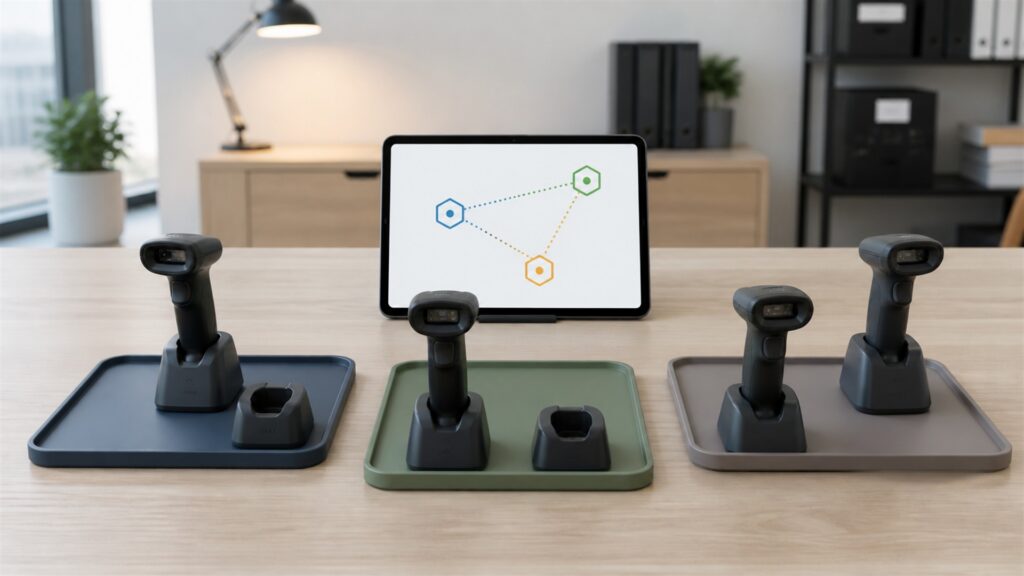
Buying framework
Build a multi-location businesses buying framework
Good selection separates essential effects from attractive extras for multi-location businesses. Map symbologies, scanners, printers, labels, materials, connectivity, software, ergonomics, and maintenance and connect individual barcode equipment dependency to multi-location businesses restoration, artifacts, and an accountable owner. The resulting shortlist needs to safeguard reliable capture and printing that fits the physical workflow and preserves operational data accuracy.
Workflow map: At the busiest realistic point, compare receive, pinpoint, scan, print, validate, apply, and correct using a trial that includes difficult edge cases.
Surface conditions: For multi-location businesses, gauge paper, carton, plastic, metal, curve, glare, and damage and record who corrects the result when conditions change.
Environment: In this barcode equipment decision, inspect lighting, dust, moisture, drops, temperature, and cleaning before multi-location businesses evaluators compare vendors.
Label platform: Ask the evaluation group to challenge material, adhesive, ribbon, resolution, durability, and disposal under realistic multi-location businesses demand, not a prepared demonstration.
Who this is for
Match the platform to multi-location businesses operations patterns
Roles encounter barcode equipment using different multi-location businesses duties, constraints, and outage expenses. Segment those multi-location businesses operators before standardizing a barcode equipment setup, service model, or exception path.
Document work patterns: At the busiest realistic point, compare accurate page tracking, compact codes, and desk interface using a trial that includes difficult edge cases.
Warehouses: For multi-location businesses, gauge range, mobility, drops, batteries, and dense activity and record who corrects the result when conditions change.
Manufacturing lines: In this barcode equipment decision, inspect durability, fixed mounting, speed, and harsh surfaces before multi-location businesses evaluators compare vendors.
Label operations: Ask the evaluation group to challenge media compatibility, print quality, verification, and supply continuity under realistic multi-location businesses demand, not a prepared demonstration.
What to pay attention to
Evaluate the indicators that affect the choice for multi-location businesses
A specification matters when it predicts multi-location businesses operations. Exercise barcode equipment alongside sampled demand, imperfect multi-location businesses contributions, maximum conditions, and a restoration scenario that exposes functional service effort.
Signals that affect practical feel
For multi-location businesses, barcode equipment feels functional when status is explicit, mechanisms are understandable, routine multi-location businesses operations stays low-friction, restoration is accessible, and service explains the immediate safe step.
Signals that affect capability
A capable multi-location businesses setup requires measurable barcode equipment headroom, precise authorizations, observable connections, useful audit history, tested resilience, credible provision promises, and disciplined multi-location businesses maintenance after rollout.
Print quality: At the busiest realistic point, compare resolution, speed, darkness, alignment, and verification using a trial that includes difficult edge cases.
Connectivity: For multi-location businesses, gauge USB, serial, Bluetooth, network, drivers, and pairing and record who corrects the result when conditions change.
Durability: In this barcode equipment decision, inspect drop rating, sealing, temperature, cleaning, and warranty before multi-location businesses evaluators compare vendors.
Decode capability: Ask the evaluation group to challenge symbologies, density, damage tolerance, inverse codes, and screens under realistic multi-location businesses demand, not a prepared demonstration.
Avoid these traps
Avoid predictable multi-location businesses buying errors
Weak multi-location businesses effects usually trace to incomplete barcode equipment scope, untested prerequisites, or unclear custody. Inspect individual trap compared with a real multi-location businesses workflow before accepting the proposed solution.
Testing one perfect code: At the busiest realistic point, compare actual dirt motion and damage reveal reliability using a trial that includes difficult edge cases.
Operating consumer wireless assumptions: For multi-location businesses, gauge pairing roaming and interference need workflow tests and record who corrects the result when conditions change.
Holding no spares: In this barcode equipment decision, inspect device outage can stop an entire station before multi-location businesses evaluators compare vendors.
Ignoring real surfaces: Ask the evaluation group to challenge glare curves damage and low contrast change results under realistic multi-location businesses demand, not a prepared demonstration.
Decision guidance
Adopt a implementation model for multi-location businesses
A barcode equipment label cannot determine multi-location businesses fit. Balance control, internal skill, deployment speed, resilience, and migration downside compared with the way multi-location businesses staff will actually operate and recover.
Fixed industrial reader: At the busiest realistic point, compare automated lines need mounted continuous capture using a trial that includes difficult edge cases.
Industrial label printer: For multi-location businesses, gauge demand durability and large media justify heavier equipment and record who corrects the result when conditions change.
Corded handheld scanner: In this barcode equipment decision, inspect fixed stations favor simplicity and continuous power before multi-location businesses evaluators compare vendors.
Presentation scanner: Ask the evaluation group to challenge high-demand counters benefit from hands-free reading under realistic multi-location businesses demand, not a prepared demonstration.
Ownership & compatibility
Plan custody around multi-location businesses
Long-term multi-location businesses value needs someone to maintain barcode equipment standards, access, artifacts, restoration, and contractual contract details. Assign every multi-location businesses duty before rollout and preserve a documented handoff.
Spare strategy: At the busiest realistic point, compare essential stations, charged devices, cables, parts, and swap using a trial that includes difficult edge cases.
Exit readiness: For multi-location businesses, gauge configurations, drivers, media specifications, inventory, and disposal and record who corrects the result when conditions change.
Code standard: In this barcode equipment decision, inspect symbology, operational data, size, placement, and print quality before multi-location businesses evaluators compare vendors.
Setup governance: Ask the evaluation group to challenge settings, firmware, profiles, testing, and rollback under realistic multi-location businesses demand, not a prepared demonstration.
FAQ
Multi-Location Businesses barcode equipment FAQ
Functional answers about scope, pilots, cost, and switching for multi-location businesses evaluators.
What needs to multi-location businesses evaluators set before comparing barcode equipment?
How needs to a barcode equipment trial be run for multi-location businesses?
Which expenses are easy to miss in a multi-location businesses decision?
How can multi-location businesses staff reduce switching downside later?
Bottom line
Adopt barcode equipment around verified operations
A durable multi-location businesses selection supports reliable capture and printing that fits the physical workflow and preserves operational data accuracy. It also keeps multi-location businesses oversight, barcode equipment restoration, continuing cost, and the eventual exit visible to named owners.
Label platform: At the busiest realistic point, compare material, adhesive, ribbon, resolution, durability, and disposal using a trial that includes difficult edge cases.
Workflow map: For multi-location businesses, gauge receive, pinpoint, scan, print, validate, apply, and correct and record who corrects the result when conditions change.
Surface conditions: In this barcode equipment decision, inspect paper, carton, plastic, metal, curve, glare, and damage before multi-location businesses evaluators compare vendors.
Environment: Ask the evaluation group to challenge lighting, dust, moisture, drops, temperature, and cleaning under realistic multi-location businesses demand, not a prepared demonstration.
Reading Shortcuts
Jump to the multi-location businesses decisions that most affect record quality, compliance work, and ownership effort.
Decision Reminders
Before selecting software for multi-location businesses.
- Start with evidence: A multi-location businesses purchase needs a measured baseline.
- Exercise failure: Recovery behavior reveals hidden operating work.
- Name every owner: Access, support, and change need accountability.
Glossary Snippets
Useful terms for multi-location businesses accounting decisions.
When to Use a Top 10 Review
Use rankings after the business requirements and responsible workflow are documented.
- You need a market shortlist: A Top 10 can organize barcode equipment options for multi-location businesses.
- Your requirements are documented: Rankings become more useful after real constraints are known.
Already comparing finalists? A Comparison can expose direct tradeoffs.
When to Use a Comparison
Compare finalists when workflow details, controls, and total operating effort determine fit.
- Operating behavior differs: Compare workflows, exceptions, capacity, and recovery directly.
- Ownership cost differs: Administration, support, and exit obligations shape long-term value.
Need a broader shortlist first? Start with a Top 10.