
How to Choose Beauty Devices for Professional Results
Evaluate professional-results device claims by endpoint, home-use authorization, dose limits, operator skill, evidence, maintenance, and the boundary with clinical procedures.
This guide tests professional-results claims against endpoints, operator skill, evidence, service, and strict home-versus-clinic boundaries.
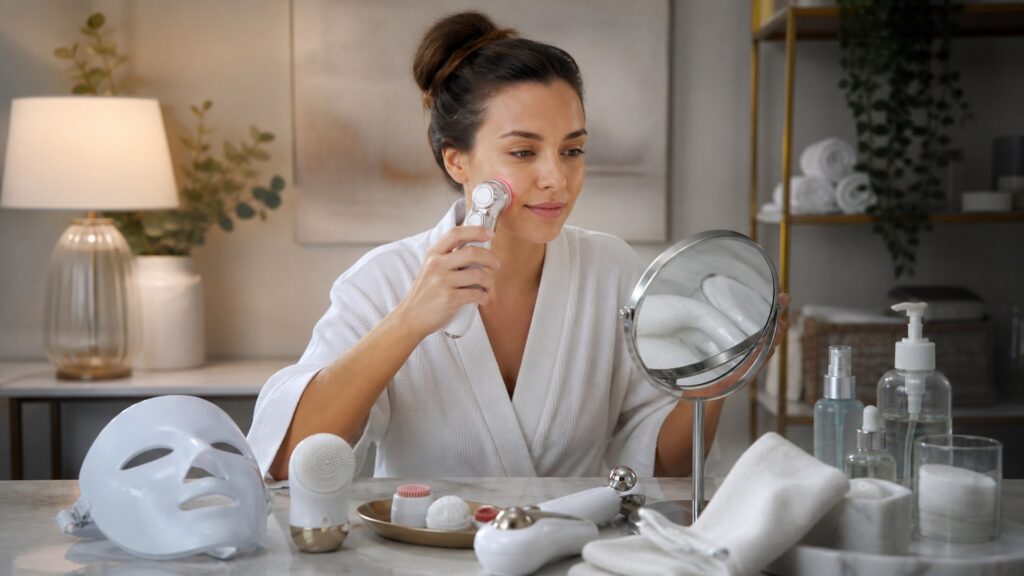
Buying framework
Name the professional comparator
A professional comparison needs a named procedure, matching endpoint, operator analysis, and home-use ceiling.
Name the professional comparator: Specify LED course, facial stimulation, RF wrinkle treatment, cleansing, hair removal, or another procedure. Salon quality alone is not measurable.
Compare endpoints, not hardware: Match concern, body zone, baseline severity, assessment method, time point, and maintenance. Similar-looking handpieces do not establish equivalent treatment.
Account for operator skill: Identify placement, movement, contact, monitoring, hygiene, diagnosis, and emergency decisions a professional provides that a consumer device must simplify.
Respect the home-use ceiling: Choose only authorized or appropriately labeled home devices. Do not seek imports, needles, higher heat, or undocumented settings to close the clinic gap.
Who should buy what
Match the product to the real use pattern
Maintenance, evidence, technique, low downtime, and clinic-level expectations lead to different choices.
The maintenance-after-clinic user: Coordinate the exact home device and schedule with the treating professional, including healing, products, contraindications, and the endpoint being maintained.
The evidence-driven premium buyer: Demand exact-model studies, relevant comparator, standardized outcomes, adverse-event reporting, and durability before paying for professional language.
The technique-focused user: Choose clear maps, contact feedback, timers, and training that reduce operator variation without encouraging unsupervised protocol invention.
The low-downtime user: Compare realistic home results against the value of gentler sessions and convenience rather than expecting procedure-level change without procedure-level risk.
The clinic-level-expectation user: Seek consultation. A clinician can explain energy, candidacy, downtime, complication management, and why a home device may or may not meet the goal.
What to pay attention to
Read specifications through the intended task
Comparator, authorization, dose, evidence, training, and procedure boundaries reveal real pro value.
Decision fit
Verify the exact claim, task, user, and delivery method.
Ownership system
Assess handling, cleaning, storage, replacements, and support.
Comparator definition: The seller should identify what professional service is being compared, under which outcome and timeline, rather than using clinic-inspired styling.
Home intended use: Verify exact model, user, area, indication, contraindications, and regulatory status; a professional sibling device cannot authorize the consumer model.
Dose and controls: Compare directed output, treatment map, contact, sensors, timer, lockouts, and maintenance—not hidden service menus or theoretical maximums.
Evidence design: Review baseline, users, sample size, comparator, assessor blinding, standardized photography, adherence, adverse events, follow-up, and commercial conflicts.
Training and support: Assess manuals, videos, live support, technique feedback, error recovery, replacement parts, warranty turnaround, and whether training stays available.
Professional boundary: Needles, tissue penetration, prescription adjuncts, anesthesia, clinician-only energy, and invasive procedures are exclusion criteria for home shopping.
Avoid these traps
Do not let a strong signal replace fit
Hardware styling and maximum power cannot reproduce professional oversight.
Equating metal weight with pro grade: Materials and stands can improve handling but do not establish output accuracy, clinical equivalence, evidence, or operator oversight.
Comparing maximum power: A professional system and home device may use different delivery, monitoring, users, and endpoints. Highest theoretical output is not a safe shopping target.
Copying a clinic protocol: Do not extend sessions, combine products, numb skin, or expose unapproved zones because an office treatment looks similar.
Using before-and-after marketing as evidence: Lighting, expression, selection, timing, and concurrent care can create dramatic cases. Look for standardized group-level outcomes.
Buying invasive lookalikes: RF microneedling and other penetrating procedures belong with qualified professionals. Consumer availability does not make them appropriate home tools.
Decision guidance
Choose the narrowest option that performs the job
Choose between maintenance, evidence, technique support, premium service, and clinical care.
For professional maintenance: Choose the model and timing your clinician supports, then follow home labeling rather than recreating the office protocol.
For stronger home evidence: Favor exact-device trials with relevant endpoints, transparent methods, adequate follow-up, and outcomes meaningful to the intended user.
For technique precision: Buy feedback, maps, timers, and support—not unlocked settings. A reproducible lower-complexity session can outperform a feature-rich device used inconsistently.
For a premium device: Price service, warranty, calibration or replacement, consumables, and maintenance time alongside the claimed result.
For procedure-level change: Purchase a consultation, not an unauthorized machine. Compare professional credentials, device indication, downtime, risk, aftercare, and alternatives.
Ownership & compatibility
Keep performance repeatable
Protocol records, performance drift, authorized service, and comparator reassessment preserve value.
Maintain protocol records: Keep exact settings, zones, supplies, dates, photographs, and professional instructions; do not let app updates silently change the course.
Inspect performance drift: Watch battery runtime, sensor behavior, temperature, output indicators, electrode wear, and errors. Stop rather than compensate with longer sessions.
Use authorized service: Retain serial and warranty records and avoid opening energy-delivery devices or using unofficial firmware, chargers, gels, cartridges, or heads.
Reassess the comparator: At the endpoint, compare result, time, adverse effects, and maintenance cost with the named professional alternative—not with marketing photographs.
FAQ
Beauty Devices for Professional Results FAQ
Answers distinguish home outcomes, pro-grade language, power, protocols, evidence, and clinic value.
Can an at-home beauty device deliver professional results?
What does professional grade mean on a beauty device?
Are professional devices more powerful than home devices?
Can I copy an in-office treatment schedule at home?
Is RF microneedling a professional version of home RF?
How can I judge professional-looking before-and-after photos?
Is a premium warranty part of professional quality?
Should a professional recommend my home device?
When is a clinic a better value than a home device?
Bottom line
Choose for the exact job
Professional language is useful only when translated into a measurable comparator.
Verify the fit: Match the exact claim, task, user, and context.
Control the routine: Follow the directed amount, schedule, handling, and exclusions.
Maintain the system: Clean, inspect, store, replace, and document as needed.
Reading Shortcuts
Move from intended job to verified ownership.
Decision Reminders
Specific fit matters more than category prestige.
- Verify the exact product: Do not transfer claims between models, materials, or mechanisms.
- Include full ownership: Time, cleaning, supplies, storage, and replacement count.
- Stop after faults: Do not improvise around damage, pain, or unclear labeling.
Glossary Snippets
Terms for this buying decision.
Using a Top 10
Rankings help after task and exclusions are fixed.
- Filter by job: Keep unlike mechanisms and tasks separate.
- Normalize the routine: Compare real time, contact, and supplies.
- Audit safety: Apply exact labeling and user exclusions.
- Price ownership: Include replacement and service.
Compare only finalists intended for the same job.
Comparing Finalists
Hold the task, user, routine, and endpoint steady.
- Match intended use: Record the exact job and user.
- Test realistic handling: Use normal time, amount, and contact.
- Inspect upkeep: Compare cleaning, drying, storage, and parts.
- Recheck value: Include time, supplies, support, and replacement.
Return to the framework when finalists solve different jobs.