
How to Choose Bicycles for Storage Space
Choose the bicycle and its storage arrangement together. A full-size bicycle on a suitable stand can be easier to live with than a folder if floor length is available; a genuinely compact fold becomes valuable when the only space is a cupboard or desk-side gap. Measure the route into that space before choosing either solution.
The important dimensions include handlebars, pedals, accessories and the room needed to turn or fold the bicycle. Lifting effort and daily retrieval matter just as much as a small catalog footprint. This guide helps you compare a normal bicycle, an approved storage rack and a folding design without buying a frame that is too small for the rider.
Buying framework
Measure the journey into storage
Begin at the entrance, not at the final parking spot. A bicycle must reach its space and leave it conveniently for every ride.
Map the narrowest access point: Measure door openings, landings, lifts and turns along the actual path. Note handrails and door swings that reduce maneuvering room even when the straight corridor looks wide enough.
Choose the allowed support method: Establish whether floor storage, drilling or a particular rack installation is possible. A wall solution is only a candidate when its mounting requirements and permission can be met.
Decide how much daily handling is acceptable: Count the lift, fold, wheel-removal or furniture-moving steps you would repeat. A technically smaller arrangement may be less useful if preparing the bicycle becomes a chore before every short trip.
Preserve rider fit: Keep the correct riding size as a requirement. A smaller frame may save little parked space because wheels, bars and pedals still define much of the envelope, while the riding position can become unsuitable.
Who this is for
Identify the constraint that actually limits you
Small homes do not all need folding bicycles. These situations point toward different combinations of bicycle and support.
Enough floor length but little lifting ability: Compare a full-size bicycle in an appropriate floor stand. It consumes floor area but can avoid the raised lift required by many wall arrangements.
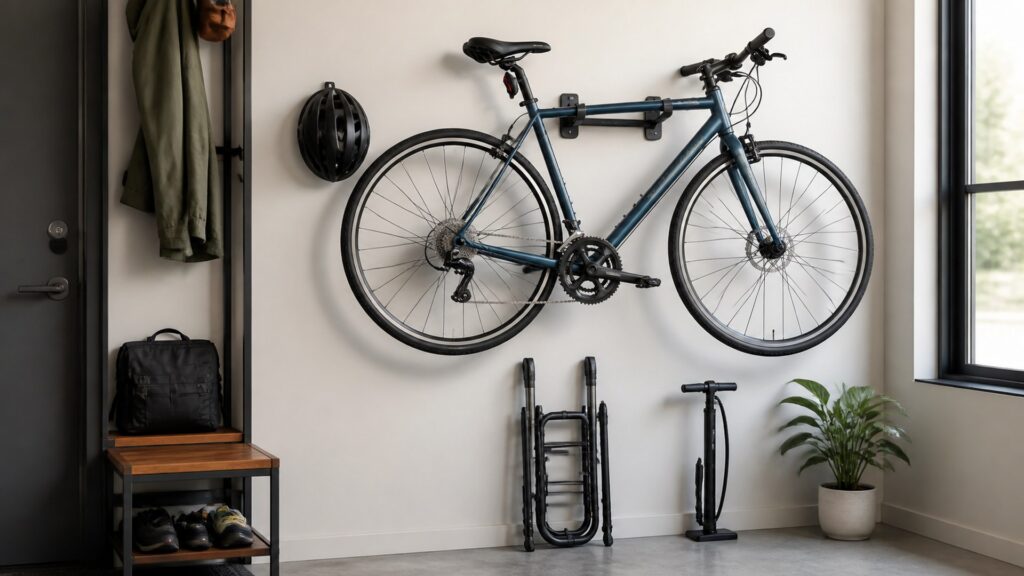
A usable wall and a clear approach: An approved rack may free useful floor space. Check how far bars and pedals project into the room, as well as the effort needed to engage the support.
A hard cupboard or office-space limit: A compact folding design deserves a physical trial in the measured space. Verify the final dimensions with the accessories and retention mechanism actually supplied.
Stairs on every journey: Prioritize a manageable carry shape and equipped weight. A folded bicycle may be shorter yet awkward to hold; compare the real carry task with a suitable full-size alternative.
What to pay attention to
Measure the equipped bicycle, not the frame
Bring a dimensioned sketch or photos of the access path to the seller. Compare these details before buying the bicycle or its rack.
Space through the whole journey
Measure the occupied space at doors, turns and the final position, including the movement needed to fold or pivot.
Handling and support compatibility
Verify the carrying task and the rack's approved contact points instead of comparing footprint or weight in isolation.
Total parked envelope: Record maximum length, height and width, including handlebars, pedals, racks and bags left attached. Mark the proposed footprint on the floor and leave the intended walking and door clearance.
Folded dimensions and orientation: Use all three dimensions for the exact model and configuration. A package that fits upright may not remain stable or accessible when turned to fit a lower shelf.
Equipped lifting mass: Compare the bicycle as you will move it, including guards, lock and any battery. Weight alone does not describe grip position or balance, so rehearse the permitted lift with a retailer's demonstration unit.
Rack interface and load rating: Check the storage maker's supported tire, rim or frame shapes and installation conditions. The bicycle's fit on the hook or cradle matters separately from whether its mass is below the published limit.
Working space for folding or pivoting: Allow room for wheels, bars and your hands throughout the movement. A small finished package does not prove the bicycle can be folded inside the space where it will live.
Cable and component clearance: Look for pressure on hoses, cables, brake parts or the derailleur in the stored position. Support the bicycle through approved contact points rather than wedging it against whichever component happens to touch first.
Avoid these traps
Avoid space savings that move the problem elsewhere
Storage marketing often describes a finished arrangement under ideal conditions. Rehearse the actual use before accepting those measurements.
Buying by wheel diameter alone: Smaller wheels can help a fold, but hinge layout, bars and accessories determine the final package. Compare complete dimensions instead of assuming all bicycles with the same wheel size store alike.
Ignoring wall projection: A vertical or horizontal rack can leave handlebars extending into a walkway. Draw the occupied volume at the relevant heights rather than treating a freed patch of floor as an empty room.
Assuming every wheel can use every hook: Rim shape, tire width and hook geometry affect contact. Get compatibility guidance from the relevant manufacturers, especially for unusual rims, rather than treating a rack's weight rating as universal approval.
Planning constant disassembly: Removing wheels may reduce the stored envelope, but adds handling, clean-up and correct reinstallation. Choose it only when you are comfortable following the actual retention and brake procedures every time.
Decision guidance
Try the full storage routine before ordering
Use the exact candidate or a representative demonstration wherever possible. A tape outline tests space; the bicycle itself tests handling and retrieval.
Floor length is available: Choose the correctly fitted conventional bicycle with a compatible stand if it leaves circulation clear. Keep the simpler arrangement when a fold would add cost without solving an actual size constraint.
A wall arrangement genuinely improves access: Select the bicycle and approved rack as a pair, then confirm suitable installation. Reject a setup that meets the rack rating but requires an unmanageable lift or blocks the route past it.
A fixed enclosure sets the limit: Pick a folding model only after checking the complete folded package and the space needed to create it. Accept the additional hinge checks and riding differences in exchange for fitting the required enclosure.
Nothing fits the access path: Reconsider the storage location or a different bicycle format before compromising riding size. The narrowest doorway or turn can eliminate a candidate regardless of how neatly it fits the final corner.
Ownership & compatibility
Make retrieval as practical as parking
The arrangement must keep working after the first demonstration. Include the support hardware and folding mechanisms in the care plan.
Inspect support and contact points: Follow the rack's inspection and fastening instructions, and check for rubbing or unexpected contact. A change of tires, bags or bicycle can require a fresh compatibility check rather than automatic reuse of the same position.
Maintain the fold as specified: Use the maker's hinge, latch and seatpost instructions. Do not improvise adjustments to remove play or force a reluctant latch; obtain service guidance for a mechanism that no longer operates normally.
Store a dry, stable bicycle: Provide a place for wet equipment to dry and prevent the parked bicycle from rolling or falling. Follow model-specific storage directions for batteries and other powered parts instead of leaving them wherever the folded package fits.
FAQ
Questions about fitting a bicycle into your home
These details often decide whether a compact arrangement stays convenient.
Is a folding bicycle always easier to carry?
Can I store a bicycle by one wheel?
Will turning the handlebars solve a narrow hallway?
Do removable pedals make a useful difference?
Should I remove an e-bike battery before lifting?
Can a freestanding rack avoid drilling?
Are larger-wheel folding bicycles a good compromise?
Can I keep the bicycle on a balcony?
What should I take to the retailer?
Bottom line
Choose the smallest arrangement you will actually use
The final test is a complete trip from the door to the storage spot and back. A compact specification is useful only when it fits that routine.
Approve the access route: Eliminate candidates that cannot pass the real doors and turns.
Approve handling and support: Match the lift, contact points and installation to both the bicycle and the user.
Approve daily retrieval: Choose the arrangement that preserves rider fit and can be repeated without rearranging the home.
Reading Shortcuts
Work through access measurements, support compatibility and the complete storage trial.
Decision Reminders
Measure the tightest point before measuring the final corner.
- 1: Include pedals and handlebars in the space outline.
- 2: Measure the folding movement as well as the finished package.
- 3: Test the lift at the planned support height.
- 4: Check the exact wheel or frame contact allowed by the rack.
Glossary Snippets
Terms used in rack instructions and folding specifications.
When to Use a Top 10 Review
Look for candidate lists that state complete folded size and carrying configuration.
- Hard size limit: Use all three dimensions to eliminate packages that cannot fit the enclosure.
- Daily access: Look for evidence about carry grip, fold retention and accessory effects.
References: Brompton folding bicycle selection guide; Feedback Sports storage compatibility questions; Trek owner manual: parking and storage. Checked October 6, 2026. This guide does not claim original product measurements. Use the Comparison to assess finalists.
When to Use a Comparison
Compare the bicycle and support arrangement as a combined purchase.
- Occupied volume: Include the stand base, wall projection and remaining circulation space.
- Complete routine: Compare the repeated steps from entering the home to riding away again.
For a selection of candidates, visit the Top 10.