
How to Choose Bicycles for Weather Changes
For riding through ordinary rain and seasonal temperature changes, start with a bicycle that accepts suitable tires, properly fitted full fenders and useful lights. Then check braking controls with the gloves you will wear and decide how the bicycle will be cleaned and stored. An all-weather label is much less useful than confirming those details on the exact build.
An equipped hybrid or fender-ready road bicycle will cover many paved routes; rough ground and persistent winter conditions can change the choice. This guide separates equipment that manages everyday exposure from claims that suggest weather no longer matters. Ice, flooding and severe conditions remain reasons to reconsider the ride itself.
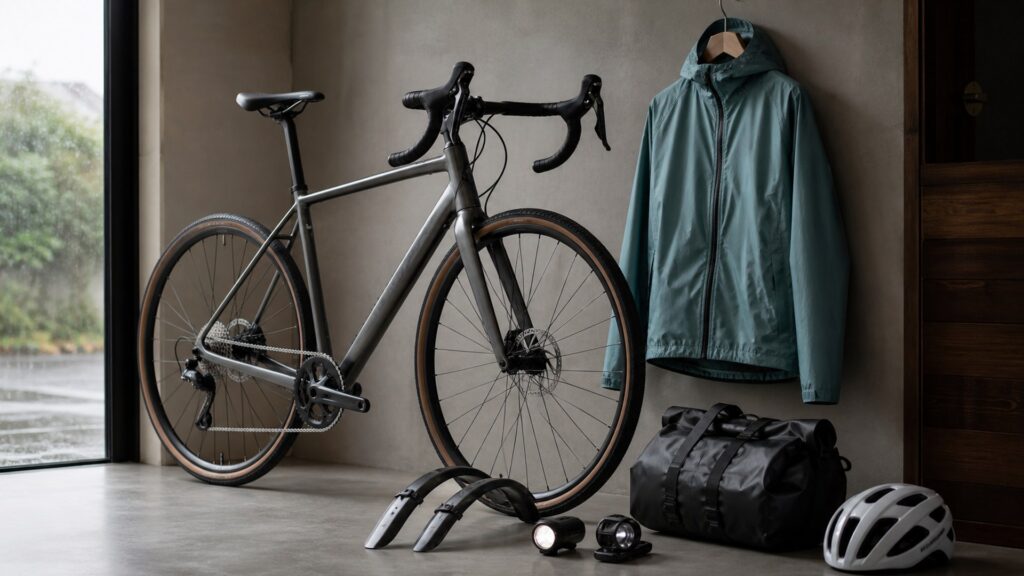
Buying framework
Buy for the conditions you actually ride in
A season is too broad to specify a bicycle. Describe the recurring exposure and the point at which you will choose another way to travel.
Separate rain from winter terrain: Wet pavement, loose debris, snow and ice are different conditions. Do not buy ordinary wet-road equipment expecting it to establish traction on every winter surface.
Plan protection as a fitted system: Choose the tires, fenders, lights and bags together. A frame with mounts still needs enough room and compatible hardware for all the equipment you intend to leave installed.
Make the controls usable in your clothing: Try braking and shifting with the gloves and sleeves expected on colder rides. Small buttons or an awkward lever reach may matter more than a higher component grade.
Choose a realistic exposure routine: Decide where a wet bicycle can be cleaned, dried and kept between rides. A purchase that needs care you cannot provide is a poor seasonal match, even when the frame itself is suitable.
Who this is for
Different seasons create different priorities
Choose the case that resembles the route, not the most dramatic forecast. The useful equipment changes with the exposure.
Rainy paved commuting: An equipped hybrid is a practical baseline. Full guards, reliable light mounting and accessible wear parts deserve attention before frame-weight savings.
Road riding across changing seasons: Look for an endurance road frame that supports the intended guard and tire combination. Verify the winter configuration at purchase instead of discovering that the summer build leaves no fitting room.
Rough paths with wet debris: An all-road or gravel bicycle may offer the tire options the route needs. Select a tread and casing for those surfaces rather than assuming a wider tire alone resolves traction.
Frequent ice or deep winter surfaces: Investigate a condition-specific setup and local route advice before choosing a bicycle. Ordinary rain equipment is not a guarantee of usable grip, and alternate transport may remain part of the plan.
What to pay attention to
Check the complete seasonal configuration
The useful specification is the assembled bicycle with its guards and accessories. Have the seller confirm these six details.
Control when conditions change
Assess tire suitability, brake access and visible lighting with the clothing and luggage used in the changing conditions.
Equipment exposure and recovery
Consider spray coverage, dirty wear parts and where the bicycle will dry between outings.
Tire clearance with guards installed: The frame's maximum tire claim may describe an unguarded configuration. Confirm the permitted combination and required clearance through the fork, brakes and frame, including the guard hardware.
Brake system and lever access: Compare predictable operation in the intended grip, pad availability and service needs. Trek's owner manual notes longer braking distances in wet weather; a disc-brake label does not remove the effect of road grip.
Tire construction and seasonal options: Ask which approved tires fit the wheels and suit the recurring surface. Tread appearance, width and marketing language alone do not establish wet or icy grip; avoid comparisons presented without relevant test conditions.
Light placement and operating time: Fit lights where bags and guards do not block them, and assess illumination appropriate to the route. Check runtime at the chosen mode rather than using the longest advertised runtime beside maximum brightness.
Glove room around controls: Try shifts and progressive brake operation in the intended gloves. Ensure accessories around the bars leave the normal controls accessible rather than crowding the position you need in cold conditions.
Serviceable wear parts: Identify the actual pads, chain and cables or hoses in the build. Readily available replacements and straightforward inspections are useful where grit and repeated wet use increase the care workload.
Avoid these traps
Avoid all-weather promises without conditions
A bicycle can be equipped for recurring exposure without being immune to it. These shortcuts confuse equipment benefits with guarantees.
Treating aluminum or carbon as maintenance-free: A corrosion-resistant frame material does not protect every bearing, fastener or drivetrain part. Inspect the complete bicycle and its care instructions rather than judging exposure needs from the main frame alone.
Assuming a short splash guard equals full coverage: Small guards can address a limited spray path. Compare the actual coverage needed for your feet, luggage and following riders before choosing the easiest accessory to clip on.
Buying the widest tire regardless of fit: A tire that barely clears the frame may leave insufficient room for the intended guard or debris. Use the documented combination instead of turning nominal width into the only selection rule.
Reading water resistance as permission to soak electronics: Rain-use approval does not automatically allow immersion or pressure washing. For assisted bicycles and powered accessories, consult their specific manuals rather than extending one product's rating to the entire build.
Decision guidance
Choose the seasonal package, not just the frame
Compare candidates with the equipment that will remain fitted during the difficult months. Price that configuration before deciding whether a bare sporting build is good value.
Mostly paved trips in frequent rain: Favor an equipped hybrid that already accommodates the required guards and lights. Accept additional hardware when it removes repeated fitting work and suits the actual journey.
Road position is the priority: Choose a fender-ready road model after the seller confirms the intended tire combination. A model without the needed clearance is not rescued by a more prestigious drivetrain.
Rough surfaces drive the tire choice: Select an all-road or gravel candidate with the necessary approved clearance. Evaluate its road manners as well, since the roughest section should influence the purchase without hiding the rest of the route.
Conditions exceed ordinary wet riding: Seek a genuinely appropriate seasonal tire and bicycle setup or change the travel plan. No general buying guide can certify a particular icy, flooded or otherwise hazardous route as rideable.
Ownership & compatibility
Allow for the work after a wet ride
Repeated exposure makes the care routine part of the purchase. Choose a configuration that you or a local shop can service consistently.
Clean without forcing water into components: Follow the bicycle's washing instructions and dry it as directed. Trek warns against high-pressure washing; use model-specific guidance for electrical parts rather than assuming that more water pressure means better cleaning.
Match chain care to conditions: Use the specified cleaning and lubrication method, removing excess as instructed. A wet-use lubricant still needs attention after dirty rides and should never contaminate braking surfaces.
Inspect guards and braking parts: Check for loose stays, rubbing and visible wear according to the relevant manuals. Have unfamiliar brake faults assessed before the next outing, and keep the planned inspection routine realistic during the busiest riding months.
FAQ
Questions about seasonal equipment
Resolve the remaining fitting and care details before buying a second configuration.
Do I need a separate winter bicycle?
Are disc brakes always the best wet-weather choice?
Can clip-on fenders work?
Should I change tires for every forecast?
Does rain mean I need a suspension fork?
Can I keep the bicycle under a cover outside?
What changes for an electric bicycle?
Are two wheelsets a convenient seasonal solution?
How should I compare wet-grip claims?
Bottom line
Buy verified seasonal capability
The useful upgrade is a bicycle that accepts the equipment your weather requires. Keep route judgment separate from the capability of the hardware.
Approve the combination: Confirm tires, guards and lighting fit together before placing the order.
Approve the control setup: Try the intended gloves and preserve access to brakes and shifts.
Approve the care plan: Include cleaning space, wear-part support and an alternative for unsuitable conditions.
Reading Shortcuts
Locate the seasonal setup, exposure tradeoffs and configuration choices.
Decision Reminders
Inspect the fully equipped bicycle rather than the bare frame.
- 1: Specify the tire and fender together.
- 2: Bring the gloves you plan to ride in.
- 3: Check lamp placement around loaded bags.
- 4: Identify the local source for replacement brake pads.
Glossary Snippets
Terms that distinguish control, clearance and care.
When to Use a Top 10 Review
Search for builds with documented guard fit and seasonal equipment options.
- Recurring weather: Separate wet-pavement candidates from specialist winter-surface designs.
- Fitting evidence: Look for explicit accessory compatibility rather than an all-weather slogan.
References: Trek owner manual: weather, braking and cleaning; Trek fender and rack compatibility (listed model years); Trek electric bicycle questions. Checked October 6, 2026. This guide does not claim original product measurements. Use the Comparison to assess finalists.
When to Use a Comparison
Compare candidates in the actual wet-season configuration.
- Ready for the season: Include guards, lighting and the selected tires in the quoted build.
- Care burden: Compare access to consumables and the work required after repeated exposure.
For a selection of candidates, visit the Top 10.