
How to Choose Brake Components for Brake Components Preventive Maintenance
Preventive brake maintenance is not replacing parts at a universal mileage. It is inspecting every relevant position, comparing measurements with exact limits, recognizing abnormal wear, maintaining approved movement and hydraulics, and scheduling service with enough margin.
Use consistent methods and records so each inspection shows what changed. New symptoms, corrosion, severe trips, storage, or a component approaching its limit should shorten the plan rather than be averaged into an optimistic forecast.
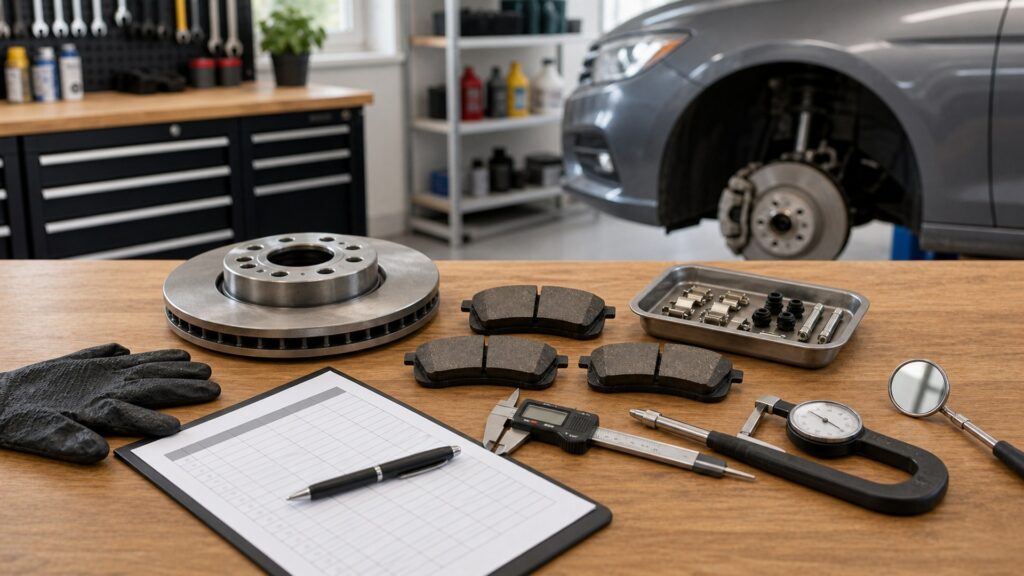
Buying framework
Measure trends before limits are reached
Preventive brake maintenance is scheduled inspection, cleaning or lubrication only where specified, fluid and parking-brake care, and planned replacement based on actual wear—not automatic parts swapping.
Set inspection triggers: Use manufacturer time, mileage, condition, warning, and severe-use guidance. Add checks before towing, mountain travel, seasonal storage, wheel or tire service, and after water, road salt, impact, overheating, pedal change, noise, pull, or vibration.
Create a position map: Measure each pad or shoe and rotor or drum, not just the easiest visible surface. Record inner, outer, left, right, leading, trailing, wear indicators, runout where required, and remaining margin to the controlling limit.
Inspect movement and protection: Check slides, pistons, boots, abutments, springs, pins, adjusters, shields, hoses, lines, fittings, bleeders, wheel cylinders, parking cables or actuators, sensors, hubs, bearings, and mounting faces under the vehicle procedure.
Service only approved points: Use specified cleaning, corrosion removal, lubrication, hardware replacement, fluid, bleeding, parking adjustment, and electronic mode. Keep products off friction surfaces and avoid compressed-air dust dispersal or improvised chemical treatment.
Forecast replacement timing: Use current and prior measurements, duty cycle, climate, axle balance, upcoming trips, parts lead time, and downtime. Schedule service with adequate margin; never extend a component past its specified limit because a trend line predicts more miles.
Who this is for
Preventive priorities follow use and environment
Short trips, towing, storage, corrosion, and regenerative braking create different inspection patterns.
Urban short-trip drivers: Frequent braking and limited drying can produce wear, rust, and rear-brake issues. Track pad position, slide movement, parking-brake cycles, fluid time, and whether a hybrid or EV's regeneration changes friction-brake use.
Mountain and towing users: Inspect before demanding trips and follow severe-duty guidance. Pay attention to friction thickness, rotor or drum heat condition, fluid specification, hoses, tire grip, trailer brakes separately, and signs of fade, odor, cracking, or discoloration.
Rust-belt and coastal owners: Frequent wheel-off inspection may be valuable where road salt attacks abutments, backing plates, shields, parking cables, lines, fittings, and hub faces. Use approved corrosion protection and keep drainage and rubber components intact.
Low-mileage and stored vehicles: Calendar age, moisture, fluid, rotor rust, seized slides or cables, tire condition, and pests can matter more than pad mileage. Follow storage guidance and perform a controlled recommissioning inspection before road use.
Hybrid and electric vehicle owners: Regenerative braking can reduce some friction use but does not eliminate pads, rotors, fluid, parking brakes, hoses, or corrosion. Follow manufacturer inspection and service guidance and periodically verify smooth friction-brake operation.
What to pay attention to
Measurements and conditions worth trending
A preventive record should show remaining material, component health, and whether wear is balanced across the system.
Wear & Condition
Position measurements, limits, rotor or drum surfaces, caliper motion, hardware, corrosion, hydraulics, and warnings.
Timing & Procedure
Inspection triggers, duty cycle, trend records, service margin, approved cleaning, fluid, electronics, and verification.
Pad and shoe thickness: Measure friction material according to the service method, excluding backing plate where specified. Record every position, taper, cracking, glazing, edge lift, contamination, and indicator condition; one outer pad cannot represent the axle.
Rotor thickness and condition: Measure at the specified number and location of points, avoiding the lip, and compare the lowest valid value with minimum thickness and service rules. Also inspect scoring, cracks, heat spots, corrosion bands, deposits, and runout.
Drum diameter and hardware: Measure inside diameter using the prescribed method and compare with discard or machining limits. Inspect shoe orientation, wheel cylinders, springs, anchors, adjusters, backing-plate contact pads, parking cables, and contamination before deciding service timing.
Caliper, slide, and boot condition: Verify permitted movement, pad support, guide condition, piston or parking mechanism, dust boots, leakage, and corrosion. Use only specified lubricant and locations; excess or incompatible product can reach friction surfaces or damage rubber.
Hoses, lines, and fluid: Inspect cracks, swelling, chafing, routing, clips, corrosion, fittings, leaks, and fluid level and specification. Follow time or condition guidance for fluid service and the exact bleeding sequence, including electronic functions where required.
Wear indicators and warnings: Mechanical tabs, electronic sensors, dashboard messages, parking-brake faults, and fluid warnings are prompts for diagnosis, not measurements of every component. Confirm the actual wear and system condition before ordering parts or clearing a message.
Measurement trend and margin: Store date, mileage, position, tool, reading, limit, duty change, and photographs. Estimate service windows conservatively, but treat new symptoms, abnormal wear, upcoming severe use, and any minimum specification as overriding the forecast.
Avoid these traps
Preventive habits that create damage or false confidence
More frequent service is not better when the inspection is incomplete or the procedure is wrong.
Checking only visible outer pads: Inner pads can wear differently because of piston, slide, abutment, hose, or corrosion faults. Use the vehicle's inspection method and measure all required positions before estimating remaining life.
Replacing from mileage alone: Brake life varies with driver, route, load, climate, regeneration, parking, hardware, and component condition. Mileage can schedule inspection, but measured limits, damage, hydraulic faults, and symptoms determine the repair.
Lubricating every contact: Some locations require specific lubricant, some must remain dry, and friction surfaces must stay clean. Follow exact product compatibility and quantity; excess grease can collect debris, swell rubber, alter torque, or contaminate pads.
Treating fluid color as the only test: Color does not replace the specified time interval, fluid standard, contamination diagnosis, moisture or boiling-point method where approved, leak inspection, and bleeding procedure. Use vehicle guidance and uncontaminated sealed fluid.
Projecting wear past the limit: A trend estimate is a planning tool, not authorization to run material or rotors below specification. Add margin for trips, measurement uncertainty, uneven wear, parts delays, and a changed duty cycle.
Decision guidance
Convert inspection findings into a service window
Preventive maintenance should schedule a complete, evidence-based repair before urgency removes choices.
If wear is even with generous margin: Record all positions and related conditions, follow any approved cleaning or lubrication, and schedule the next inspection from manufacturer guidance and measured trend. Do not disturb hydraulics or replace serviceable parts without a reason.
If one position is advancing faster: Shorten the interval and diagnose slides, piston, abutment, hose, mounting, parking brake, or other relevant cause. Do not average the readings or order only the thinnest pad's replacement.
If a severe trip is approaching: Inspect with enough time to obtain parts and complete bedding before towing, mountains, or long travel. Follow vehicle guidance for brakes, tires, fluid, loads, and trailer systems; replace components when margin is insufficient.
If corrosion is progressing: Address approved cleanup, hardware, boots, shields, lines, fittings, parking components, and hub surfaces before movement or sealing is lost. Plan professional line or fastener work when corrosion exceeds home-garage capability.
If a warning or symptom appears: Move from preventive scheduling to diagnosis. Noise, vibration, pull, heat, odor, leak, soft pedal, warning lamp, or parking-brake fault can require immediate inspection regardless of the previous trend.
Ownership & compatibility
Make each inspection comparable
Consistent measurement methods and position labels turn scattered observations into useful trends.
Use one inspection sheet: Record VIN, axle, wheel position, date, mileage, duty, pad or shoe readings, rotor or drum readings, limits, runout, hardware, calipers, hoses, lines, fluid, parking brake, warnings, photos, and next action.
Maintain the measuring tools: Use suitable gauges, micrometers, dial indicators, and torque tools as required; keep contact faces clean, understand resolution and method, and verify or calibrate tools under their instructions. Poor technique can create false trends.
Coordinate with tire and wheel service: Wheel removal creates inspection access, but wheel torque, hub cleanliness, tire condition, and safe support remain critical. Ask for brake measurements rather than vague percentages and retain the actual readings by position.
Update after operating changes: New driver, commute, towing, mountain travel, storage, wheels, tires, regenerative settings, or parking habits can change wear. Reset the inspection interval from new evidence instead of extending the old forecast automatically.
FAQ
Preventive brake maintenance FAQ
Answers about inspection intervals, measurements, fluid, lubrication, corrosion, EVs, and replacement timing.
How often should brake components be inspected?
Can I estimate brake life from pad thickness?
Why should every pad position be measured?
What rotor information belongs in a maintenance record?
Should brake fluid be replaced whenever pads are changed?
Where should brake lubricant be applied?
Do EV regenerative brakes still need inspection?
What should I do before a mountain or towing trip?
When does preventive inspection become an immediate repair?
Bottom line
Preventive maintenance is measurement plus timing
Inspect the complete system consistently, record the trend, and schedule supported service before limits, trips, corrosion, or symptoms remove the planning margin.
Use defined triggers: Combine manufacturer guidance with duty, climate, storage, and symptoms.
Measure every position: Track friction, rotor or drum, hardware, hydraulics, and parking brake.
Service approved points: Use exact cleaners, lubricants, fluid, hardware, torque, and electronics.
Preserve margin: Plan parts, testing, and bedding before a severe trip or wear limit.
Reading Shortcuts
Confirm measurements before ordering.
Decision Reminders
Checks to complete before committing.
- Confirm application: Cross-check vehicle and installed-system evidence.
- Diagnose first: Let abnormal wear guide inspection.
- Keep axle consistency: Use the specified paired-service scope.
- Follow procedures: Respect torque, fluid, electronics, and bedding.
- Protect friction: Prevent unsuitable chemical or fluid contact.
- Verify release: Confirm pedal, leaks, warnings, and operation.
Glossary Snippets
Terms used in this decision.
When to Use a Top 10 Review
Use rankings after fitment and repair scope are documented.
- Fitment confirmed: Filter with codes and measurements.
- Scope identified: Compare the complete required repair.
- Evidence visible: Rank construction, hardware, and support.
- Procedure covered: Include tools, fluid, testing, and records.
Already down to 2–3 options? A Comparison is usually faster.
When to Use a Comparison
Compare finalists for the same verified application.
- Application data: Match each dimension and interface.
- Included content: List hardware, sensors, and companion parts.
- Service evidence: Review instructions, traceability, and warranty.
- Installed outcome: Price labor, consumables, testing, and downtime.
Still building a shortlist? Start with a Top 10.