
How to Choose Brake Components for Daily Driving
Brake components are deceptively simple to shop for and surprisingly easy to mismatch. Pads, rotors, fluid, and hardware span a wide range of compounds, designs, and intended use cases—from light commuter duty to towing, mountain descents, and spirited driving. For daily driving, the tradeoffs between bite, noise, dust, longevity, and heat tolerance matter far more than the headline numbers printed on the box.
This buying guide explains how the major brake components work together, which specifications meaningfully affect everyday stops, and where the real differences hide between options that look nearly identical on a shelf. By the end, readers will understand which compounds, rotor styles, fluids, and hardware choices fit their vehicle, climate, and driving habits.
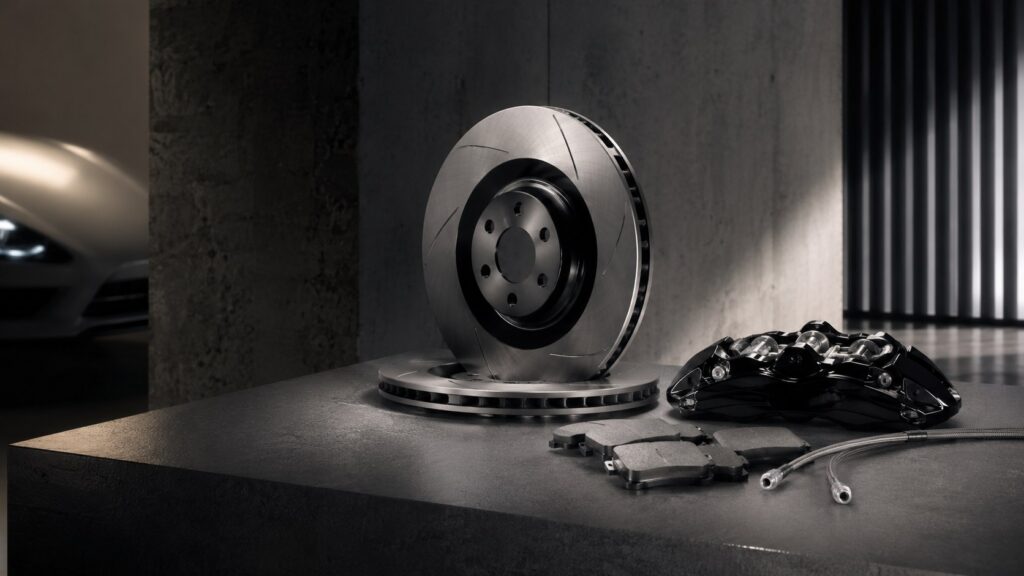
Buying framework
How to think about choosing brake components for daily driving
Brake components look similar on the shelf but behave very differently on the road. The right setup for daily driving balances compound choice, rotor design, fluid condition, and hardware quality—not headline performance numbers. Use this framework to clarify what actually shapes braking feel and longevity before narrowing your options.
Compound choice drives daily satisfaction: Friction material (ceramic, semi-metallic, low-metallic, or NAO) determines bite, noise, dust, and rotor wear far more than the brand name on the box. The wrong compound for your conditions is the most common reason drivers feel let down after a brake service.
Rotors are not interchangeable: Vented, slotted, drilled, and coated rotors each behave differently under heat and corrosion. For daily driving, plain or coated vented rotors paired with the right pad usually outperform aggressive-looking alternatives.
Brake fluid is a wear item: DOT spec, age, and absorbed moisture quietly shape pedal feel and reliability. A premium pad on neglected fluid often feels worse than a midrange pad on fresh, properly bled fluid.
Hardware matters more than people think: Caliper guide pins, anti-rattle clips, abutment shims, and brake hoses determine whether new pads and rotors actually perform like they should. Skipping these is where noise, uneven wear, and dragging brakes come from.
Match the system to the vehicle, not a wish list: Bigger isn’t better. Oversized rotors or aggressive compounds can hurt feel, raise noise, and overshoot the brake bias the manufacturer engineered for your wheel, tire, and suspension setup.
Who this is for
Pick brake components that match how you actually drive
Brake components perform differently depending on the loads, speeds, and environments they see day to day. These profiles help clarify which compound, rotor, and service approach fits your driving so you can focus on the choices that matter and ignore the marketing that doesn’t.
Commuters & city drivers: prioritize quiet operation, low dust, and a predictable, easy-to-modulate pedal. Stop-and-go traffic means thousands of low-energy applications, where smooth bite and clean wheels matter far more than peak grip on a single hard stop.
Highway & mixed-use drivers: prioritize fade resistance, consistent feel from cold to warm, and steady wear. Highway speeds load brakes harder on off-ramps and emergency stops, so heat capacity and stable friction become more important than soft-pedal smoothness.
Hilly terrain, towing, or roof loads: prioritize heat tolerance, rotor mass, and pad temperature range. Long descents and added weight push standard components past their comfort zone, where vented rotors, mid-temp compounds, and serviceable hardware really pay off.
Cold-climate or salt-belt drivers: prioritize corrosion protection and consistent cold bite. Coated rotors, stainless hardware, and compounds that warm up quickly help avoid the rust-bloomed surfaces and morning squeal that plague salt-state daily drivers each spring.
Higher-mileage budget-conscious owners: prioritize cost per mile, hardware kits, and predictable replacement intervals. Choosing balanced, long-wearing components and refreshing small parts at each service usually beats chasing the cheapest pad or rotor in isolation.
What to pay attention to
Which brake component specs actually matter
Brake parts spec sheets emphasize peak numbers and exotic-sounding features, but daily driving rewards a different set of details. What matters in everyday use is how the system feels under your foot and how it holds up over thousands of stops, not how it looks on paper. These are the specifications that translate most directly into real-world braking.
Specs that affect feel
Pad compound, fluid quality, hardware condition, and rotor finish determine pedal modulation, bite, and noise.
Specs that affect capability
Rotor design, temperature range, and material composition determine how brakes hold up under heat, load, and repeated use.
Friction compound: Ceramic, semi-metallic, low-metallic, and NAO compounds each trade dust, noise, bite, and rotor wear differently. The compound shapes daily experience more than any other single choice on the parts list.
Operating temperature range: Pads are designed to work within a temperature window. A track-oriented compound is often worse on a commuter car because it never warms up, while a soft daily compound can fade fast on long mountain descents.
Rotor design: Vented rotors shed heat better than solid ones; slots help degas the pad face; drilled holes can crack under thermal stress; coatings primarily fight corrosion in the hat and outer edge. Choose the design for the work, not for looks.
Brake fluid spec and moisture content: DOT 3, DOT 4, and DOT 5.1 differ in boiling point and viscosity. Fluid absorbs water steadily over time, which drops the boiling point dramatically—so age and service history matter more than the bottle label.
Hardware and hoses: Caliper guide pins, abutment clips, and rubber brake hoses are easy to overlook. Sticky pins or swollen hoses produce uneven wear and an inconsistent pedal that no premium pad can fix.
Often overhyped: Drilled rotor patterns, exotic pad marketing, and headline “peak temperature” ratings rarely translate to better daily driving—and sometimes work against it.
Avoid these traps
Common mistakes people make when buying brake components
Most disappointment with a brake job traces back to mismatching components to the actual driving environment. These are the assumptions that lead to noise, premature wear, and unhappy pedal feel—and how to think about them more clearly before deciding.
Buying performance pads for a daily driver: Track or autocross compounds need heat to perform. On a commute they’re noisier, dustier, and often less predictable than a properly chosen street pad, because they rarely reach their intended operating window.
Pairing a new pad with a worn or scored rotor: Old rotor surfaces keep new pads from bedding evenly, causing vibration, glazing, and noise. Skipping rotor service to save money usually shortens the new pad’s life and feel.
Treating brake fluid as permanent: Brake fluid absorbs moisture from the moment the bottle opens and continues silently in the reservoir. Old fluid lowers the boiling point, softens the pedal, and corrodes internal components in calipers, cylinders, and ABS hardware.
Choosing rotors by appearance: Cross-drilled and slotted patterns photograph well but offer little benefit on most daily drivers. Drilled rotors can crack around the holes under repeated thermal cycling, while plain or coated vented rotors usually deliver better long-term results.
Reusing old hardware: Anti-rattle clips, shims, and guide pin boots all have a service life. Reusing them invites noise, uneven pad wear, and sticky calipers that look and feel like a “bad” pad or rotor when the parts themselves are fine.
Ignoring the rear of the system: Most braking happens up front, but neglected rear pads, frozen rear calipers, or seized parking brake mechanisms cause pedal complaints, uneven wear, and ABS faults that often get blamed on the front brakes.
Decision guidance
Which type of brake setup is right for daily driving
The right brake setup depends more on how and where you drive than on labels, badges, or aggressive-looking parts. Use this guidance to align compound, rotor, and service choices with your real workload, not the occasional worst case you might encounter.
Choose a ceramic or premium NAO pad if: your driving is mostly city, suburban, or mixed light highway, and you value low noise, low dust, and clean wheels. These compounds shine in stop-and-go conditions and behave predictably from the first cold stop of the morning.
Choose a semi-metallic or low-metallic pad if: you regularly carry loads, tow occasionally, drive in hilly terrain, or live in a warm climate where pad temperatures climb on long descents. They give up some quietness but tolerate heat far better than most ceramics.
Choose plain or coated vented rotors paired with the right pad if: you’re not tracking the car. They’re balanced, predictable, and almost always the right answer for daily duty—save slotted or drilled upgrades for specific corrosion, aesthetic, or sustained-heat needs.
Refresh fluid and hardware at every pad service if: you want brakes that actually feel new. Fresh fluid restores firm pedal feel, and a hardware kit prevents the noise and uneven-wear complaints that tend to show up months after an otherwise good install.
When brake components aren’t the issue: if pulsation, drag, or pulling persists after new pads and rotors, suspect sticky caliper slides, a collapsed flexible hose, or worn suspension and wheel bearing components rather than chasing further pad upgrades.
Ownership & compatibility
What you’re really buying into long term
Brake components are part of a larger system that shapes how the vehicle stops over years of service. Long-term ownership is defined by how parts wear together, how fluid and hardware are maintained, and how cleanly aftermarket choices integrate with the design the vehicle was engineered around.
Vehicle-specific design constraints: Brake components are engineered around a specific rotor diameter, caliper piston count, and front-to-rear bias. Parts that respect those constraints integrate cleanly, while oversized or aggressive aftermarket choices can disrupt the balance the car was designed around.
Pad and rotor wear pairing: Pads and rotors wear together, and aggressive compounds chew rotors faster while gentle compounds can glaze hardened rotor surfaces. Replacement intervals line up more predictably when both are chosen from the same intended use range.
Hardware and consumables: Anti-rattle clips, abutment shims, caliper boots, and slide-pin grease are inexpensive but easy to skip. Including them at each service is what separates a quiet, long-lasting brake job from one that drifts toward noise and uneven wear within a few months.
Fluid lifecycle: Brake fluid is a true maintenance item with a real interval—typically two to three years for DOT 3 or DOT 4 in daily use. Planning for periodic fluid replacement keeps moisture low and protects calipers, master cylinders, and ABS components from internal corrosion.
Long-term cost considerations: The cheapest pad rarely produces the lowest cost per mile, especially if it shortens rotor life or demands earlier reservicing. Mid-tier components combined with proper hardware and fluid service usually deliver the lowest total ownership cost over years of driving.
FAQ
Brake components buying guide FAQ
Quick answers to the questions people ask most when choosing brake components for daily driving—focused on real-world use, not spec-sheet hype.
Do I need ceramic pads, or are semi-metallic pads fine?
What’s the difference between DOT 3, DOT 4, and DOT 5.1 brake fluid?
Do I really need to replace rotors every time I replace pads?
Are cross-drilled and slotted rotors worth it for daily driving?
How often should brake fluid be replaced?
Why are my new brakes noisy?
Can I mix brake pad brands between front and rear?
Should I do brake pads myself or pay a shop?
How long should brake components last?
Bottom line
The simplest way to pick the right brake components for daily driving
Most modern brake components can stop the car. Long-term satisfaction comes from choosing parts that match how you actually drive, refreshing the supporting hardware and fluid, and letting the system feel quiet, firm, and predictable every time you press the pedal.
If you want the easiest daily driving experience: choose a quality ceramic or premium NAO pad with plain vented or coated rotors, refresh hardware, and bleed the fluid. That combination delivers quiet, predictable braking for the vast majority of street use.
If you carry weight or drive demanding routes: step up to a semi-metallic or low-metallic compound and confirm your rotor is rated for the heat load. Pair with fresh fluid that handles a higher boiling point.
If you live where roads are salted: prioritize coated rotors, stainless hardware kits, and compounds that warm up quickly so morning braking feels consistent through winter.
If your pedal feels soft or inconsistent: suspect fluid age, a swollen flexible hose, or sticky caliper slides before assuming new pads will fix it. Hydraulic and mechanical issues mimic worn pads more often than people expect.
Final check: picture how and where you drive most—city traffic, highway commuting, hills, or mixed loads—and match the compound, rotor, and service interval to that pattern. The right setup for daily driving is the one you stop noticing.
Reading Shortcuts
Jump to the sections that matter most for choosing the right brake components.
Decision Reminders
A quick checklist before you commit to a brake parts package.
- Match compound to conditions: ceramic for city quiet, semi-metallic for heat and load—not the other way around.
- Don’t reuse worn rotors: old surfaces stop new pads from bedding evenly and shorten their life.
- Treat fluid as a wear item: refresh every two to three years; moisture quietly destroys pedal feel.
- Use the hardware kit: anti-rattle clips and fresh slide grease prevent the noise that gets blamed on pads.
- Service both axles together: rear neglect causes complaints that look like front-end problems.
- Respect the vehicle’s design: oversized rotors and aggressive compounds can disrupt OEM brake bias.
Glossary Snippets
Quick translations for the terms that confuse brake buyers most.
When to Use a Top 10 Review
This format is best when you want a fast, informed shortlist before narrowing your brake components choice.
- You’re still orienting yourself: A Top 10 translates compound names, rotor styles, and fluid specs into practical use cases.
- You want a broad scan of the field: It shows how different pad types, rotor designs, and price tiers stack up across daily driving.
- You want “best for” framing: Rankings like Best Overall, Best Low-Dust, or Best for Heat align components with common needs.
- You’re comparing categories, not single parts: Useful for understanding how full brake setups behave together, not just one part in isolation.
If you’re already down to two or three options, a Comparison usually gets you to a decision faster.
When to Use a Comparison
Use this format once you’ve narrowed the field and want the clearest tradeoffs.
- You’re down to 2–3 finalists: side-by-side views surface meaningful differences faster than full reviews.
- You care about real-world feel: pedal modulation, noise, dust, and bite become obvious in head-to-head comparisons.
- You want a category winner: comparisons highlight strengths across quietness, heat tolerance, longevity, and value.
- You need to decide efficiently: this is the shortest path from shortlist to confident choice.
Earlier in the process? Start with a Top 10 to identify the right brake category first.