
How to Choose Brake Components for Warranty and Service Life
Brake warranty and brake service life are different questions. Warranty defines a remedy for eligible conditions; service life depends on friction wear, heat, corrosion, driving, storage, installation, maintenance, and the health of related components.
Read the terms before purchase, choose parts for the actual operating environment, and create the claim record during installation. Track measurements and use over time, and contact the administrator before failed parts or packaging are altered or discarded.
Buying framework
Separate coverage from durability
Warranty is a contract remedy for eligible defects; service life is the result of friction wear, heat, corrosion, use, installation, maintenance, and related system condition. They require different evidence.
Define the operating environment: Record vehicle, axle, mileage, commute, towing, mountains, load, climate, road salt, storage, wheel design, driving style, parking-brake use, and maintenance. These conditions shape wear and corrosion more than a universal mileage promise.
Read the warranty before purchase: Identify duration, mileage, eligible buyer and vehicle, authorized seller, transfer, wear, noise, corrosion, commercial or competition exclusions, installation duties, proof, return authorization, shipping, labor, core, and remedy limits.
Evaluate service-life evidence: Compare fitment, friction and rotor or drum construction, coating, hardware, caliper or hose condition, supplier documentation, intended use, maintenance, and support. Avoid treating a lifetime warranty as a lifetime wear prediction.
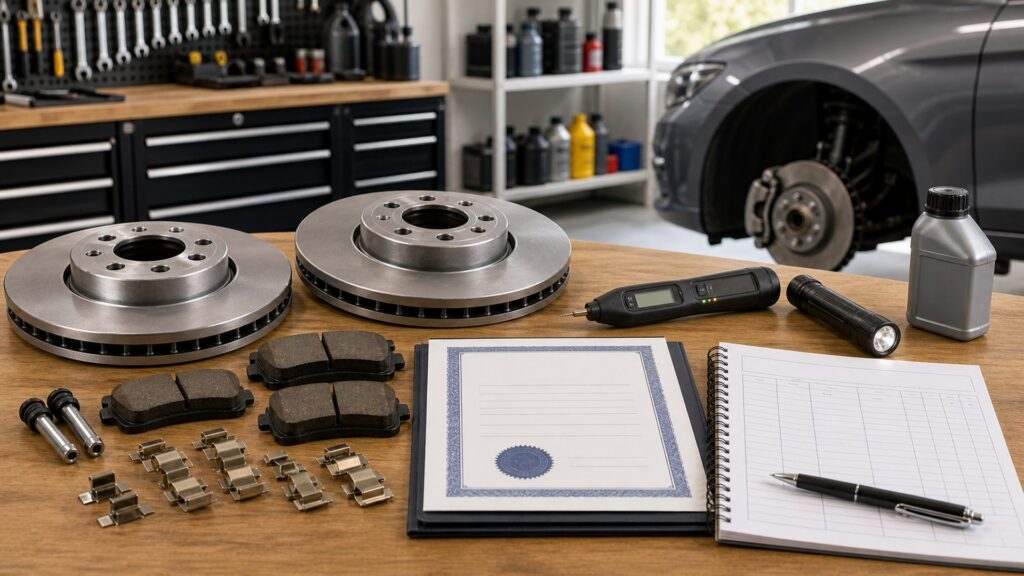
Protect installation evidence: Measure the old system, correct the root cause, use specified hardware, torque, fluid, electronic procedures, road test, and bedding, and record part and lot numbers, seller, installer, date, mileage, photographs, and results.
Plan the claim and replacement path: Know whom to contact, what inspection is required, whether the vehicle must remain assembled, how parts are returned, who pays diagnosis or labor, and what alternate transportation is available during review.
Who this is for
Service life changes with duty and environment
A commuter, tow vehicle, corrosion-region car, low-mileage stored vehicle, and commercial user may have very different warranty eligibility and wear.
Normal-duty commuters: Compare cold behavior, noise, dust, wear, corrosion, complete hardware, local availability, and realistic replacement labor. Consistent installation and normal service can matter more than the longest written term.
Towing and mountain drivers: Repeated heat and load can accelerate friction and fluid demands. Use parts supported for the exact duty and follow vehicle guidance; check whether towing, severe use, or overheating affects coverage and preserve inspection and bedding records.
Rust-belt and coastal owners: Corrosion can attack rotor hats, vanes, edges, brackets, clips, lines, and parking mechanisms while friction thickness remains. Read cosmetic and corrosion exclusions and evaluate suitable coatings, hardware, cleanup, storage, and seasonal inspection.
Low-mileage and stored vehicles: Calendar aging, moisture, surface rust, seized slides, fluid, hoses, and parking brakes can dominate before friction wears out. Warranty mileage may appear generous while time and corrosion exclusions control the actual claim.
Commercial and fleet users: Delivery, rideshare, police, livery, fleet, or other commercial use may face different coverage and duty cycles. Verify eligibility in writing, standardize installation records, track position wear and downtime, and value rapid local replacement support.
What to pay attention to
Terms and conditions that determine practical protection
A warranty should be evaluated alongside expected wear, installation cost, support speed, and excluded failure modes.
Coverage Contract
Duration, mileage, owner, seller, vehicle, use, exclusions, evidence, return, remedy, labor, and shipping.
Service Reality
Fitment, friction, corrosion, heat, related faults, installation, bedding, maintenance, wear trend, and replacement access.
Duration, mileage, and owner eligibility: Identify when coverage begins and ends, original versus subsequent owner, transfer, registration, proof of purchase, authorized seller, vehicle and application accuracy, geographic limits, and whether time or mileage controls first.
Wear, noise, and corrosion exclusions: Pads, shoes, rotors, and drums are consumable or corrosion-exposed. Determine whether ordinary wear, uneven wear caused elsewhere, cosmetic rust, severe corrosion, squeal, pulsation, heat checking, cracking, or contamination are covered or excluded.
Installation and maintenance duties: Review professional-installation requirements, torque, rotor or drum pairing, hardware, sensors, fluid, lubrication, bedding, road test, inspection interval, maintenance proof, and prohibited modifications. Correct fit and procedure often determine claim eligibility.
Vehicle and use exclusions: Check towing, racing, track, commercial, fleet, oversized wheels or tires, modified suspension or brakes, off-road use, collision, abuse, improper storage, environmental exposure, and incompatible components. Ask for ambiguous use terms in writing.
Claim evidence and return process: List receipt, seller, VIN, part and lot, installation invoice, mileage, measurements, photographs, fault codes, maintenance, removed parts, return authorization, inspection, packaging, core, shipping, and deadline requirements.
Remedy and labor treatment: Determine whether the remedy is replacement, refund, credit, repair, or pro-rated value; whether labor, diagnosis, towing, shipping, fluid, hardware, collateral damage, or repeated installation is paid; and who authorizes outside work.
Expected service and support availability: Compare measured wear trends, environment, supplier application, local stock, seller stability, replacement lead time, technical support, warranty administration, and total installed cost. Fast support can be more valuable than a long but cumbersome term.
Avoid these traps
Warranty language that gets mistaken for a life estimate
A generous remedy cannot prevent wear, diagnose the vehicle, or reimburse every cost of repeat service.
Reading lifetime as never wearing out: Lifetime usually refers to a defined coverage period or original purchaser, subject to terms. Friction materials still wear, rotors and drums still lose material, and corrosion or heat may be excluded. Read the actual remedy.
Ignoring installation and root cause: A seized slide, restricted hose, hub runout, contaminated friction, incorrect torque, missing hardware, or improper bedding can damage new parts and invalidate coverage. Document diagnosis and correction before claiming product defect.
Discarding parts and packaging: Claims may require the failed component, lot code, seller, receipt, photographs, measurements, and return authorization. Preserve evidence and contact the administrator before machining, modifying, disposing, or installing a second replacement.
Assuming labor follows the replacement part: Many warranties cover only the component, leaving diagnosis, removal, installation, fluid, hardware, shipping, towing, and downtime with the owner. Compare likely repeat labor with the purchase-price difference before choosing.
Using one service-life mileage for every driver: Traffic, load, hills, towing, salt, storage, wheel design, regeneration, maintenance, caliper condition, compound, rotor, and driver inputs change life. Use inspections and position measurements rather than a universal replacement promise.
Decision guidance
Choose the best supported ownership outcome
A shorter clear warranty with local stock can outperform a longer term that excludes the likely failure and requires costly repeat labor.
If two comparable lines differ mainly by warranty: Normalize fitment, construction, hardware, price, seller, and support first. Then compare excluded wear and corrosion, evidence, return, remedy, labor, shipping, replacement availability, and whether the owner will keep the receipt and vehicle long enough.
If corrosion is the dominant failure: Evaluate coated non-friction surfaces, hardware, hub and bracket preparation, shields, storage, and maintenance. Read corrosion exclusions carefully; a warranty designed for manufacturing defects may offer little protection against environmental rust.
If labor is expensive: Prioritize traceability, complete hardware, verified fit, local supply, strong technical support, and a remedy that addresses labor if offered. Avoid low-cost unknown parts whose failure requires repeating bleeding, calibration, or seized-fastener work.
If commercial use applies: Obtain explicit eligibility and mileage or duty terms before purchase. Compare fleet support, standard part availability, claim speed, labor treatment, and downtime; consumer lifetime wording may exclude the operation entirely.
If a part fails early: Stop using the vehicle when braking is unsafe, document symptoms and measurements, inspect related causes, contact the seller or maker, preserve the part, and follow authorization. Do not assume early failure automatically proves a covered defect.
Ownership & compatibility
Build the warranty file during installation
The easiest claim record is created before the box and removed parts disappear.
Capture purchase and identity: Save seller, authorized status where relevant, receipt, date, vehicle and VIN, axle, part and lot numbers, packaging, warranty version, return policy, core terms, and photographs of received condition and labels.
Document installation and diagnosis: Record old wear by position, rotor or drum measurements, caliper, hose, hub, fluid and parking-brake findings, root-cause correction, hardware, fasteners, torque source, installer, date, mileage, road test, and bedding.
Track service-life conditions: Log mileage, duty changes, towing, mountains, commercial use, storage, corrosion exposure, inspections, pad or shoe and rotor or drum measurements, maintenance, noise, vibration, heat, and any repeated work.
Open claims before altering evidence: Contact the administrator, obtain a claim number and instructions, and clarify driving safety, diagnosis, disassembly, photographs, return, shipping, replacement, labor, and deadlines. Retain communication and final resolution with the service record.
FAQ
Brake warranty and service-life FAQ
Answers about lifetime coverage, wear, corrosion, labor, claims, installation, and realistic replacement life.
What does a lifetime brake-pad warranty usually mean?
How long should brake pads and rotors last?
Does a brake warranty cover normal wear?
Are rusty brake rotors covered by warranty?
Will a brake-parts warranty pay installation labor?
What can invalidate a brake warranty claim?
What evidence supports an early brake failure claim?
Does a longer warranty prove the part will last longer?
Should I replace a warranted brake part before claim approval?
Bottom line
Warranty protects a claim; maintenance protects service life
Choose parts for fit, use, evidence, support, and installed value, then preserve the records needed for both inspection and recourse.
Read the contract: Understand eligibility, exclusions, evidence, return, remedy, labor, and deadlines.
Model the environment: Account for wear, heat, corrosion, storage, towing, and commercial duty.
Document installation: Capture fitment, measurements, root cause, hardware, torque, testing, and bedding.
Track and preserve: Measure service life and open claims before altering or discarding evidence.
Reading Shortcuts
Confirm measurements before ordering.
Decision Reminders
Checks to complete before committing.
- Confirm application: Cross-check vehicle and installed-system evidence.
- Diagnose first: Let abnormal wear guide inspection.
- Keep axle consistency: Use the specified paired-service scope.
- Follow procedures: Respect torque, fluid, electronics, and bedding.
- Protect friction: Prevent unsuitable chemical or fluid contact.
- Verify release: Confirm pedal, leaks, warnings, and operation.
Glossary Snippets
Terms used in this decision.
When to Use a Top 10 Review
Use rankings after fitment and repair scope are documented.
- Fitment confirmed: Filter with codes and measurements.
- Scope identified: Compare the complete required repair.
- Evidence visible: Rank construction, hardware, and support.
- Procedure covered: Include tools, fluid, testing, and records.
Already down to 2–3 options? A Comparison is usually faster.
When to Use a Comparison
Compare finalists for the same verified application.
- Application data: Match each dimension and interface.
- Included content: List hardware, sensors, and companion parts.
- Service evidence: Review instructions, traceability, and warranty.
- Installed outcome: Price labor, consumables, testing, and downtime.
Still building a shortlist? Start with a Top 10.