
How to Choose Brake Drums for Brake Components Preventive Maintenance
Preventive maintenance with brake drums is a timing decision: replace too early and you waste money, wait too long and related components can create a larger rear brake service.
This guide explains how to inspect, plan, and buy brake drums as drum of a maintenance strategy instead of reacting to the first symptom.
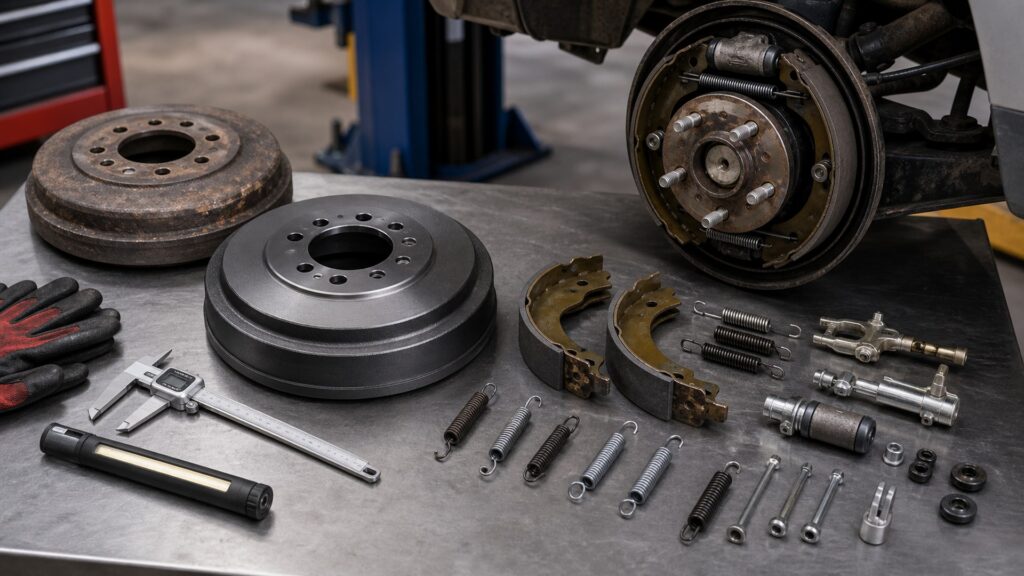
Buying framework
How to think about buying brake drums for maintenance timing
Use inspection evidence, service history, and related wear items to decide when replacement is genuinely worthwhile. For brake drums, the measured inside diameter, hub pilot, hat depth, and parking-brake surface decide whether the casting belongs on the axle. Preventive replacement should be tied to inspection evidence, access timing, or a known service interval.
Use inspection before replacement: Preventive brake drums buying should be based on wear, contamination, corrosion, restriction, or service interval evidence. For brake drums, the measured inside diameter, hub pilot, hat depth, and parking-brake surface decide whether the casting belongs on the axle. Preventive replacement should be tied to inspection evidence, access timing, or a known service interval. Rear drum service depends on the adjuster, wheel cylinder, return springs, shoe arc, and backing plate condition as much as the drum itself.
Separate early warning from failure: A slight symptom around a brake drum may call for cleaning or adjustment before full replacement. A drum that seats poorly can create pedal travel, parking-brake weakness, shoe drag, or low-speed noise even when the shoe set is new. Do not replace a healthy part just because the category is inexpensive or easy to order. A useful drum listing separates nominal diameter, discard diameter, bolt pattern, ABS provisions, and heavy-duty brake-package notes.
Bundle sensible small parts: Maintenance planning works best when nominal diameter, discard diameter, clips, seals, or related items are renewed at the right time. Rear drum service depends on the adjuster, wheel cylinder, return springs, shoe arc, and backing plate condition as much as the drum itself. Use the maintenance record to decide when replacement prevents a likely problem rather than creating extra work. Before installation, the new drum should slide over the hub and shoes without forcing, wobble, or unexplained contact marks.
Match timing to vehicle use: Short trips, towing, dust, moisture, and storage can change when brake drums deserve attention. A useful drum listing separates nominal diameter, discard diameter, bolt pattern, ABS provisions, and heavy-duty brake-package notes. Preventive replacement should be tied to inspection evidence, access timing, or a known service interval. For brake drums, the measured inside diameter, hub pilot, hat depth, and parking-brake surface decide whether the casting belongs on the axle.
Avoid calendar-only decisions: A preventive brake drum purchase should connect to condition, mileage, and service access rather than a vague schedule. Before installation, the new drum should slide over the hub and shoes without forcing, wobble, or unexplained contact marks. Do not replace a healthy part just because the category is inexpensive or easy to order. A drum that seats poorly can create pedal travel, parking-brake weakness, shoe drag, or low-speed noise even when the shoe set is new.
Who this is for
Match brake drums to the vehicle, repair goal, and buyer situation
Use these profiles for maintenance timing decisions. For brake drums, the measured inside diameter, hub pilot, hat depth, and parking-brake surface decide whether the casting belongs on the axle. Use the maintenance record to decide when replacement prevents a likely problem rather than creating extra work.
Maintenance tracker: Choose brake drums when inspection and mileage both support replacement, then record the interval. For brake drums, the measured inside diameter, hub pilot, hat depth, and parking-brake surface decide whether the casting belongs on the axle. Use the maintenance record to decide when replacement prevents a likely problem rather than creating extra work. Rear drum service depends on the adjuster, wheel cylinder, return springs, shoe arc, and backing plate condition as much as the drum itself.
Pre-trip planner: Consider a brake drum before long travel only if condition checks show risk or access will be harder later. A drum that seats poorly can create pedal travel, parking-brake weakness, shoe drag, or low-speed noise even when the shoe set is new. Preventive replacement should be tied to inspection evidence, access timing, or a known service interval. A useful drum listing separates nominal diameter, discard diameter, bolt pattern, ABS provisions, and heavy-duty brake-package notes.
DIY scheduler: Buy brake drums with related shoe hardware so the maintenance day does not become a drums chase. Rear drum service depends on the adjuster, wheel cylinder, return springs, shoe arc, and backing plate condition as much as the drum itself. Do not replace a healthy part just because the category is inexpensive or easy to order. Before installation, the new drum should slide over the hub and shoes without forcing, wobble, or unexplained contact marks.
Fleet caretaker: Use consistent brake drum drum numbers and intervals to reduce surprise downtime. A useful drum listing separates nominal diameter, discard diameter, bolt pattern, ABS provisions, and heavy-duty brake-package notes. Use the maintenance record to decide when replacement prevents a likely problem rather than creating extra work. For brake drums, the measured inside diameter, hub pilot, hat depth, and parking-brake surface decide whether the casting belongs on the axle.
Conservative owner: Do not replace brake drums early just for reassurance if inspection data shows they are healthy. Before installation, the new drum should slide over the hub and shoes without forcing, wobble, or unexplained contact marks. Preventive replacement should be tied to inspection evidence, access timing, or a known service interval. A drum that seats poorly can create pedal travel, parking-brake weakness, shoe drag, or low-speed noise even when the shoe set is new.
What to pay attention to
Which brake drum specs actually matter
Prioritize specs that change maintenance timing outcomes. For brake drums, the measured inside diameter, hub pilot, hat depth, and parking-brake surface decide whether the casting belongs on the axle. Do not replace a healthy part just because the category is inexpensive or easy to order.
Practical-feel specifications
In maintenance timing, pedal travel, parking brake hold, low-speed noise shape the driver's first signs that the brake drum choice worked. For brake drums, the measured inside diameter, hub pilot, hat depth, and parking-brake surface decide whether the casting belongs on the axle. Preventive replacement should be tied to inspection evidence, access timing, or a known service interval.
Capability specifications
For brake drums, casting quality, thermal mass, machining limit matter when climate, workload, or old related drums add stress. A drum that seats poorly can create pedal travel, parking-brake weakness, shoe drag, or low-speed noise even when the shoe set is new. Do not replace a healthy part just because the category is inexpensive or easy to order.
Wear indicators: Know which brake drum measurements, marks, or symptoms show useful remaining life. For brake drums, the measured inside diameter, hub pilot, hat depth, and parking-brake surface decide whether the casting belongs on the axle. Do not replace a healthy part just because the category is inexpensive or easy to order. Rear drum service depends on the adjuster, wheel cylinder, return springs, shoe arc, and backing plate condition as much as the drum itself.
Service interval fit: Pick brake drums that match the axle's expected maintenance rhythm and operating environment. A drum that seats poorly can create pedal travel, parking-brake weakness, shoe drag, or low-speed noise even when the shoe set is new. Use the maintenance record to decide when replacement prevents a likely problem rather than creating extra work. A useful drum listing separates nominal diameter, discard diameter, bolt pattern, ABS provisions, and heavy-duty brake-package notes.
Hardware freshness: For preventive work, included nominal diameter, discard diameter, clips, or seals can prevent old drums from undermining the new brake drum. Rear drum service depends on the adjuster, wheel cylinder, return springs, shoe arc, and backing plate condition as much as the drum itself. Preventive replacement should be tied to inspection evidence, access timing, or a known service interval. Before installation, the new drum should slide over the hub and shoes without forcing, wobble, or unexplained contact marks.
Ease of inspection: Features tied to pedal travel, parking brake hold, or low-speed noise help future checks stay simple. A useful drum listing separates nominal diameter, discard diameter, bolt pattern, ABS provisions, and heavy-duty brake-package notes. Do not replace a healthy part just because the category is inexpensive or easy to order. For brake drums, the measured inside diameter, hub pilot, hat depth, and parking-brake surface decide whether the casting belongs on the axle.
Long-term capacity: Compare casting quality, thermal mass, and machining limit when the goal is extending service consistency. Before installation, the new drum should slide over the hub and shoes without forcing, wobble, or unexplained contact marks. Use the maintenance record to decide when replacement prevents a likely problem rather than creating extra work. A drum that seats poorly can create pedal travel, parking-brake weakness, shoe drag, or low-speed noise even when the shoe set is new.
Avoid these traps
Common mistakes people make when buying brake drums
Maintenance timing fails when fit or context is skipped. Rear drum service depends on the adjuster, wheel cylinder, return springs, shoe arc, and backing plate condition as much as the drum itself. Use the maintenance record to decide when replacement prevents a likely problem rather than creating extra work.
Replacing without evidence: Preventive brake drums still need a reason; otherwise the money may be better spent on inspection or related service. Rear drum service depends on the adjuster, wheel cylinder, return springs, shoe arc, and backing plate condition as much as the drum itself. Use the maintenance record to decide when replacement prevents a likely problem rather than creating extra work. Before installation, the new drum should slide over the hub and shoes without forcing, wobble, or unexplained contact marks.
Skipping the related checklist: A new brake drum without supporting shoe hardware or cleaning may not improve reliability. A useful drum listing separates nominal diameter, discard diameter, bolt pattern, ABS provisions, and heavy-duty brake-package notes. Preventive replacement should be tied to inspection evidence, access timing, or a known service interval. For brake drums, the measured inside diameter, hub pilot, hat depth, and parking-brake surface decide whether the casting belongs on the axle.
Using mileage alone: Mileage matters, but heat, dust, moisture, and driving pattern can age brake drums differently. Before installation, the new drum should slide over the hub and shoes without forcing, wobble, or unexplained contact marks. Do not replace a healthy part just because the category is inexpensive or easy to order. A drum that seats poorly can create pedal travel, parking-brake weakness, shoe drag, or low-speed noise even when the shoe set is new.
Buying parts too early: Some brake drums can sit unused past return windows or become superseded before they are needed. For brake drums, the measured inside diameter, hub pilot, hat depth, and parking-brake surface decide whether the casting belongs on the axle. Use the maintenance record to decide when replacement prevents a likely problem rather than creating extra work. Rear drum service depends on the adjuster, wheel cylinder, return springs, shoe arc, and backing plate condition as much as the drum itself.
Ignoring service access: Preventive replacement is easiest when the brake drum is already accessible during nearby work. A drum that seats poorly can create pedal travel, parking-brake weakness, shoe drag, or low-speed noise even when the shoe set is new. Preventive replacement should be tied to inspection evidence, access timing, or a known service interval. A useful drum listing separates nominal diameter, discard diameter, bolt pattern, ABS provisions, and heavy-duty brake-package notes.
Decision guidance
Which type of brake drum purchase is right for you
Use the rear brake service evidence before choosing a drum tier. Rear drum service depends on the adjuster, wheel cylinder, return springs, shoe arc, and backing plate condition as much as the drum itself. Do not replace a healthy part just because the category is inexpensive or easy to order.
Replace when condition supports it: Buy brake drums when wear limits, contamination, corrosion, or service history point toward action. Rear drum service depends on the adjuster, wheel cylinder, return springs, shoe arc, and backing plate condition as much as the drum itself. Do not replace a healthy part just because the category is inexpensive or easy to order. Before installation, the new drum should slide over the hub and shoes without forcing, wobble, or unexplained contact marks.
Inspect when symptoms are mild: If the brake drum still meets service criteria, inspection and cleaning may be the smarter maintenance move. A useful drum listing separates nominal diameter, discard diameter, bolt pattern, ABS provisions, and heavy-duty brake-package notes. Use the maintenance record to decide when replacement prevents a likely problem rather than creating extra work. For brake drums, the measured inside diameter, hub pilot, hat depth, and parking-brake surface decide whether the casting belongs on the axle.
Bundle during adjacent repairs: Preventive brake drums make more sense when the same labor already exposes the area. Before installation, the new drum should slide over the hub and shoes without forcing, wobble, or unexplained contact marks. Preventive replacement should be tied to inspection evidence, access timing, or a known service interval. A drum that seats poorly can create pedal travel, parking-brake weakness, shoe drag, or low-speed noise even when the shoe set is new.
Choose durable basics: For maintenance, a reliable OE-style brake drum often beats a specialty drum with no clear benefit. For brake drums, the measured inside diameter, hub pilot, hat depth, and parking-brake surface decide whether the casting belongs on the axle. Do not replace a healthy part just because the category is inexpensive or easy to order. Rear drum service depends on the adjuster, wheel cylinder, return springs, shoe arc, and backing plate condition as much as the drum itself.
Defer uncertain upgrades: Wait on premium brake drums until the need is tied to actual axle use. A drum that seats poorly can create pedal travel, parking-brake weakness, shoe drag, or low-speed noise even when the shoe set is new. Use the maintenance record to decide when replacement prevents a likely problem rather than creating extra work. A useful drum listing separates nominal diameter, discard diameter, bolt pattern, ABS provisions, and heavy-duty brake-package notes.
Ownership & compatibility
What you are really buying into with brake drums
Keep records, related drums, and support in view. Rear drum service depends on the adjuster, wheel cylinder, return springs, shoe arc, and backing plate condition as much as the drum itself. Preventive replacement should be tied to inspection evidence, access timing, or a known service interval.
Record the trigger: Write down why the brake drum was replaced so the next interval is based on evidence. Rear drum service depends on the adjuster, wheel cylinder, return springs, shoe arc, and backing plate condition as much as the drum itself. Preventive replacement should be tied to inspection evidence, access timing, or a known service interval. Before installation, the new drum should slide over the hub and shoes without forcing, wobble, or unexplained contact marks.
Monitor early results: After preventive brake drums service, check for noise, leaks, airflow, dust, or uneven behavior before assuming the job is done. A useful drum listing separates nominal diameter, discard diameter, bolt pattern, ABS provisions, and heavy-duty brake-package notes. Do not replace a healthy part just because the category is inexpensive or easy to order. For brake drums, the measured inside diameter, hub pilot, hat depth, and parking-brake surface decide whether the casting belongs on the axle.
Keep inspection notes: Photos and measurements help prove whether future brake drum wear is normal or premature. Before installation, the new drum should slide over the hub and shoes without forcing, wobble, or unexplained contact marks. Use the maintenance record to decide when replacement prevents a likely problem rather than creating extra work. A drum that seats poorly can create pedal travel, parking-brake weakness, shoe drag, or low-speed noise even when the shoe set is new.
Store extra parts carefully: If you buy ahead, keep brake drums clean, dry, labeled, and inside the return or coverage window when possible. For brake drums, the measured inside diameter, hub pilot, hat depth, and parking-brake surface decide whether the casting belongs on the axle. Preventive replacement should be tied to inspection evidence, access timing, or a known service interval. Rear drum service depends on the adjuster, wheel cylinder, return springs, shoe arc, and backing plate condition as much as the drum itself.
Review intervals annually: Update the brake drum plan when driving conditions, mileage, or axle use changes. A drum that seats poorly can create pedal travel, parking-brake weakness, shoe drag, or low-speed noise even when the shoe set is new. Do not replace a healthy part just because the category is inexpensive or easy to order. A useful drum listing separates nominal diameter, discard diameter, bolt pattern, ABS provisions, and heavy-duty brake-package notes.
FAQ
Brake drums buying guide FAQ
Focused answers for maintenance timing decisions. Rear drum service depends on the adjuster, wheel cylinder, return springs, shoe arc, and backing plate condition as much as the drum itself. Use the maintenance record to decide when replacement prevents a likely problem rather than creating extra work.
When is preventive replacement of brake drums justified?
Can I wait if the brake drum still works?
What should be bundled with preventive brake drums service?
Should severe-duty use shorten the replacement plan?
How should I track preventive brake drums?
Bottom line
The simplest way to choose brake drums
Choose by fit, evidence, and rear brake service risk. Rear drum service depends on the adjuster, wheel cylinder, return springs, shoe arc, and backing plate condition as much as the drum itself. Do not replace a healthy part just because the category is inexpensive or easy to order.
Use condition, not anxiety: Preventive brake drums make sense when inspection, mileage, or service access points to real risk. Rear drum service depends on the adjuster, wheel cylinder, return springs, shoe arc, and backing plate condition as much as the drum itself. Do not replace a healthy part just because the category is inexpensive or easy to order. Before installation, the new drum should slide over the hub and shoes without forcing, wobble, or unexplained contact marks.
Bundle thoughtfully: Renew nominal diameter, discard diameter, clips, seals, or supplies when those pieces age with the brake drum. A useful drum listing separates nominal diameter, discard diameter, bolt pattern, ABS provisions, and heavy-duty brake-package notes. Use the maintenance record to decide when replacement prevents a likely problem rather than creating extra work. For brake drums, the measured inside diameter, hub pilot, hat depth, and parking-brake surface decide whether the casting belongs on the axle.
Do not over-service: If brake drums still meet service criteria, document the check and revisit at the next interval. Before installation, the new drum should slide over the hub and shoes without forcing, wobble, or unexplained contact marks. Preventive replacement should be tied to inspection evidence, access timing, or a known service interval. A drum that seats poorly can create pedal travel, parking-brake weakness, shoe drag, or low-speed noise even when the shoe set is new.
Plan around use: Dust, moisture, heat, towing, and short trips should shape the timing more than a generic calendar. For brake drums, the measured inside diameter, hub pilot, hat depth, and parking-brake surface decide whether the casting belongs on the axle. Do not replace a healthy part just because the category is inexpensive or easy to order. Rear drum service depends on the adjuster, wheel cylinder, return springs, shoe arc, and backing plate condition as much as the drum itself.
Final maintenance check: The right brake drum purchase prevents a likely problem without replacing healthy drums blindly. A drum that seats poorly can create pedal travel, parking-brake weakness, shoe drag, or low-speed noise even when the shoe set is new. Use the maintenance record to decide when replacement prevents a likely problem rather than creating extra work. A useful drum listing separates nominal diameter, discard diameter, bolt pattern, ABS provisions, and heavy-duty brake-package notes.
Reading Shortcuts
Jump to the sections that matter most for choosing brake drums.
Decision Reminders
A quick checklist before you commit to brake drums.
- Confirm the old part: Use the removed drum, OE number, or service data to verify the catalog listing.
- Check included hardware: Missing clips, springs, seals, brackets, or fasteners can change the real cost.
- Inspect nearby wear: Do not expect a new brake drum to solve problems caused by related components.
- Read warranty details: Know the claim process, exclusions, and whether labor is covered.
- Plan the install: Cleaning, torque, direction, bleeding, bedding, or adjustment steps matter after purchase.
Glossary Snippets
Quick translations for terms that confuse replacement-drum buyers.
When to Use a Top 10 Review
Use this format when you want a faster way to narrow the field.
- You are early in the process: A Top 10 can separate common brake drums by drum fit confidence, completeness, and value.
- You want a shortlist: Ranked picks help organize budget, OE-style, complete-kit, and harsh-use options.
- You need category context: It is useful when you still need to understand the major choices before comparing two drums.
Already down to 2-3 options? A Comparison is usually faster than broad buying advice.
When to Use a Comparison
Ideal once you have a shortlist and need clear, practical tradeoffs.
- You narrowed it to 2-3 options: A comparison makes differences in fit notes, included shoe hardware, coverage, and total rear brake service cost easier to see.
- You are checking the quote: Side-by-side tradeoffs help determine whether a recommended drum grade is justified.
- You are ready to decide: Use a comparison when the axle fit is known and the final choice is about value and risk.
Still exploring? Start with a Top 10 to identify the right brake drum category first.