
How to Choose Brake Hardware Kits for Warranty and Service Life
Warranty language on brake small hardware kits can sound reassuring, but service life depends just as much on correct small hardware fit, kit installation, related kit contents, and operating conditions.
This guide explains how to compare coverage promises, durability cues, and replacement planning without mistaking a long coverage for a better kit component.
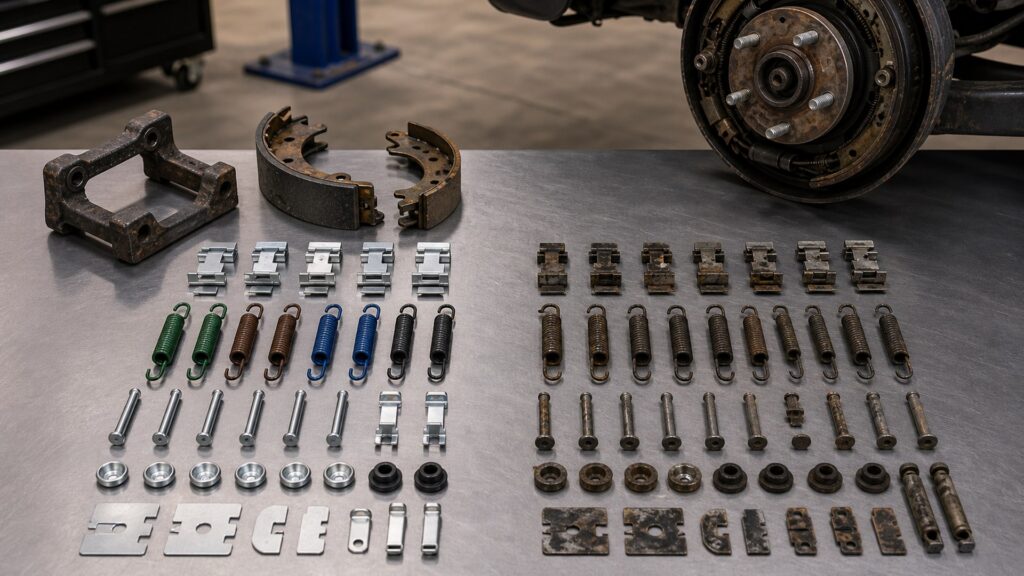
Buying framework
How to think about buying brake hardware kits for service life
Look past the coverage headline and judge the kit component, the kit contents source support, the kit installation requirements, and the wear conditions together. For hardware kits, the real buying risk is often a missing spring, retainer, shim, or abutment clip rather than the headline price. For warranty decisions, judge fit and material quality first, then use coverage as the tie-breaker.
Read warranty as support, not proof: Warranty length on brake small hardware kits does not guarantee service life; it tells you how a kit contents source may respond after a problem. For hardware kits, the real buying risk is often a missing spring, retainer, shim, or abutment clip rather than the headline price. For warranty decisions, judge fit and material quality first, then use coverage as the tie-breaker.
Connect durability to conditions: The lifespan of a brake small hardware kit depends on small hardware fit, kit installation, climate, use, and related kit contents around it. Disc and drum kits can sit in the same catalog family while using completely different clip shapes, hold-down pins, and adjuster pieces. A useful warranty explains exclusions, proof requirements, shipping, labor, and replacement timing.
Study exclusions early: Claims for brake small hardware kits may exclude wear, contamination, overheating, incorrect kit installation, or missing maintenance. Fresh hardware matters because old clips and springs lose tension, collect corrosion, and let pads or shoes move in ways the new friction parts cannot correct. Save invoices, mileage, installation notes, and part numbers because claims depend on documentation.
Compare replacement speed: A coverage is less useful if a failed brake small hardware kit leaves the brake assembly down for shipping, inspection, or paperwork. A useful listing shows the kit contents clearly enough to compare them with the old hardware before the brake assembly is apart. For warranty decisions, judge fit and material quality first, then use coverage as the tie-breaker.
Use quality cues first: Choose brake small hardware kits for materials, contents, and fit before using coverage as the tie-breaker. Small hardware should be treated as fit-critical, especially when rust, heat, or previous repairs have changed how the brake corner comes apart. A useful warranty explains exclusions, proof requirements, shipping, labor, and replacement timing.
Who this is for
Match brake hardware kits to the vehicle, repair goal, and buyer situation
Use these profiles for service life decisions. For hardware kits, the real buying risk is often a missing spring, retainer, shim, or abutment clip rather than the headline price. Save invoices, mileage, installation notes, and part numbers because claims depend on documentation.
Long-term owner: Choose brake small hardware kits with credible support and documented fit, not just a dramatic lifetime promise. For hardware kits, the real buying risk is often a missing spring, retainer, shim, or abutment clip rather than the headline price. Save invoices, mileage, installation notes, and part numbers because claims depend on documentation.
High-mileage driver: Use coverage details to understand how the brake small hardware kit will be handled if old related kit contents complicate a claim. Disc and drum kits can sit in the same catalog family while using completely different clip shapes, hold-down pins, and adjuster pieces. For warranty decisions, judge fit and material quality first, then use coverage as the tie-breaker.
Online shopper: Check who pays shipping and what evidence is required before trusting a brake small hardware kits coverage. Fresh hardware matters because old clips and springs lose tension, collect corrosion, and let pads or shoes move in ways the new friction parts cannot correct. A useful warranty explains exclusions, proof requirements, shipping, labor, and replacement timing.
Shop customer: Ask whether the shop coverage on the brake small hardware kit includes labor or only the kit component. A useful listing shows the kit contents clearly enough to compare them with the old hardware before the brake assembly is apart. Save invoices, mileage, installation notes, and part numbers because claims depend on documentation.
Value buyer: Treat coverage as one kit component of value alongside material spring rate, coating durability, and complete axle coverage. Small hardware should be treated as fit-critical, especially when rust, heat, or previous repairs have changed how the brake corner comes apart. For warranty decisions, judge fit and material quality first, then use coverage as the tie-breaker.
What to pay attention to
Which brake hardware kit specs actually matter
Prioritize specs that change service life outcomes. For hardware kits, the real buying risk is often a missing spring, retainer, shim, or abutment clip rather than the headline price. A useful warranty explains exclusions, proof requirements, shipping, labor, and replacement timing.
Practical-feel specifications
In service life, noise suppression, pad movement, shoe return shape the driver's first signs that the brake small hardware kit choice worked. For hardware kits, the real buying risk is often a missing spring, retainer, shim, or abutment clip rather than the headline price. For warranty decisions, judge fit and material quality first, then use coverage as the tie-breaker.
Capability specifications
For brake small hardware kits, material spring rate, coating durability, complete axle coverage matter when climate, workload, or old related kit contents add stress. Disc and drum kits can sit in the same catalog family while using completely different clip shapes, hold-down pins, and adjuster pieces. A useful warranty explains exclusions, proof requirements, shipping, labor, and replacement timing.
Claim process: For brake small hardware kits, the best coverage is clear about photos, diagnostics, returns, and replacement timing. For hardware kits, the real buying risk is often a missing spring, retainer, shim, or abutment clip rather than the headline price. A useful warranty explains exclusions, proof requirements, shipping, labor, and replacement timing.
Material clues: Durability still starts with material spring rate, coating durability, and complete axle coverage, not the coverage headline. Disc and drum kits can sit in the same catalog family while using completely different clip shapes, hold-down pins, and adjuster pieces. Save invoices, mileage, installation notes, and part numbers because claims depend on documentation.
Installation requirements: A brake small hardware kit coverage can depend on correct torque, cleaning, bleeding, bedding, direction, or service data. Fresh hardware matters because old clips and springs lose tension, collect corrosion, and let pads or shoes move in ways the new friction parts cannot correct. For warranty decisions, judge fit and material quality first, then use coverage as the tie-breaker.
Coverage boundaries: Know whether related abutment clip, return spring, fluids, labor, or wear items are excluded. A useful listing shows the kit contents clearly enough to compare them with the old hardware before the brake assembly is apart. A useful warranty explains exclusions, proof requirements, shipping, labor, and replacement timing.
Seller stability: Warranty support for brake small hardware kits is only useful if the kit contents source or brand remains reachable. Small hardware should be treated as fit-critical, especially when rust, heat, or previous repairs have changed how the brake corner comes apart. Save invoices, mileage, installation notes, and part numbers because claims depend on documentation.
Avoid these traps
Common mistakes people make when buying brake hardware kits
Service life fails when fit or context is skipped. Fresh hardware matters because old clips and springs lose tension, collect corrosion, and let pads or shoes move in ways the new friction parts cannot correct. Save invoices, mileage, installation notes, and part numbers because claims depend on documentation.
Buying the longest warranty automatically: Long coverage on poor-fitting brake small hardware kits does not prevent downtime or repeat labor. Fresh hardware matters because old clips and springs lose tension, collect corrosion, and let pads or shoes move in ways the new friction parts cannot correct. Save invoices, mileage, installation notes, and part numbers because claims depend on documentation.
Missing labor limits: A replacement brake small hardware kit may be free while removal and reinstall labor are not. A useful listing shows the kit contents clearly enough to compare them with the old hardware before the brake assembly is apart. For warranty decisions, judge fit and material quality first, then use coverage as the tie-breaker.
Ignoring installation proof: Claims can fail if there is no record that brake small hardware kits were installed according to service requirements. Small hardware should be treated as fit-critical, especially when rust, heat, or previous repairs have changed how the brake corner comes apart. A useful warranty explains exclusions, proof requirements, shipping, labor, and replacement timing.
Treating wear as defect: Normal wear, contamination, or related-kit component damage may not qualify as a brake small hardware kit defect. For hardware kits, the real buying risk is often a missing spring, retainer, shim, or abutment clip rather than the headline price. Save invoices, mileage, installation notes, and part numbers because claims depend on documentation.
Discarding documentation: Receipts, boxes, photos, and kit component numbers matter when coverage support is needed for brake small hardware kits. Disc and drum kits can sit in the same catalog family while using completely different clip shapes, hold-down pins, and adjuster pieces. For warranty decisions, judge fit and material quality first, then use coverage as the tie-breaker.
Decision guidance
Which type of brake hardware kit purchase is right for you
Use the brake small hardware service evidence before choosing a kit component tier. Fresh hardware matters because old clips and springs lose tension, collect corrosion, and let pads or shoes move in ways the new friction parts cannot correct. A useful warranty explains exclusions, proof requirements, shipping, labor, and replacement timing.
Choose quality before coverage: Pick brake small hardware kits that fit and suit the brake assembly, then use coverage to separate similar options. Fresh hardware matters because old clips and springs lose tension, collect corrosion, and let pads or shoes move in ways the new friction parts cannot correct. A useful warranty explains exclusions, proof requirements, shipping, labor, and replacement timing.
Choose shop-supplied parts for labor backing: If labor coverage matters, a shop-installed brake small hardware kit may offer cleaner support than customer-supplied kit contents. A useful listing shows the kit contents clearly enough to compare them with the old hardware before the brake assembly is apart. Save invoices, mileage, installation notes, and part numbers because claims depend on documentation.
Choose local support for daily drivers: Fast exchange can matter more than maximum coverage when brake small hardware kits affect transportation. Small hardware should be treated as fit-critical, especially when rust, heat, or previous repairs have changed how the brake corner comes apart. For warranty decisions, judge fit and material quality first, then use coverage as the tie-breaker.
Choose documented brands for long ownership: A brake small hardware kit from a stable supplier is easier to claim years later. For hardware kits, the real buying risk is often a missing spring, retainer, shim, or abutment clip rather than the headline price. A useful warranty explains exclusions, proof requirements, shipping, labor, and replacement timing.
Avoid vague lifetime promises: If the coverage for brake small hardware kits does not explain exclusions and process, treat it as weak support. Disc and drum kits can sit in the same catalog family while using completely different clip shapes, hold-down pins, and adjuster pieces. Save invoices, mileage, installation notes, and part numbers because claims depend on documentation.
Ownership & compatibility
What you are really buying into with brake hardware kits
Keep records, related kit contents, and support in view. Fresh hardware matters because old clips and springs lose tension, collect corrosion, and let pads or shoes move in ways the new friction parts cannot correct. For warranty decisions, judge fit and material quality first, then use coverage as the tie-breaker.
Store proof of fitment: Keep the VIN match, kit component number, and invoice for installed brake small hardware kits. Fresh hardware matters because old clips and springs lose tension, collect corrosion, and let pads or shoes move in ways the new friction parts cannot correct. For warranty decisions, judge fit and material quality first, then use coverage as the tie-breaker.
Document installation: Photos and service notes help show the brake small hardware kit was installed correctly. A useful listing shows the kit contents clearly enough to compare them with the old hardware before the brake assembly is apart. A useful warranty explains exclusions, proof requirements, shipping, labor, and replacement timing.
Track mileage and symptoms: Warranty conversations go better when brake small hardware kits problems are tied to date, mileage, and observed behavior. Small hardware should be treated as fit-critical, especially when rust, heat, or previous repairs have changed how the brake corner comes apart. Save invoices, mileage, installation notes, and part numbers because claims depend on documentation.
Keep related repair records: If abutment clip, return spring, or fluids were replaced, keep those receipts with the brake small hardware kit file. For hardware kits, the real buying risk is often a missing spring, retainer, shim, or abutment clip rather than the headline price. For warranty decisions, judge fit and material quality first, then use coverage as the tie-breaker.
Know the contact path: Save the kit contents source and manufacturer claim links before the brake small hardware kits listing disappears. Disc and drum kits can sit in the same catalog family while using completely different clip shapes, hold-down pins, and adjuster pieces. A useful warranty explains exclusions, proof requirements, shipping, labor, and replacement timing.
FAQ
Brake hardware kits buying guide FAQ
Focused answers for service life decisions. Fresh hardware matters because old clips and springs lose tension, collect corrosion, and let pads or shoes move in ways the new friction parts cannot correct. Save invoices, mileage, installation notes, and part numbers because claims depend on documentation.
Does a longer coverage mean better brake small hardware kits?
What coverage exclusions matter for a brake small hardware kit?
Should I choose shop-supplied brake small hardware kits for coverage?
What proof should I keep for a claim?
How should coverage affect value?
Bottom line
The simplest way to choose brake hardware kits
Choose by fit, evidence, and brake small hardware service risk. Fresh hardware matters because old clips and springs lose tension, collect corrosion, and let pads or shoes move in ways the new friction parts cannot correct. A useful warranty explains exclusions, proof requirements, shipping, labor, and replacement timing.
Quality comes first: Warranty should separate similar brake small hardware kits, not rescue a weak fit or poor material choice. Fresh hardware matters because old clips and springs lose tension, collect corrosion, and let pads or shoes move in ways the new friction parts cannot correct. A useful warranty explains exclusions, proof requirements, shipping, labor, and replacement timing.
Check claim friction: A useful brake small hardware kit coverage explains shipping, proof, diagnosis, labor, and replacement timing. A useful listing shows the kit contents clearly enough to compare them with the old hardware before the brake assembly is apart. Save invoices, mileage, installation notes, and part numbers because claims depend on documentation.
Keep proof organized: Save kit component numbers, invoices, mileage, and kit installation notes for the installed brake small hardware kits. Small hardware should be treated as fit-critical, especially when rust, heat, or previous repairs have changed how the brake corner comes apart. For warranty decisions, judge fit and material quality first, then use coverage as the tie-breaker.
Use local support when downtime matters: Fast exchange can be worth more than a distant lifetime promise for a daily-driver brake small hardware kit. For hardware kits, the real buying risk is often a missing spring, retainer, shim, or abutment clip rather than the headline price. A useful warranty explains exclusions, proof requirements, shipping, labor, and replacement timing.
Final warranty check: Choose brake small hardware kits that you would still buy if the coverage lengths were equal. Disc and drum kits can sit in the same catalog family while using completely different clip shapes, hold-down pins, and adjuster pieces. Save invoices, mileage, installation notes, and part numbers because claims depend on documentation.
Reading Shortcuts
Jump to the sections that matter most for choosing brake small hardware kits.
Decision Reminders
A quick checklist before you commit to brake small hardware kits.
- Confirm the old part: Use the removed kit component, OE number, or service data to verify the catalog listing.
- Check included hardware: Missing clips, springs, seals, brackets, or fasteners can change the real cost.
- Inspect nearby wear: Do not expect a new brake small hardware kit to solve problems caused by related components.
- Read warranty details: Know the claim process, exclusions, and whether labor is covered.
- Plan the install: Cleaning, torque, direction, bleeding, bedding, or adjustment steps matter after purchase.
Glossary Snippets
Quick translations for terms that confuse replacement-kit component buyers.
When to Use a Top 10 Review
Use this format when you want a faster way to narrow the field.
- You are early in the process: A Top 10 can separate common brake small hardware kits by small hardware fit confidence, completeness, and value.
- You want a shortlist: Ranked picks help organize budget, OE-style, complete-kit, and harsh-use options.
- You need category context: It is useful when you still need to understand the major choices before comparing two kit contents.
Already down to 2-3 options? A Comparison is usually faster than broad buying advice.
When to Use a Comparison
Ideal once you have a shortlist and need clear, practical tradeoffs.
- You narrowed it to 2-3 options: A comparison makes differences in fit notes, included small hardware, coverage, and total brake small hardware service cost easier to see.
- You are checking the quote: Side-by-side tradeoffs help determine whether a recommended kit component grade is justified.
- You are ready to decide: Use a comparison when the brake assembly fit is known and the final choice is about value and risk.
Still exploring? Start with a Top 10 to identify the right brake hardware kit category first.