
How to Choose Car Care & Detailing for Garage Detailing Setups
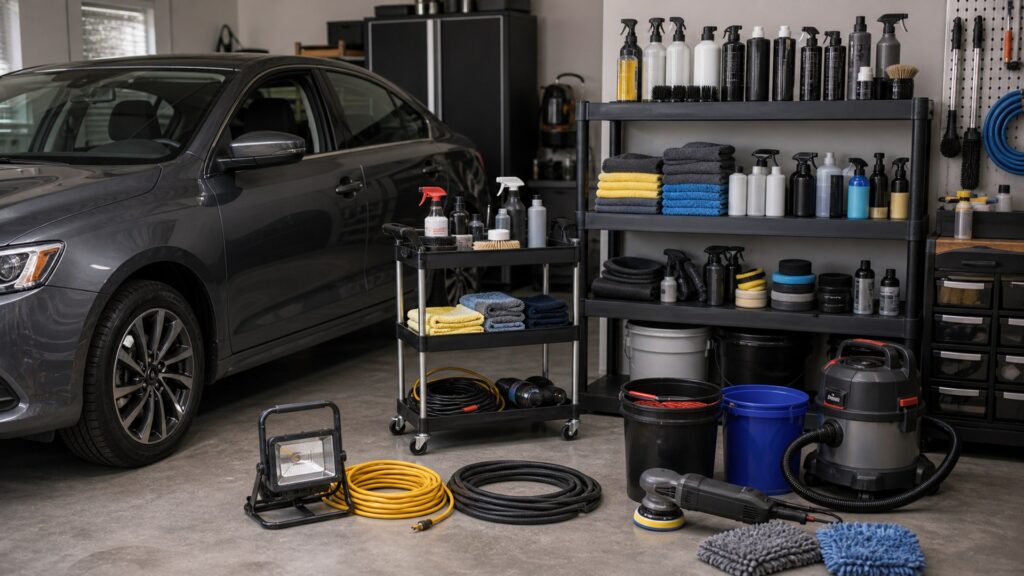
A detailing garage is a workflow built around a vehicle, not a collection of machines. Door clearance, walking space, floor slope, drainage, water supply, electrical circuits, ventilation, lighting, storage, noise, and runoff determine which wash, extraction, polishing, and protection tasks can be performed safely.
Map the bay before purchasing equipment. Follow the movement of hoses, cords, dirty tools, clean towels, chemicals, removed mats, and drying air from setup through cleanup. Check equipment loads and protective requirements with qualified help where needed, and use product labels and safety data sheets to plan ventilation and storage. A compact organized system often supports better finish inspection than a crowded high-powered one.
Buying framework
Design the bay from tasks and hazards
Utilities and movement set the equipment ceiling. Build clean, wet, chemical, and machine zones before choosing brands.
Measure the working envelope: Park the largest intended vehicle and measure open-door, hood, liftgate, ladder, kneeling, cart, hose, and machine clearance at every side.
Map water and drainage: Identify supply flow, backflow requirements, floor slope, drain destination, splash control, winter protection, water recovery, and local discharge restrictions before indoor washing.
Audit electrical capacity: List voltage, amperage, simultaneous loads, circuit locations, GFCI or other required protection, extension limits, cord routes, and qualified installation needs.
Design lighting in layers: Combine broad ceiling and wall illumination with movable inspection lights that reveal defects without glare, deep shadows, unsafe heat, or misleading color.
Separate clean and contaminated flow: Keep wheel tools, used towels, wet mats, chemicals, polish dust, clean media, coating applicators, and laundry from crossing paths during the job.
Who this is for
Garage priorities change with service depth
A weekly wash bay and a correction studio need different utilities. Buy for tasks performed often and leave safe expansion paths.
Compact single-bay owners: Wall storage, mobile carts, retractable hoses, slim lighting, folding work surfaces, and strict floor clearance keep the vehicle accessible without overcrowding.
Wash-focused users: Drainage, runoff control, hose management, pressure-equipment placement, slip resistance, water quality, ventilation, and rapid drying take priority over permanent correction stations.
Paint-correction enthusiasts: Stable power, low-glare wall lighting, mobile inspection, pad cleaning, machine and bottle access, dust control, temperature stability, and protected cure space matter most.
Interior-detailing operators: Strong vacuum and extraction access, controlled moisture, ventilation, mat-drying racks, small-tool organization, task lighting, and separation from clean upholstery supplies shape the bay.
What to pay attention to
Garage equipment details that affect safe use
Rated performance must fit the building and task. Check real simultaneous demand and manufacturer installation instructions.
Facility & Safety
Clearance, floor traction, drainage, water control, electrical protection, load, ventilation, lighting, fire risk, and chemical storage.
Workflow & Equipment
Wash and dry zones, carts, reels, media segregation, machine access, inspection, ergonomics, cleanup, expansion, and maintenance.
Electrical input and duty: Compare voltage, current, startup demand, cord specification, grounding, duty cycle, heat, and whether pressure washers, vacuums, extractors, polishers, lights, and blowers overlap.
Lighting quality and placement: Output, beam shape, diffusion, flicker, color rendering, color temperature, heat, adjustability, and reflection angles determine whether haze, scratches, texture, and coating residue are visible.
Pressure and water delivery: Flow, working pressure, nozzle system, hose length and quality, fittings, freeze protection, pump duty, water source, and safe storage matter beyond headline maximum pressure.
Ventilation and filtration: Match airflow and exhaust path to product directions, moisture, heat, odor, aerosols, combustion sources, filter loading, makeup air, and neighborhood constraints.
Storage compatibility: Cabinets and shelves need load capacity, spill containment, labeling, temperature control, chemical segregation, child security, and easy access without placing products above vehicles.
Mobility and hose control: Caster quality, locking stability, reel flow restriction, swivel durability, bend radius, cord gauge, tool hooks, and cart width affect reach and trip risk around paint.
Avoid these traps
Garage upgrades that create new hazards
Power and permanence can magnify a poor layout. Test movement with the actual vehicle before mounting equipment.
Using one circuit for every machine: Combined load and startup current can trip protection, overheat unsuitable cords, interrupt coating or extraction work, and encourage unsafe wiring workarounds.
Installing only ceiling lights: Overhead brightness can hide vertical-panel haze, isolated scratches, sanding marks, and coating high spots that angled wall or handheld inspection reveals.
Running hoses across exits: Pressure lines, vacuum hoses, cords, and air lines become trip and paint-contact hazards when reels, routes, and machine parking are not planned.
Storing chemicals by convenience: Heat, freezing, sunlight, ignition sources, incompatible products, damaged labels, and overhead shelves can degrade supplies or increase spill and exposure risk.
Assuming a floor drain accepts wash water: Drain destinations and local rules vary; verify whether discharge enters sanitary, storm, septic, or another system before sending detergents and road residue into it.
Decision guidance
Choose equipment in dependency order
Facility constraints should eliminate unsuitable machines before feature comparison. Purchase storage and safety controls with the tool, not afterward.
If water use is restricted: Design a rinseless or dry-detail workflow with appropriate soil limits, solution handling, clean-media capacity, floor protection, and an alternate site for heavy contamination.
If circuits are limited: Calculate simultaneous demand, stagger equipment use, choose efficient tools, and obtain qualified electrical advice instead of relying on long or undersized extension cords.
If correction is the main task: Invest first in controllable side lighting, inspection mobility, stable power, pad and towel management, ergonomic carts, clean air, and cure conditions.
If the bay must remain multipurpose: Use mobile carts, covered bins, retractable services, wall-mounted tools, quick cleanup, and clear parking boundaries so detailing equipment does not obstruct household use.
If a permanent upgrade is proposed: Verify permits, building rules, drainage, electrical protection, ventilation, fire safety, and resale implications before cutting floors, adding circuits, or installing fixed water systems.
Ownership & compatibility
Maintain the garage as detailing equipment
A clean bay improves finish quality and reveals hazards early. Inspect utilities and storage on a schedule.
Reset after every job: Remove wet towels and mats, clean spills, clear drains or capture equipment, wipe cords and hoses, empty machines, charge lights, and restore open walkways.
Inspect electrical and pressure equipment: Check plugs, GFCI test function where applicable, cords, strain relief, reels, fittings, hoses, nozzles, leaks, filters, brushes, and manufacturer maintenance items.
Inventory chemicals: Keep current labels and safety data, inspect containers, rotate stock, verify dilution bottles, separate incompatible products, and dispose of degraded material according to local rules.
Reassess layout with new vehicles: Larger doors, higher roofs, charging equipment, sensors, and different wheelbase can change clearance, lighting angles, hose reach, and emergency exit access.
FAQ
Garage detailing setup questions
Resolve electrical, lighting, water, ventilation, storage, and workflow choices.
How much space is needed around a vehicle?
Do detailing garages need special electrical circuits?
What lighting is best for paint correction?
Can I wash a vehicle over a garage floor drain?
Is ventilation needed for interior and coating products?
Where should detailing chemicals be stored?
Should I install hose and cord reels?
What belongs on a mobile detailing cart?
How should a garage setup be expanded over time?
Bottom line
The garage should make correct work easier
Good layout controls water, electricity, light, chemicals, and movement before the first product touches the vehicle. Add equipment only when the bay can support it.
Map the facility: Measure clearance, utilities, drains, and airflow.
Design the workflow: Separate clean, wet, chemical, and machine zones.
Maintain the bay: Reset tools, inspect systems, and preserve access.
Reading Shortcuts
Move directly to the decision you need to resolve.
Decision Reminders
Use these checks while narrowing the field.
- Calculate combined load: Machines may run together.
- Inspect vertical panels: Ceiling lights are incomplete.
- Keep exits clear: Hoses create trip paths.
- Verify drain destination: Floor drains differ.
- Separate chemicals: Storage needs compatibility.
- Reset after every job: Clean space protects finishes.
Glossary Snippets
Terms that appear in listings, labels, and service information.
When to Use a Top 10 Review
Use rankings after requirements and exclusions are clear.
- Scan candidates: Find credible options.
- Compare strengths: See major tradeoffs.
- Build a shortlist: Choose what to inspect.
- Check availability: Confirm current offerings.
Already down to 2–3 options? A Comparison is usually the faster next step.
When to Use a Comparison
Compare directly when only a few candidates remain.
- Align versions: Compare equivalent configurations.
- Trace differences: Locate meaningful distinctions.
- Price the outcome: Include continuing costs.
- Verify uncertainty: Inspect unresolved details.
Still exploring? Start with a Top 10 to build a shortlist first.