
How to Choose Car Care & Detailing for Interior Restoration Projects
Interior restoration begins with material identification and damage diagnosis. A seat may use coated leather only on contact panels, with vinyl elsewhere; trim can include soft-touch coatings, painted plastic, film, wood veneer, metal, fabric, screens, sensors, and airbag seams. One strong cleaner can leave permanent gloss, fading, swelling, or delamination.
Separate removable soil from wear, dye loss, cracking, burns, adhesive failure, moisture, and odor sources. Clean with controlled chemistry and minimal saturation before deciding whether repair, recoloring, or replacement is justified. Every product should be tested in a hidden area, and the plan must protect electronics, headliner adhesive, restraint webbing, sensors, and occupant-contact finishes while allowing complete drying.
Buying framework
Restore the material, not just the appearance
Cleaning can reveal damage but cannot replace missing structure or coating. Diagnose each zone before choosing chemistry or repair products.
Create an interior material map: Identify upholstery panels, coatings, stitching, carpet, floor mats, headliner, plastics, screens, glossy trim, wood, metal, belts, sensors, and airbag deployment seams.
Classify the condition: Separate loose debris, water-soluble soil, grease, protein, dye transfer, mineral residue, odor, fading, abrasion, cracking, burns, delamination, and missing material.
Test the least aggressive cleaner: Use the documented dilution, gentle agitation, short dwell, controlled wipe or extraction, and inspection for color transfer, gloss change, swelling, tackiness, or residue.
Control moisture and drying: Limit liquid near foam, seams, electronics, headliners, connectors, and floor modules; recover solution, ventilate, and verify deep layers dry before reassembly.
Choose repair after cleaning: Evaluate structural support, texture, color, sheen, flexibility, adhesion, heat, UV, occupant contact, and reversibility before patching or recoloring.
Who this is for
Interior projects vary in depth and risk
A maintenance refresh is different from correcting flood or smoke damage. Select products and professional support according to hidden contamination and material loss.
Used-car refreshers: Vacuuming, material-safe cleaning, glass, odor-source removal, and modest protection can improve condition without disguising damage or saturating the cabin.
Stain and spill responders: Prompt identification, blotting, compatible chemistry, measured extraction, and rapid drying matter more than fragrance or aggressive scrubbing.
Wear and color repairers: Bolster abrasion, small cracks, scratches, or dye loss may support flexible repair and color coating after cleaning and adhesion testing, while structural damage needs replacement.
Severe-contamination projects: Flood, mold, smoke, biological material, or pest contamination may extend into foam, wiring, insulation, ducts, and restraints, requiring health, electrical, and replacement assessment beyond detailing.
What to pay attention to
Interior-product details that protect materials
Compatibility claims must cover the exact substrate and finish. Application method can matter as much as formula strength.
Material & Damage Diagnosis
Surface identity, coating, stain type, wear, cracking, delamination, odor source, moisture, hidden contamination, and safety interfaces.
Restoration Process & Stability
Test spot, dilution, agitation, extraction, drying, repair adhesion, color match, finish sheen, ventilation, and maintenance.
Material approval: Look for explicit use or exclusions for coated leather, aniline leather, vinyl, plastics, Alcantara-like materials, fabric, screens, tint, wood, metal, and restraint webbing.
Dilution and residue: Confirm concentration, water quality, dwell, rinse or wipe requirement, foaming, fragrance, surfactant film, and whether residue can attract soil or change traction.
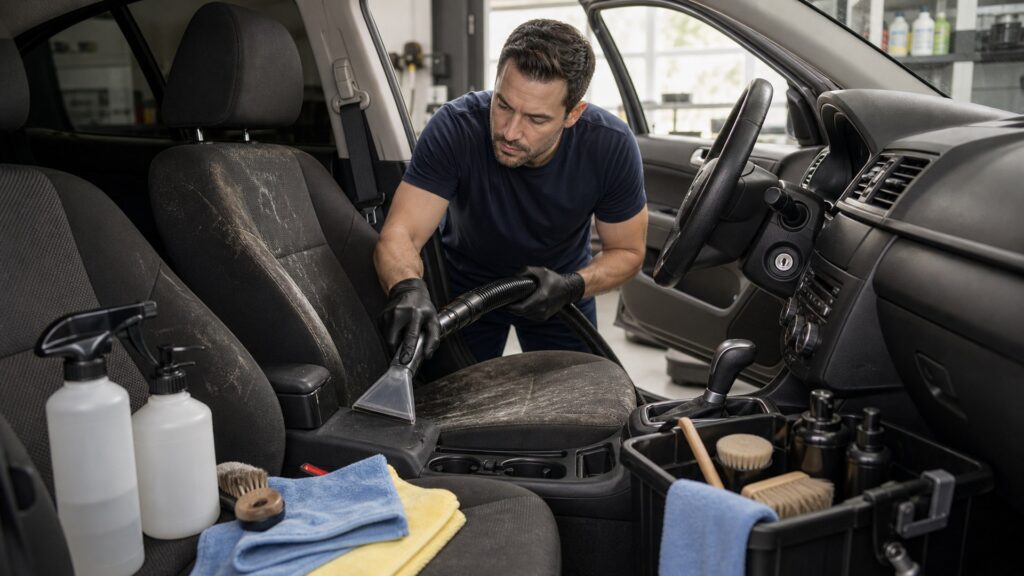
Moisture recovery: For extraction, compare controlled solution delivery, suction recovery, tool width, heat, access, tank hygiene, and drying plan instead of assuming more water cleans deeper.
Brush and towel design: Fiber stiffness, tip shape, backing, edge, colorfastness, lint, and dedicated use influence whether texture is cleaned without abrasion or cross-contamination.
Repair flexibility and adhesion: Fillers, adhesives, grain compounds, and color coatings must flex with the substrate, bond to the prepared surface, and match texture and sheen after cure.
Occupant and control safety: Avoid slippery residue on pedals, steering wheels, floors, seats, or controls and protect screens, sensors, belt webbing, airbag seams, switches, and ventilation openings.
Avoid these traps
Interior restoration methods that make damage worse
Strong chemistry and heavy moisture can hide delayed failures. Inspect during drying and after the surface returns to normal temperature.
Assuming every seat panel is leather: Mixed materials and factory coatings are common, so conditioners or solvents selected for one surface may stain, soften, or gloss another.
Soaking the headliner: Excess liquid, heat, or aggressive brushing can weaken adhesive and create sagging or rings that appear after drying.
Masking an odor with fragrance: Perfume does not remove contamination in carpet, foam, ducts, drains, filters, leaks, or hidden cavities; locate and correct the source first.
Scrubbing dye transfer aggressively: Abrasion or solvent can remove the factory color coating along with transferred dye; test mild chemistry and distinguish staining from coating wear.
Recoloring over contamination: Silicone, dressing, grease, cleaner residue, and failing coatings undermine adhesion and can create fisheyes, peeling, stiffness, or mismatched sheen.
Decision guidance
Choose cleaning, repair, recoloring, or replacement
Escalate only after the material is clean and dry. Cosmetic improvement should not compromise restraint or electrical function.
If the surface is intact but soiled: Use compatible cleaner, controlled agitation, residue removal, and drying, then reassess whether any protectant adds useful UV or stain resistance.
If fabric holds a localized stain: Identify stain chemistry, pre-treat cautiously, extract without oversaturation, equalize the cleaned area when needed, and dry from both surface and underlying foam.
If coating is worn: Consider flexible color repair only when the substrate remains sound and a test confirms adhesion, texture, color, sheen, and transfer resistance.
If damage affects safety equipment: Do not coat, stitch, glue, or alter belts, airbag seams, sensor mats, buckles, or structural seat parts without manufacturer-approved procedures and qualified repair.
If contamination is deep or hazardous: Assess removal of carpet, insulation, foam, filters, or modules and use appropriate professional remediation rather than relying on surface extraction.
Ownership & compatibility
Protect the restored cabin
Gentle routine care prevents another aggressive restoration cycle. Watch moisture and wear before damage spreads.
Vacuum before wet cleaning: Remove grit from seams, tracks, perforations, carpet, and textured plastic so agitation does not grind particles into coatings or fibers.
Respond to leaks quickly: Find water entry, dry carpet and padding, inspect connectors or modules, and correct drainage before odor, corrosion, staining, or microbial growth develops.
Use protectants selectively: Confirm material approval, finish level, transfer resistance, and non-slip behavior; more gloss or dressing does not necessarily mean more protection.
Document repaired zones: Record products, color formula, preparation, cure, panels treated, sensitivities, and replacement parts so future cleaning does not attack the restoration.
FAQ
Interior restoration questions
Resolve material, stain, moisture, odor, and repair choices before treatment.
How can I tell whether a seat is leather or vinyl?
Can an extractor damage vehicle interiors?
What is the safest way to clean a headliner?
Why does an interior stain return after drying?
Can detailing remove smoke odor permanently?
Should I condition coated automotive leather?
Can cracked vinyl or leather be repaired invisibly?
Are glossy interior dressings safe everywhere?
When should interior parts be replaced instead of restored?
Bottom line
Interior restoration rewards restraint
Identify materials, remove contamination, dry completely, and repair only sound substrates. Safety interfaces always outrank cosmetic uniformity.
Map the cabin: Know materials, coatings, and sensitive systems.
Control cleaning: Limit chemistry, abrasion, moisture, and residue.
Repair selectively: Match flexibility, color, sheen, and safe use.
Reading Shortcuts
Move directly to the decision you need to resolve.
Decision Reminders
Use these checks while narrowing the field.
- Vacuum before agitation: Grit damages finishes.
- Test every material: Cabins mix surfaces.
- Limit headliner moisture: Adhesive can release.
- Remove odor sources: Fragrance is not correction.
- Protect airbag seams: Safety outranks cosmetics.
- Dry hidden layers: Surface dryness is incomplete.
Glossary Snippets
Terms that appear in listings, labels, and service information.
When to Use a Top 10 Review
Use rankings after requirements and exclusions are clear.
- Scan candidates: Find credible options.
- Compare strengths: See major tradeoffs.
- Build a shortlist: Choose what to inspect.
- Check availability: Confirm current offerings.
Already down to 2–3 options? A Comparison is usually the faster next step.
When to Use a Comparison
Compare directly when only a few candidates remain.
- Align versions: Compare equivalent configurations.
- Trace differences: Locate meaningful distinctions.
- Price the outcome: Include continuing costs.
- Verify uncertainty: Inspect unresolved details.
Still exploring? Start with a Top 10 to build a shortlist first.