
How to Choose Car Electronics & Driving Tech for In-Dash Upgrade Planning
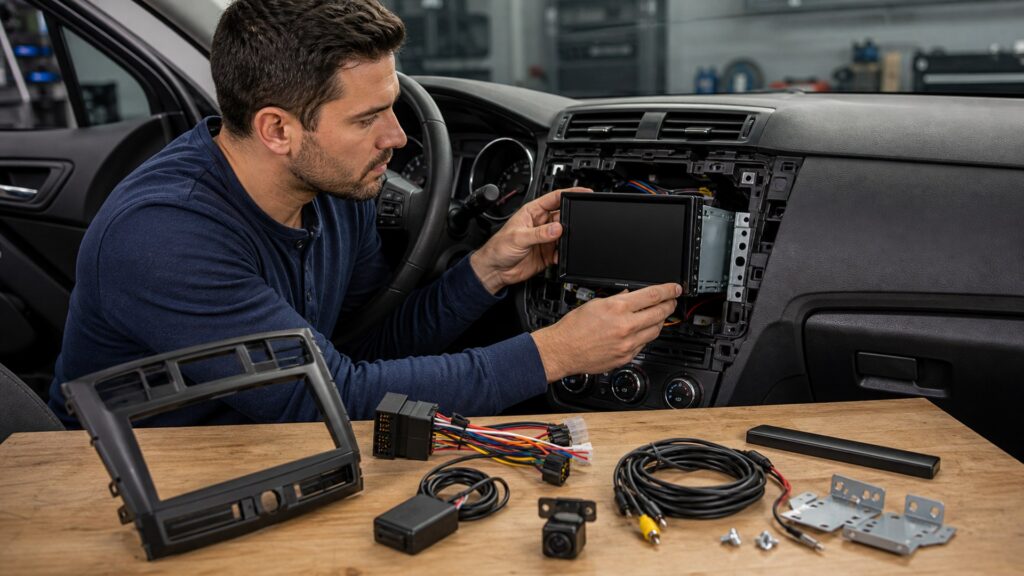
An in-dash receiver is rarely a stand-alone purchase. The factory unit may supply vehicle settings, chimes, amplifier commands, camera switching, microphones, antennas, USB routing, and network behavior in addition to entertainment. Dash depth, brackets, vents, moving panels, and a floating screen's position can decide whether an advertised size actually works.
Plan the complete signal and control path before removing trim. Record every factory function, identify the installed system, and list the dash kit, harnesses, data interface, amplifier or camera adapters, antennas, microphone, USB extension, and programming required. Bench-configure compatible modules where possible, then test startup, shutdown, sound, calls, cameras, controls, settings, dimming, and fault-free sleep before reassembly. Judge the upgrade by dependable daily operation, not the feature list alone.
Buying framework
Build the purchase around the real job
Define the outcome, constraints, and verification steps before comparing products. Let build the purchase around the real job shape the comparison.
Factory-function inventory: Begin by documenting audio sources, amplifier, chimes, settings, climate display, cameras, microphones, antennas, controls, usb, diagnostics, and connected services.
Dash geometry map: Make a separate decision about radio opening, rear depth, brackets, trim overlap, vents, shifter movement, steering sightline, screen tilt, glare, and removal access.
Complete parts chain: Before shopping, establish receiver, dash kit, main harness, data module, amplifier interface, antenna adapters, camera conversion, microphone, usb, and mounting hardware.
Parked configuration: Use a test to settle firmware, vehicle profile, steering buttons, amplifier gain, camera triggers, dimming, radio region, phone pairing, and privacy settings.
Release test: Complete the plan with cold and warm boot, key cycles, retained accessory power, battery sleep, every speaker, calls, projection, cameras, warnings, and diagnostic scan.
Who this is for
Different users need different priorities
Frequency, environment, skill, vehicle design, and tolerance for downtime change the best choice. Let different users need different priorities shape the comparison.
Basic radio replacement: This use pattern rewards reliable tuner, simple bluetooth, physical controls, documented harnessing, legible display, and minimal software dependence.
Phone-projection user: This owner should prioritize compatible wired and wireless carplay or android auto, high-quality usb path, microphone clarity, fast reconnection, and wired fallback.
Factory-amplified vehicle owner: For this situation, compare correct signal and gain integration, channel retention, chimes, fader behavior, noise control, and amplifier turn-on timing.
Large-screen upgrader: This project needs structural mounting, control and vent clearance, sightline, glare, passenger reach, camera scaling, and theft exposure.
What to pay attention to
Specifications that change the result
Published numbers matter only when they connect to fit, performance, safety, and repeatable use. Let specifications that change the result shape the comparison.
Dash & Vehicle Integration
Opening, brackets, trim, depth, ventilation, wiring, networks, settings, chimes, controls, cameras, amplifier, antenna, and reversibility.
Daily Infotainment Operation
Screen visibility, boot time, controls, microphone, audio, phone projection, USB, navigation, updates, profiles, and distraction.
Chassis and screen dimensions: Read listings for din body, rear connector clearance, display width and height, adjustable position, screen travel, bezel overlap, and service removal.
Preamp and speaker outputs: Confirm the published details for rms power evidence, channel configuration, preout voltage, crossover functions, impedance limits, factory-amplifier compatibility, and noise performance.
Phone projection support: Compare evidence covering specific wired and wireless platforms, phone operating systems, pairing capacity, data plan needs, wi-fi behavior, usb cable, and fallback.
Camera handling: Treat as essential input count, accepted formats, power, triggers, boot-to-image time, guidelines, image mirroring, front-camera timing, and recording limits.
Control and interface support: Look beyond headline claims to steering buttons, vehicle settings, chimes, climate information, gauges, parking sensors, antenna power, and programmable outputs.
Update and recovery process: Require documentation of firmware source, release history, storage media, stable power requirement, settings backup, failure recovery, warranty, and support contact.
Avoid these traps
Shortcuts that create avoidable problems
A plausible product can still fail when preparation, interfaces, or operating limits are ignored. Let shortcuts that create avoidable problems shape the comparison.
Buying the receiver alone: This fails when buyers overlook that interfaces, adapters, brackets, cables, antennas, programming, labor, and retained-feature requirements can exceed the headline unit price.
Assuming double-DIN guarantees fit: The hidden problem is rear depth, angled openings, factory brackets, floating displays, vents, knobs, dashboards, and cable bends still create interference.
Reusing the factory microphone blindly: Avoid assuming that impedance, bias, connector, placement, beam pattern, and echo processing may not match the replacement receiver.
Hiding untested modules: This shortcut can cause a buried interface can require firmware, reset, or reprogramming later, so access and identification should be preserved.
Skipping sleep-current verification: Correct the plan by checking incorrect accessory timing or a module that never sleeps can create intermittent resets or a discharged battery.
Decision guidance
Turn the evidence into a shortlist
Use conditional choices instead of treating one configuration as universally best. Let turn the evidence into a shortlist shape the comparison.
Factory unit meets core needs: Choose this path only after confirming a smaller phone, charging, or audio correction rather than replacing an integrated control center.
Phone projection is the priority: This option fits when a supported receiver and verified data-grade usb installation with clear microphone testing and simple physical controls.
Premium factory audio remains: Prefer this approach if an integration path whose signal, channels, volume, chimes, fader, and amplifier timing are documented for the exact trim.
Vehicle settings depend on the radio: Escalate the project when a proven retention interface or vehicle-specific solution, with every critical menu demonstrated before purchase.
Irreversible dash changes are proposed: Delay purchase until you resolve a vehicle-specific professional plan and complete bench verification before any trimming, drilling, or harness alteration.
Ownership & compatibility
Keep the system dependable after purchase
Maintenance, records, updates, inspection, and storage determine whether the initial result lasts. Let keep the system dependable after purchase shape the comparison.
Configuration archive: After installation or use, track receiver and interface versions, vehicle profile, button map, audio settings, paired phones, camera logic, and restoration instructions.
Connection health: Preserve a record of usb cable strain, microphone clarity, antenna reception, wireless reconnection, heat, resets, display response, and night dimming.
Update discipline: Routine care should include release notes, compatibility reports, stable power, settings backup, parked installation, full retest, and avoidance of unnecessary changes.
Resale handoff: Recheck the system whenever cleared accounts and phones, saved factory equipment, labeled adapters, manuals, security information, and an accurate as-built diagram.
FAQ
In-dash upgrade questions
Resolve fit, integration, phone, camera, audio, control, and update choices before opening the dashboard.
What is the difference between single-DIN and double-DIN?
Will wireless CarPlay or Android Auto work with every phone?
Can I keep the factory amplifier?
Can the original USB port be reused?
Should I use the receiver's included microphone?
How fast should a backup camera appear?
Are floating screens safe in every dashboard?
Can a firmware update erase settings?
When should an installer handle the upgrade?
Bottom line
Make the final choice defensible
The strongest purchase connects the requirement, evidence, and verification plan without adding unsupported complexity. Let make the final choice defensible shape the comparison.
Whole-system parts list: Anchor the purchase to receiver plus every required retention, signal, antenna, camera, control, and mounting interface.
Parked functional proof: Protect the result through all factory and new functions verified before the dashboard is closed.
Serviceable installation: Leave room for labeled, accessible, reversible work supported by current documentation.
Reading Shortcuts
Move directly to the decision you need to resolve.
Decision Reminders
Use these checks while narrowing the field.
- Identify the exact application: Names alone do not prove fit.
- Read primary instructions: Limits and steps matter.
- Test before full commitment: Small trials expose mismatch.
- Budget the complete system: Accessories and labor count.
- Protect safety functions: Convenience never overrides control.
- Keep records: Future diagnosis needs evidence.
Glossary Snippets
Terms that appear in listings, labels, and service information.
When to Use a Top 10 Review
Use rankings after requirements and exclusions are clear.
- Scan candidates: Find credible options.
- Compare strengths: See major tradeoffs.
- Build a shortlist: Choose what to inspect.
- Check availability: Confirm current offerings.
Already down to 2–3 options? A Comparison is usually the faster next step.
When to Use a Comparison
Compare directly when only a few candidates remain.
- Align versions: Compare equivalent configurations.
- Trace differences: Locate meaningful distinctions.
- Price the outcome: Include continuing costs.
- Verify uncertainty: Inspect unresolved details.
Still exploring? Start with a Top 10 to build a shortlist first.