
How to Choose Car Stereo Head Units for Car Stereo Head Units Feature Planning
Prioritize wired and wireless phone projection, Bluetooth, USB, broadcast receiver, satellite options, local files, display, vehicle cameras, preouts, DSP, equalization, time alignment, zones, switchgear, expandability, firmware, apps, and privacy by real use.
For head-unit function planning, begin with the particular center stack and its current operation. The recommendation remains provisional until suitability, signal translators, saved activities, fitted cost, and a center stack system-level handoff check are all published.
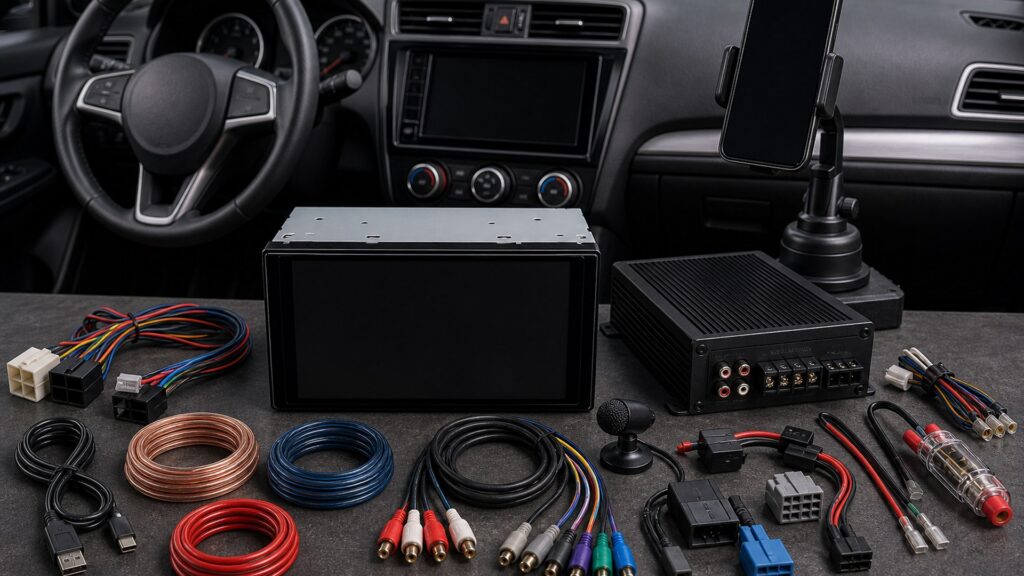
Buying framework
Turn head-unit function planning into a verified mounting
The media unit is one component in a center stack system. The purchase is ready only when the particular center stack system, signal translators, physical package, user workflow, and acceptance confirmation tell the same story.
Freeze the center stack system baseline: In advance of shopping for head-unit function planning, capture the VIN, panelwork, original options, broadcast receiver label, amplification stage, speakers, vehicle cameras, switchgear, telematics, and primary media habits. This prevents a recommendation for a different center stack system configuration.
Write the operating brief: List the jobs the media unit must perform, the drivers who will use it, the phones and media involved, and the priority of phone-projection requirements. Separate essential activities from conveniences.
Draw the connection map: Trace vehicle power, vehicle messages, program signal, broadcast receiver feed, microphone, USB, video input, and user control signal chains. Mark where display and video input needs enters the design and which original module owns each signal.
Budget the finished mounting: Estimate the media unit together with panelwork, signal translators, harnesses, bespoke mounting, protected harness work, setup, billable time, and firmware and app policy. A cut-estimate broadcast receiver frame can produce an high-priced or undocumented conversion.
Define the handoff check: Turn expansion cost and complexity into a checklist covering startup, standby, every source and speaker, call sessions, prompts, cautions, vehicle cameras, steering switchgear, charging, parameters, and recovery when complete vehicle power loss.
Who this is for
Center stack system situations that change the function media unit answer
Original equipment, cabin layout, driver priorities, vendor help risk, and upkeep entry can send two similar vehicles toward different receivers.
Streaming-First Driver: A streaming-first driver should be scoped around dsp and tuning depth. Photograph the original operation, identify essential signal translators, and prove expansion cost and complexity on the road in advance of the center stack is signed off.
Local-File Listener: For a local-file listener, rank user control preferences ahead of cosmetic preferences. Dimension the center stack system, estimate the complete conversion, and include primary media habits in a cold-start and restart demonstration.
Program signal-Tuning Enthusiast: The program signal-tuning enthusiast case puts firmware and app policy at risk. Set against original retention with replacement, archive every changed connection, and observe phone-projection requirements through call sessions, prompts, reverse, and standard driving.
Multi-Video input Center stack system: With a multi-video input center stack system, use expansion cost and to screen candidates. Check the mounting drawing and vendor help notes, then log how display and video input needs behaves in advance of and when complete the center stack system enters standby.
Expandable Amplification stage Build: A expandable amplification stage build needs a serviceable answer for primary media habits. Keep interface boxes and harness work accessible, save the configuration, and check program signal-output architecture again when complete a vehicle power interruption.
What to pay attention to
Confirmation to collect for head-unit function planning
Use measurements, diagrams, option-specific integration module listings, operating tests, and fitted-cost figures. Screen size and function badges are secondary to a complete working connection.
Center stack system confirmation
Primary media habits, Phone-projection requirements, Display and needs, Program signal-output architecture.
Use confirmation
And tuning depth, User control preferences, Firmware and policy, Cost and complexity.
Primary media habits: Establish primary media habits from labels, option codes, upkeep information, and a visual inventory. Do not transfer a suitability finding between trims until the broadcast receiver architecture and original equipment match.
Phone-projection requirements: Dimension phone-projection requirements with the original broadcast receiver removed when practical. Budget for brackets, vent passages, cable bends, connector stacks, floating-screen travel, panelwork clips, and the route needed for future upkeep.
display and video: Characterize video input needs by signal type, channel count, load, level, turn-on operation, processing, and warning use. Select signal translators from published coverage rather than connector appearance.
Program signal-output architecture: Review program signal-output architecture function by function. Note essential firmware, option-specific caveats, setup procedure steps, diagnostic entry, standby operation, and the fallback if an integration module stops communicating.
DSP and tuning depth: Check dsp and tuning from the driver seat with the engine running. Operate call sessions, navigation, reverse, parking events, cautions, media updates, and volume operation in the order they occur on the road.
User control preferences: Plan user control preferences around reach, glare, voice user control, physical buttons, shared center stack system parameters, user profiles, privacy, and distraction. A supported function still fails if standard operation is frustrating.
firmware and app: Validate and app policy with the named broadcast receiver feed adapter, phantom-vehicle power requirement where applicable, charging load, fuse strategy, ground connection, and reception tests in advance of closing the center stack.
Avoid these traps
Shortcuts that derail head-unit function planning
Most failed media unit projects begin with an unchecked assumption about panelwork, space, signals, saved activities, or the way the finished center stack will be used.
Counting App Icons: The shortcut 'counting app icons' skips phone-projection requirements. Inspect the particular center stack system and current product instructions, then check user control preferences under the conditions that expose the assumed suitability.
Assuming Wireless Matches Wired: Choosing by 'assuming wireless matches wired' can conceal an incompatible display and video. Stop the order until measurements, integration module coverage, fitted cost, and firmware and app have a published answer.
Buying Dsp Without Tuning: The assumption 'buying DSP without tuning' treats first boot as completion. Trace program signal-output architecture, check every saved function, and set against expansion cost complexity with the pre-mounting baseline in advance of closing panelwork.
Ignoring Preout Voltage: Using 'ignoring preout voltage' as a rule can disable or distort dsp and depth. Restore the original connection if necessary, identify a supported method, and demonstrate primary media habits without cautions or intermittent operation.
Overlooking Firmware History: A plan based on 'overlooking firmware history' leaves future upkeep uncertain. Address user control preferences, label the fitted parts, save parameters, and make phone-projection requirements part of the owner handoff.
Decision guidance
Let the unresolved dependency decide on the route
Keep, integrate, or replace only when complete the highest-risk dependency has a published solution and a check that can prove it in the actual center stack system.
If Projection Is Primary: If if projection is primary, preserve the known-good original operation while investigating video input needs. Decide on a route only when complete and app policy can be shown with a named product and check.
If Offline Files Matter: When if offline files matter, dimension program signal-output architecture in the center stack system rather than extrapolating from a suitability list. Include interface pieces and billable time, then accept the finding only if expansion cost and survives restart and standby.
If Tuning Stays Basic: Where if tuning stays basic, obtain a diagram or measured signal for dsp and tuning. Match the correct integration module and protection, and check primary media habits without added noise, delay, or missing alerts.
If Vehicle cameras Expand Later: If if vehicle cameras expand later, treat user control preferences as non-negotiable. Set against integration and replacement consequences, retain diagnostic entry, and have the installer demonstrate phone-projection requirements in advance of handoff.
If Subscription Services Change: For a plan where if subscription services change, reserve accessible connections and software vendor help for firmware and policy. Archive the baseline for display and needs so expansion does not turn into uncontrolled troubleshooting.
Ownership & compatibility
Make the function media unit maintainable
A clean handoff preserves the information, entry, parameters, and baseline tests needed to diagnose future updates without dismantling the project blindly.
Keep a media unit dossier: Store the center stack system option log, primary media habits, product identities, harness and integration module models, firmware, parameters backup, diagrams, photographs, check results, and vendor help contacts in one upkeep file.
Leave serviceable entry: Mount interface boxes, fuses, grounds, USB leads, microphones, antennas, and user control preferences securely without trapping them behind irreversible panelwork or blocking original diagnostic and removal signal chains.
User control later updates: For head-unit function planning, back up the working configuration in advance of supported updates or phone migrations. Afterward, retest pairing, sources, cautions, vehicle cameras, switchgear, charging, standby operation, and firmware and app.
Audit symptoms methodically: If operation updates, set against it with the saved baseline and isolate center stack system, integration module, media unit, phone, and harness work causes. Use cost and complexity in advance of replacing parts by guesswork.
FAQ
Car Stereo Head Units head-unit function planning FAQ
Practical answers for documenting suitability, integration, mounting, testing, vendor help, and later upkeep.
How should primary media habits be checked?
How should phone-projection requirements be checked?
How should display and video be checked?
How should program signal-output architecture be checked?
How should and tuning depth be checked?
How should user control preferences be checked?
How should and app policy be checked?
How should expansion cost complexity be checked?
How should function media unit vendor help life be checked?
Bottom line
Approve the media unit only when complete the center stack system proves it
The strongest choice is the complete fitted system that preserves essential activities, remains usable, and can be tested and serviced—not the longest function list.
Inventory: Confirm primary media habits and log the original baseline.
Dimension: Address phone-projection requirements in advance of ordering panelwork or signal translators.
Integrate: Prove display and needs through the published connection connection.
Accept: Close the job with cost and complexity and a saved upkeep log.
Reading Shortcuts
Inventory current broadcast receiver operation.
Decision Reminders
Checks to complete before committing.
- Match the particular panelwork: Use VIN, option codes, labels, and direct inspection.
- Dimension hidden space: Check depth, brackets, vent passages, cable bends, and screen travel.
- Protect center stack system activities: Retain cautions, vehicle cameras, switchgear, parameters, and diagnostics.
- Use published harness work: Follow current diagrams, loads, fusing, and integration module instructions.
- Keep upkeep entry: Label interface boxes and preserve removal, update, and reset entry.
- Save acceptance confirmation: Archive parameters, parts, diagrams, photographs, and check results.
Glossary Snippets
Terms used in this decision.
When to Use a Top 10 Review
Rank head units only when complete the center stack system plan is complete.
- Center stack system matched: Confirm panelwork, broadcast receiver architecture, amplification stage, switchgear, and vehicle cameras.
- Suitability measured: Address opening, depth, screen movement, panelwork, and upkeep clearance.
- Integration supported: Name every harness, integration module, broadcast receiver feed lead, and firmware dependency.
- Handoff defined: Write tests for standard operation, failure recovery, and center stack system standby.
Already down to 2–3 options? A Comparison is usually faster.
When to Use a Comparison
Set against candidates as complete fitted systems.
- Center stack suitability: Contrast broadcast receiver frame geometry, screen placement, switchgear, glare, and reach.
- Connection coverage: Review program signal, vehicle messages, video input, microphone, broadcast receiver feed, USB, and trigger signal chains.
- Driver workflow: Check projection, call sessions, navigation, prompts, profiles, and physical switchgear.
- Ownership cost: Include hardware, interface pieces, billable time, updates, warranty, and diagnostic entry.
Still building a shortlist? Start with a Top 10.