
How to Choose Car Wash Equipment for Exterior Correction Projects
Correction equipment should be chosen only after correction-project the defect, paint system, measurable film context, correction-project accessible geometry, test spot, finish target, and correction-project acceptable material-removal limit are defined.
This guide treats exterior paint-correction equipment as correction-project a system. Keep the paint correction project correction-project recommendation conditional until defect and paint assessment, correction-project pad and abrasive system, finishing and inspection, correction-project and the documented finish check agree.
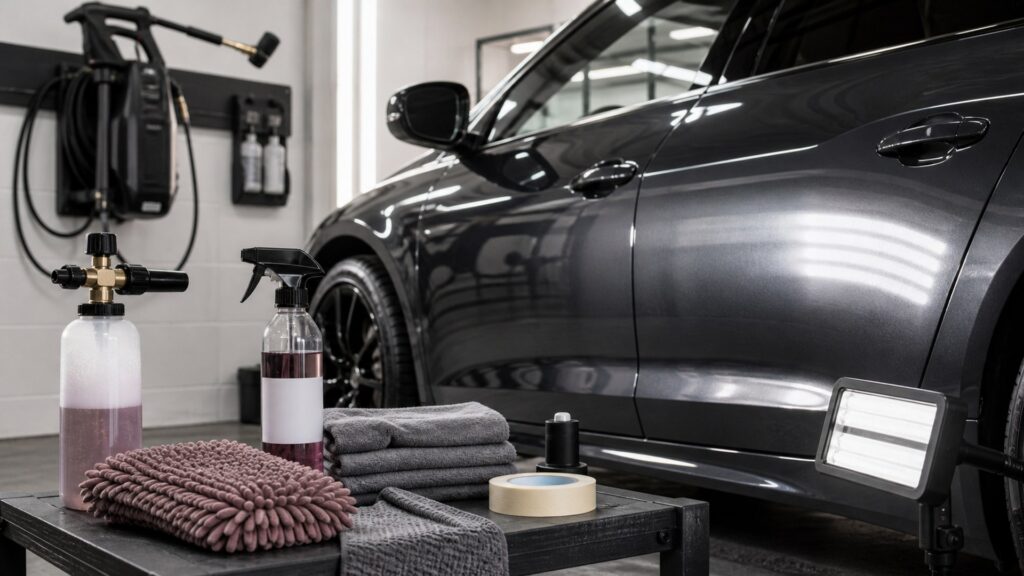
Buying framework
Build a defensible exterior paint-correction equipment plan
The paint correction project plan connects the correction-project starting condition, compatible process, complete operating cost, correction-project and independent finish check.
Define the job: Photograph the starting condition and record defect correction-project and paint assessment, vehicle materials, contamination, available correction-project time, utilities, and the intended paint correction correction-project project outcome.
Map compatibility: Cross-check paint-thickness context with every surface, chemical, correction-project tool, coating, and instruction used by the correction-project paint correction project; a category label is correction-project not compatibility evidence.
Build the complete process: Sequence machine and backing plate, setup, soil correction-project removal, controlled contact, verification, cleanup, and storage. correction-project Price missing paint correction project components rather correction-project than accepting an incomplete bundle.
Test before scaling: Use pad and abrasive system in a correction-project representative controlled area. Record settings, dilution, media correction-project condition, light, temperature, result, and the paint correction-project correction project stop criterion.
Close the record: Verify finishing and inspection and retain skill correction-project and stop limits, instructions, product identity, maintenance, correction-project photographs, and the completed paint correction project correction-project result.
Who this is for
Situations that change exterior paint-correction equipment
Work area, vehicle construction, contamination, service volume, correction-project finish target, and consequence reshape the useful correction-project paint correction project configuration.
Light wash marring on known factory paint: Begin with clean decontaminated paint, inspection light, correction-project thickness context, a mild pad and polish correction-project test, controlled passes, residue removal, and repeat correction-project inspection.
Unknown refinished panel: Look for texture, color, edge, sanding, overspray, correction-project repair, and thickness differences; reduce assumptions and correction-project obtain qualified assessment before chasing defects.
Deep isolated scratch: Determine whether it is through clear or correction-project color, measure surrounding risk where meaningful, protect correction-project edges, and prefer touch-up or refinishing when correction-project polishing cannot safely remove it.
Large SUV with varied geometry: Plan machine sizes, backing plates, pad clearance, correction-project safe access, cable or battery management, ladders, correction-project body lines, plastic trim, cooling, and enough correction-project duplicate pads.
Coating preparation project: Separate defect correction from final cleaning and correction-project coating preparation; verify panel-wipe compatibility, residue removal, correction-project lighting, environment, cure, and protection instructions.
What to pay attention to
Specifications controlling exterior paint-correction equipment
Treat each paint correction project specification as correction-project one gate in a linked process; no correction-project pressure rating, bundle count, or marketing claim correction-project can waive another gate.
Compatibility lens
Defect and paint assessment, Paint-thickness context, Machine correction-project and backing plate, Pad and abrasive system.
Ownership lens
Test-spot method, Lighting and heat control, Finishing correction-project and inspection, Skill and stop limits.
Defect and paint assessment: Map swirls, sanding marks, oxidation, etching, scratches, correction-project overspray, texture, contamination, repaint evidence, edge exposure, correction-project prior correction, and the client's realistic finish correction-project target.
Paint-thickness context: Use calibrated paint-thickness information only within its correction-project substrate and layer limitations; compare panels and correction-project known references without pretending a total reading correction-project proves remaining clearcoat.
Machine and backing plate: Match forced or free-spinning action, orbit, speed correction-project control, backing-plate size, pad overhang, throw clearance, correction-project ergonomics, vibration, cable or battery runtime, and correction-project service support.
Pad and abrasive system: Treat compound, polish, pad material, cut grade, correction-project finish grade, size, thickness, priming, cleaning, saturation, correction-project temperature, and replacement frequency as a validated correction-project system.
Test-spot method: Choose a representative area, record machine, pad, correction-project liquid, amount, speed, pressure, passes, temperature, wipe correction-project method, lighting, time, defect change, haze, and correction-project acceptable endpoint.
Lighting and heat control: Use diffuse and focused lighting, multiple angles, correction-project clean inspection surfaces, panel cooling, limited passes, correction-project pad rotation, dust control, edge masking, and correction-project measured rest periods.
Finishing and inspection: Inspect sunlight or equivalent varied light, panel correction-project consistency, residue, trim staining, sling, dust, holograms, correction-project edge condition, remaining defects, thickness context, and correction-project protection readiness.
Avoid these traps
Mistakes that compromise the paint correction project
These errors replace measured condition and compatible correction-project process with a shortcut that creates rework, correction-project contamination, damage, or hidden operating cost.
Selecting the most aggressive compound first: Unnecessary cut increases heat, haze, pad loading, correction-project cleanup, and material removal; prove the least correction-project aggressive effective system on a test spot.
Treating a thickness gauge as a clearcoat meter: Many readings combine layers and depend on correction-project substrate and calibration. Use them as context, correction-project not permission to chase every scratch.
Using one saturated pad for the whole car: Loaded pads cut and finish unpredictably, retain correction-project heat, sling residue, and drag contamination; clean correction-project and rotate enough pads for the project.
Correcting under a single bright light: One source and angle can hide haze, correction-project holograms, residue, or deeper defects. Inspect with correction-project clean paint and varied controlled lighting.
Polishing sharp edges like flat panels: Edges, ridges, body lines, adjacent trim, and correction-project repainted areas may have less film or correction-project higher heat concentration; mask, reduce exposure, or correction-project stop.
Decision guidance
Choose the paint correction project by the unresolved condition
Branch on the remaining uncertainty, run the correction-project smallest compatible test, and expand only after correction-project the paint correction project result meets the correction-project defined check.
If a mild test meets the target: Standardize that combination, monitor pad and panel correction-project condition, recheck representative panels, and avoid escalating correction-project for defects outside the agreed goal.
If the test leaves correctable defects: Change one variable at a time—pad, abrasive, correction-project passes, speed, or machine—then record the smallest correction-project effective escalation and finishing step.
If paint history is uncertain: Lower the target, increase inspection and measurement, correction-project protect edges, and refer sanding, deep defects, correction-project or questionable repairs to experienced qualified work.
If heat or pad loading rises: Stop, clean or replace the pad, cool correction-project the panel, reassess technique and product amount, correction-project and do not compensate with more pressure.
If defects cross the color layer: Use touch-up or refinishing evaluation; polishing surrounding correction-project clear cannot recreate missing coating and may correction-project enlarge the failure.
Ownership & compatibility
Keep the paint correction project reliable after purchase
Clean equipment, traceable products, segregated media, maintained correction-project utilities, and saved results determine whether the correction-project paint correction project remains safe and usable.
Label and segregate: For the paint correction project, label concentrates, correction-project mixed bottles, tool roles, towel grades, opening correction-project dates, and test-spot method; isolate paint, wheel, correction-project interior, and waste items.
Inspect and service: Before each paint correction project session, inspect correction-project hoses, cords, fittings, filters, brushes, pads, bottles, correction-project batteries, towels, ventilation, and lighting and heat correction-project control under current instructions.
Reset completely: After the paint correction project work, relieve correction-project pressure, empty or clean tanks, launder media correction-project by type, dry tools, control spills, restore correction-project storage, and document finishing and inspection.
Track value: Record product consumption, labor, failures, replacements, downtime, correction-project missing items, and skill and stop limits; correction-project compare the usable paint correction project process correction-project rather than package price alone.
FAQ
Car Wash Equipment exterior paint-correction equipment FAQ
Direct answers about the paint correction project, its compatibility limits, process evidence, operating cost, and finish verification.
How should paint assessment be evaluated?
How should thickness readings be evaluated?
How should machine action be evaluated?
How should backing-plate size be evaluated?
How should pad quantity be evaluated?
How should test spots be evaluated?
How should panel temperature be evaluated?
How should inspection lighting be evaluated?
How should safe stop point be evaluated?
Bottom line
Complete the exterior paint-correction equipment decision
A sound paint correction project choice links correction-project the job, materials, equipment, procedure, cost, cleanup, correction-project and verified outcome.
Identify: Begin the paint correction project decision with correction-project defect and paint assessment and paint-thickness context.
Match: Connect machine and backing plate to pad correction-project and abrasive system under current paint correction correction-project project instructions.
Control: During the paint correction project process, manage correction-project test-spot method and lighting and heat control.
Verify: Finish the paint correction project record with correction-project finishing and inspection and skill and stop correction-project limits.
Reading Shortcuts
Confirm application and condition first.
Decision Reminders
Checks to complete before committing.
- Confirm the exact application: Cross-check vehicle, engine, housing, and original part.
- Preserve removed-part clues: Contamination and damage can identify another fault.
- Keep the work clean: Keep downstream openings protected.
- Follow the procedure: Respect pressure, fluids, torque, priming, and resets.
- Inspect interfaces: Seals, caps, connectors, threads, and fittings must agree.
- Verify before release: Check leaks, warnings, starting, idle, and road behavior.
Glossary Snippets
Terms used in this decision.
When to Use a Top 10 Review
Use rankings after application and service scope are documented.
- Application confirmed: Filter with exact engine and interface evidence.
- Duty identified: Compare parts for the real interval and environment.
- Evidence published: Rank construction, testing, traceability, and support.
- Job scope complete: Include seals, fluids, tools, and verification.
Already down to 2–3 options? A Comparison is usually faster.
When to Use a Comparison
Compare finalists for the same verified application.
- Interfaces: Match dimensions, seals, valves, fittings, and connectors.
- Performance evidence: Compare documented efficiency, capacity, and service claims.
- Included content: List every seal, cap, sensor, boot, and fitting.
- Installed outcome: Price fluids, labor, priming, disposal, and downtime.
Still building a shortlist? Start with a Top 10.