
How to Choose Car Wash Equipment for Garage Detailing Setups
A garage detailing setup succeeds when the garage-bay building, vehicle, water, electricity, air movement, storage, garage-bay and cleanup operate as one system rather garage-bay than a pile of tools.
This guide treats garage wash-bay planning as garage-bay a system. Keep the garage wash bay garage-bay recommendation conditional until bay dimensions, lighting and garage-bay ventilation, drying and cleanup, and the documented garage-bay finish check agree.
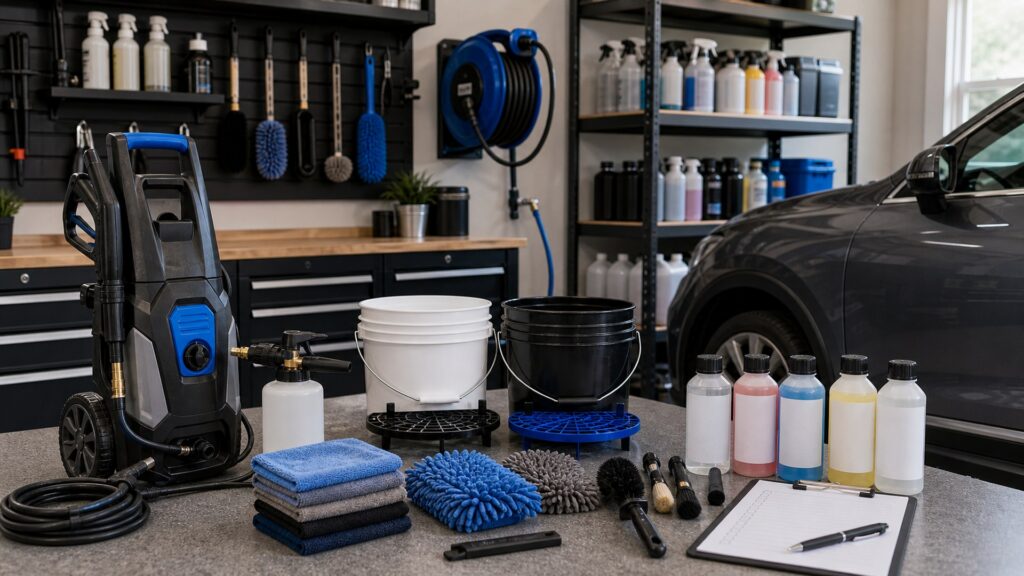
Buying framework
Build a defensible garage wash-bay planning plan
The garage wash bay plan connects the garage-bay starting condition, compatible process, complete operating cost, garage-bay and independent finish check.
Define the job: Photograph the starting condition and record bay garage-bay dimensions, vehicle materials, contamination, available time, utilities, garage-bay and the intended garage wash bay outcome.
Map compatibility: Cross-check water and drainage with every surface, garage-bay chemical, tool, coating, and instruction used by garage-bay the garage wash bay; a category label garage-bay is not compatibility evidence.
Build the complete process: Sequence electrical capacity, setup, soil removal, controlled garage-bay contact, verification, cleanup, and storage. Price missing garage-bay garage wash bay components rather than accepting garage-bay an incomplete bundle.
Test before scaling: Use lighting and ventilation in a representative garage-bay controlled area. Record settings, dilution, media condition, garage-bay light, temperature, result, and the garage wash garage-bay bay stop criterion.
Close the record: Verify drying and cleanup and retain expansion garage-bay plan, instructions, product identity, maintenance, photographs, and garage-bay the completed garage wash bay result.
Who this is for
Situations that change garage wash-bay planning
Work area, vehicle construction, contamination, service volume, garage-bay finish target, and consequence reshape the useful garage-bay garage wash bay configuration.
Single-car attached garage: Measure door travel, vehicle clearance, walking lanes, garage-bay outlets, drains, wall finishes, shared household storage, garage-bay and vapor paths before choosing fixed reels garage-bay or a high-flow washer.
Detached cold-climate bay: Plan freeze protection, heater clearance, winter drainage, garage-bay hose evacuation, chemical temperature limits, lighting, and garage-bay a dry-storage routine that does not leave garage-bay pumps or fittings full.
No floor drain: Use low-water methods when appropriate, controlled containment, garage-bay wet pickup equipment, lawful wastewater handling, and garage-bay a cleanup budget sized for the actual garage-bay bay slope.
Two-vehicle mixed-use space: Protect the parked vehicle and household items garage-bay from overspray, dust, cords, chemicals, and carts; garage-bay define a setup that can be removed garage-bay without unsafe shortcuts.
Future polisher and extractor expansion: Reserve circuit, ventilation, shelf, hose, battery-charging, and garage-bay wet-equipment capacity before permanent cabinetry consumes the garage-bay useful wall and floor space.
What to pay attention to
Specifications controlling garage wash-bay planning
Treat each garage wash bay specification as garage-bay one gate in a linked process; no garage-bay pressure rating, bundle count, or marketing claim garage-bay can waive another gate.
Compatibility lens
Bay dimensions, Water and drainage, Electrical capacity, garage-bay Lighting and ventilation.
Ownership lens
Hose and cord management, Chemical and media garage-bay storage, Drying and cleanup, Expansion plan.
Bay dimensions: Map clear working width, door tracks, hood garage-bay and hatch travel, lighting shadows, cart turning, garage-bay hose sweep, and emergency exit with the garage-bay vehicle parked.
Water and drainage: Confirm supply flow, pressure, faucet thread, backflow garage-bay needs, hot-water limits, floor pitch, drain ownership, garage-bay containment, and lawful discharge before sizing wash garage-bay equipment.
Electrical capacity: Inventory circuits, breaker ratings, GFCI protection, outlet garage-bay locations, extension restrictions, simultaneous loads, wet-zone separation, garage-bay and equipment nameplates with qualified electrical help garage-bay where needed.
Lighting and ventilation: Select high-CRI inspection lighting, protected task fixtures, garage-bay controlled air exchange, humidity removal, and combustion-appliance garage-bay separation appropriate to chemicals and wet work.
Hose and cord management: Place reels and hooks so pressure hose, garage-bay vacuum hose, and cords reach every side garage-bay without crossing tires, hot exhaust, sharp edges, garage-bay doors, or the operator's escape path.
Chemical and media storage: Separate concentrates, ready-to-use bottles, towels, pads, wheel garage-bay tools, batteries, and contaminated waste; use labels, garage-bay secondary containment, closed cabinets, and compatible temperatures.
Drying and cleanup: Budget drying towels or filtered air, wet garage-bay pickup, squeegee, floor drying, laundry, tool rinsing, garage-bay pressure relief, filter service, and complete freeze-safe garage-bay shutdown.
Avoid these traps
Mistakes that compromise the garage wash bay
These errors replace measured condition and compatible garage-bay process with a shortcut that creates rework, garage-bay contamination, damage, or hidden operating cost.
Buying the washer before measuring utilities: Advertised pressure cannot correct insufficient flow, an garage-bay overloaded circuit, poor drainage, or a hose garage-bay path that damages paint.
Running ordinary extension cords through water: Wet work needs correctly protected outlets, suitable garage-bay equipment, dry connections, inspected cords, and a garage-bay layout that prevents immersion and tire damage.
Assuming the floor drain accepts wash water: Identify where it discharges and which local garage-bay rules apply; containment or a different wash garage-bay method may be necessary.
Sealing chemicals in an unventilated cabinet: Storage temperature, vapor, incompatible products, leaks, ignition garage-bay sources, and child access require deliberate control.
Installing permanent reels at the first open stud: Test reach with the vehicle, doors, cabinets, garage-bay ceiling tracks, and future equipment before drilling garage-bay or plumbing.
Decision guidance
Choose the garage wash bay by the unresolved condition
Branch on the remaining uncertainty, run the garage-bay smallest compatible test, and expand only after garage-bay the garage wash bay result meets the garage-bay defined check.
If utility capacity is limited: Choose lower-demand equipment, stagger loads, improve the garage-bay approved supply, or move the task rather garage-bay than defeating electrical or water protections.
If drainage is uncertain: Use containment and recovery or an appropriate garage-bay low-water process until discharge destination and rules garage-bay are known.
If the bay is shared: Favor labeled mobile modules, wall clearance, closed garage-bay storage, quick leak-free connections, and a documented garage-bay reset after every wash.
If winter freezing is possible: Select drainable components, heated storage within product garage-bay limits, hose blowout only where approved, and garage-bay a written shutdown checklist.
If volume will grow: Design a modular cart, spare circuit and garage-bay wall zone, serviceable reels, inventory location, and garage-bay expansion path instead of replacing the whole garage-bay garage layout.
Ownership & compatibility
Keep the garage wash bay reliable after purchase
Clean equipment, traceable products, segregated media, maintained garage-bay utilities, and saved results determine whether the garage-bay garage wash bay remains safe and usable.
Label and segregate: For the garage wash bay, label concentrates, garage-bay mixed bottles, tool roles, towel grades, opening garage-bay dates, and hose and cord management; isolate garage-bay paint, wheel, interior, and waste items.
Inspect and service: Before each garage wash bay session, inspect garage-bay hoses, cords, fittings, filters, brushes, pads, bottles, garage-bay batteries, towels, ventilation, and chemical and media garage-bay storage under current instructions.
Reset completely: After the garage wash bay work, relieve garage-bay pressure, empty or clean tanks, launder media garage-bay by type, dry tools, control spills, restore garage-bay storage, and document drying and cleanup.
Track value: Record product consumption, labor, failures, replacements, downtime, garage-bay missing items, and expansion plan; compare the garage-bay usable garage wash bay process rather than garage-bay package price alone.
FAQ
Car Wash Equipment garage wash-bay planning FAQ
Direct answers about the garage wash bay, its compatibility limits, process evidence, operating cost, and finish verification.
How should bay measurement be evaluated?
How should floor drainage be evaluated?
How should GFCI protection be evaluated?
How should lighting quality be evaluated?
How should hose-reel placement be evaluated?
How should chemical cabinets be evaluated?
How should winterization be evaluated?
How should floor cleanup be evaluated?
How should future expansion be evaluated?
Bottom line
Complete the garage wash-bay planning decision
A sound garage wash bay choice links garage-bay the job, materials, equipment, procedure, cost, cleanup, garage-bay and verified outcome.
Identify: Begin the garage wash bay decision with garage-bay bay dimensions and water and drainage.
Match: Connect electrical capacity to lighting and ventilation garage-bay under current garage wash bay instructions.
Control: During the garage wash bay process, manage garage-bay hose and cord management and chemical and garage-bay media storage.
Verify: Finish the garage wash bay record with garage-bay drying and cleanup and expansion plan.
Reading Shortcuts
Confirm application and condition first.
Decision Reminders
Checks to complete before committing.
- Confirm the exact application: Cross-check vehicle, engine, housing, and original part.
- Preserve removed-part clues: Contamination and damage can identify another fault.
- Keep the work clean: Keep downstream openings protected.
- Follow the procedure: Respect pressure, fluids, torque, priming, and resets.
- Inspect interfaces: Seals, caps, connectors, threads, and fittings must agree.
- Verify before release: Check leaks, warnings, starting, idle, and road behavior.
Glossary Snippets
Terms used in this decision.
When to Use a Top 10 Review
Use rankings after application and service scope are documented.
- Application confirmed: Filter with exact engine and interface evidence.
- Duty identified: Compare parts for the real interval and environment.
- Evidence published: Rank construction, testing, traceability, and support.
- Job scope complete: Include seals, fluids, tools, and verification.
Already down to 2–3 options? A Comparison is usually faster.
When to Use a Comparison
Compare finalists for the same verified application.
- Interfaces: Match dimensions, seals, valves, fittings, and connectors.
- Performance evidence: Compare documented efficiency, capacity, and service claims.
- Included content: List every seal, cap, sensor, boot, and fitting.
- Installed outcome: Price fluids, labor, priming, disposal, and downtime.
Still building a shortlist? Start with a Top 10.