
How to Choose Cheek Makeup for Beginner Routines
Beginner cheek color should allow a light first pass. A sheer, buildable formula gives the user time to see placement and soften an edge before pigment becomes difficult to move.
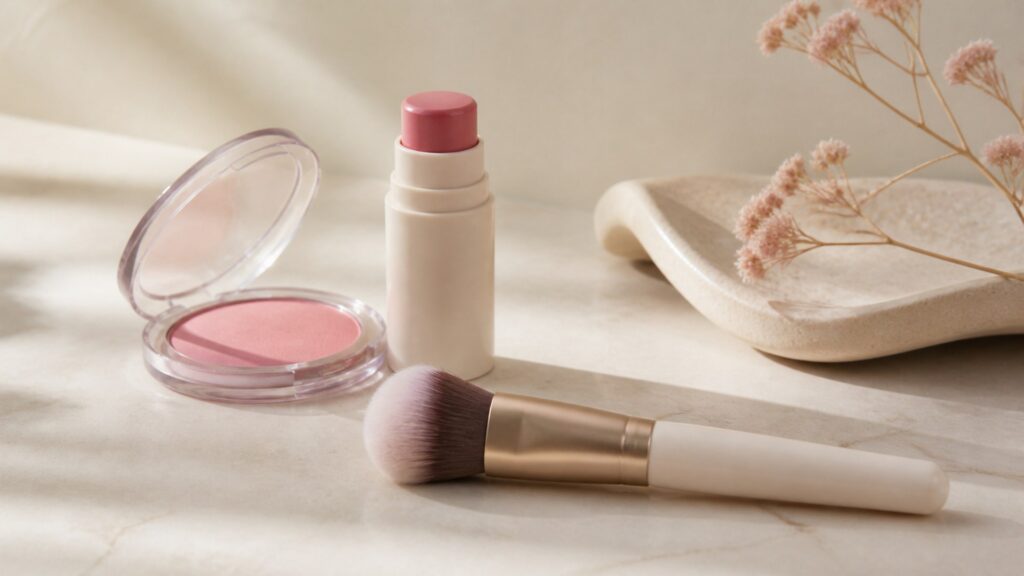
Test with the tool that will actually be used. A forgiving pan can behave very differently with a dense brush, damp sponge, or fingertips, so keep application simple while learning pressure and placement.
Buying framework
Define the beginner makeup job before comparing cheek makeup products
Keep a short routine with simple placement cues unchanged while examining sheerness. The beginner-friendly cheek makeup candidate remains viable only when brush compatibility supports forgiving color that builds gradually and blends without specialized technique.
Routine evidence: Document sheerness in ordinary light and at the end of a short routine with simple placement cues. Do not keep beginner-friendly cheek makeup in the shortlist after persistent redness, burning, swelling, or a contaminated applicator.
Performance boundary: Change one variable while assessing blend time; otherwise the beginner-friendly cheek makeup evidence becomes unclear. Pause the experiment for persistent redness, burning, swelling, or a contaminated applicator.
Decision signal: Count application, correction, and removal when scoring brush compatibility. A fast beginner-friendly cheek makeup result does not justify persistent redness, burning, swelling, or a contaminated applicator.
Use profiles
Match the cheek product to the person and frequency
Treat blend time as behavior, not a package claim. With beginner-friendly cheek makeup, its value appears beside placement visibility during a short routine with simple placement cues.
Routine evidence: Change one variable while assessing blend time; otherwise the beginner-friendly cheek makeup evidence becomes unclear. Pause the experiment for persistent redness, burning, swelling, or a contaminated applicator.
Performance boundary: Count application, correction, and removal when scoring brush compatibility. A fast beginner-friendly cheek makeup result does not justify persistent redness, burning, swelling, or a contaminated applicator.
Decision signal: Inspect placement visibility with clean hands and tools. If the beginner-friendly cheek makeup session produces persistent redness, burning, swelling, or a contaminated applicator, discontinue it rather than concealing a problem during a short routine with simple placement cues.
Specifications
Read cheek product specifications through real use
Ownership changes the meaning of brush compatibility. Review the beginner-friendly cheek makeup result after a short routine with simple placement cues, including shade depth, cleanup, and comfort.
Opening evidence: sheerness
During the first beginner-friendly cheek makeup session, log sheerness, application control, and immediate comfort. Reserve judgment until removal is complete.
Later evidence: shade depth
Across repeated a short routine with simple placement cues, revisit shade depth, hygiene, fading, and beginner-friendly cheek makeup tolerance before keeping the beginner-friendly cheek makeup.
Routine evidence: Count application, correction, and removal when scoring brush compatibility. A fast beginner-friendly cheek makeup result does not justify persistent redness, burning, swelling, or a contaminated applicator.
Performance boundary: Inspect placement visibility with clean hands and tools. If the beginner-friendly cheek makeup session produces persistent redness, burning, swelling, or a contaminated applicator, discontinue it rather than concealing a problem during a short routine with simple placement cues.
Decision signal: Keep a beginner-friendly cheek makeup record of shade depth across a short routine with simple placement cues. Retire the beginner-friendly cheek makeup product when there is persistent redness, burning, swelling, or a contaminated applicator.
Common mistakes
Avoid shortcuts that distort the beginner makeup decision
Use forgiving color that builds gradually and blends without specialized technique as the pass condition. For this beginner-friendly cheek makeup comparison, placement visibility and removal ease supply the most relevant evidence.
Routine evidence: Inspect placement visibility with clean hands and tools. If the beginner-friendly cheek makeup session produces persistent redness, burning, swelling, or a contaminated applicator, discontinue it rather than concealing a problem during a short routine with simple placement cues.
Performance boundary: Keep a beginner-friendly cheek makeup record of shade depth across a short routine with simple placement cues. Retire the beginner-friendly cheek makeup product when there is persistent redness, burning, swelling, or a contaminated applicator.
Decision signal: Recreate a short routine with simple placement cues and inspect removal ease before changing technique. Keep the beginner-friendly cheek makeup trial controlled, and stop for persistent redness, burning, swelling, or a contaminated applicator.
Decision guidance
Decide when basic, premium, or no purchase makes sense
The hardest part of a short routine with simple placement cues is the honest test. Put beginner-friendly cheek makeup through it while documenting shade depth, sheerness, and correction work.
Routine evidence: Keep a beginner-friendly cheek makeup record of shade depth across a short routine with simple placement cues. Retire the beginner-friendly cheek makeup product when there is persistent redness, burning, swelling, or a contaminated applicator.
Performance boundary: Recreate a short routine with simple placement cues and inspect removal ease before changing technique. Keep the beginner-friendly cheek makeup trial controlled, and stop for persistent redness, burning, swelling, or a contaminated applicator.
Decision signal: On a representative day, record how sheerness affects the beginner-friendly cheek makeup result. Persistent redness, burning, swelling, or a contaminated applicator is a rejection boundary, never a wear tradeoff.
Ownership & compatibility
Keep the cheek product reliable after purchase
Before spending more, prove that beginner-friendly cheek makeup improves removal ease without weakening blend time. The reference point is a short routine with simple placement cues, not a demonstration.
Routine evidence: Recreate a short routine with simple placement cues and inspect removal ease before changing technique. Keep the beginner-friendly cheek makeup trial controlled, and stop for persistent redness, burning, swelling, or a contaminated applicator.
Performance boundary: On a representative day, record how sheerness affects the beginner-friendly cheek makeup result. Persistent redness, burning, swelling, or a contaminated applicator is a rejection boundary, never a wear tradeoff.
Decision signal: Give beginner-friendly cheek makeup enough time to reveal blend time, fading, and comfort during a short routine with simple placement cues. End use immediately for persistent redness, burning, swelling, or a contaminated applicator.
FAQ
Questions about cheek makeup products for beginner makeup
Answers for a careful beginner-friendly cheek makeup comparison, including brush compatibility, placement visibility, tolerance, and safe-use limits.
What should I compare first when choosing beginner-friendly cheek makeup?
How long should I test beginner-friendly cheek makeup?
When is premium beginner-friendly cheek makeup worth the price?
Bottom line
Finish the beginner makeup choice with observable proof
For a short routine with simple placement cues, beginner-friendly cheek makeup should connect sheerness and brush compatibility to one visible outcome: forgiving color that builds gradually and blends without specialized technique.
Routine evidence: On a representative day, record how sheerness affects the beginner-friendly cheek makeup result. Persistent redness, burning, swelling, or a contaminated applicator is a rejection boundary, never a wear tradeoff.
Performance boundary: Give beginner-friendly cheek makeup enough time to reveal blend time, fading, and comfort during a short routine with simple placement cues. End use immediately for persistent redness, burning, swelling, or a contaminated applicator.
Decision signal: Compare equal areas when judging brush compatibility. The beginner-friendly cheek makeup option must keep shade depth manageable and feel comfortable, with no persistent redness, burning, swelling, or a contaminated applicator.
Reading Shortcuts
Jump to the beginner-friendly cheek makeup evidence required for beginner-friendly cheek makeup.
Decision Reminders
Keep the beginner-friendly cheek makeup test realistic and hygienic.
- Target: The intended result is to forgiving color that builds gradually and blends without specialized technique.
- Evidence: Track sheerness, comfort, wear, and removal.
- Boundary: Stop for persistent redness, burning, swelling, or a contaminated applicator.
Glossary Snippets
Useful terms for assessing beginner-friendly cheek makeup.
When a Top 10 List Helps
Use rankings to discover plausible products, then screen each for a short routine with simple placement cues.
- Explore formats: A list can reveal useful approaches to sheerness.
- Create finalists: Discovery helps, but only a controlled beginner-friendly cheek makeup trial establishes fit.
Have finalists already? Open the comparison section.
When a Direct Comparison Helps
Compare finalists after both demonstrate forgiving color that builds gradually and blends without specialized technique.
- Two remain: Set blend time, comfort, wear, and removal side by side.
- An upgrade is unclear: Ask whether higher cost improves shade depth in repeated use.
Still exploring? Start with the Top 10 section.