
How to Choose Compact Stair Machines for Joint Comfort and Ergonomics
Shopping for a compact stair machine for joint comfort calls for a more precise question: which part do you need positioned differently? Start with your own physical preferences, then look for a documented way to address them. This guide separates the buying decisions without predicting how a setting will feel.
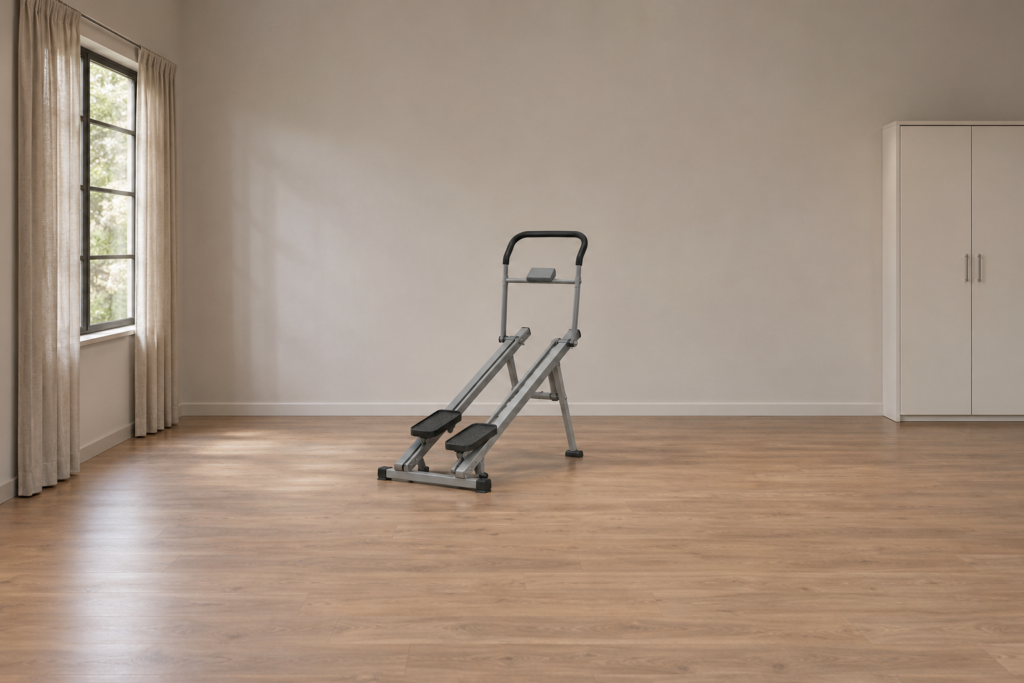
Buying framework
Define the physical change first
Turn an open-ended search for comfort into a specific buying brief.
Point to the unresolved part: Describe where you want a different position rather than asking for the most adjustable machine. A sketch with one area circled can make your intention clearer than a long list of desirable features.
Record what you already accept: Keep an accepted position in the brief too. Otherwise, while shopping to solve one problem, you may start treating every unfamiliar option as something else you need to change.
Who this is for
Two different reasons to keep shopping
Use your starting situation to decide how broad the search needs to be.
A narrow replacement brief: Imagine that you are satisfied with your present station arrangement but still want a different foot-surface pitch. Keep that search narrow: you are trying to resolve one preference while preserving the arrangement you already accept, rather than starting your entire decision again.
A station you have not settled on: Imagine two people sharing the purchase: one wants a different foot-surface pitch, while the other wants the hand-contact structure elsewhere. Agree whether both are requirements before choosing a model. Otherwise, the first person's preferred extra could settle a purchase that leaves the second person's purpose unresolved.
What to pay attention to
Compare three separate capabilities
Each example answers a different physical requirement; none is a personal comfort test.
What must the purchase resolve?
Give the unanswered physical requirement precedence over the number of settings advertised.
What work are you accepting?
Read the handling concessions as part of the choice, rather than treating them as afterthoughts.
Foot-surface pitch: Sunny SF-S025005 rotates its shoe platforms using two removable pins. Choose another pitch if that remains unresolved, accepting paired pin removal and secure reinsertion; keep an accepted pitch otherwise. Its diagram distinguishes three working holes from the storage hole.
Hand-contact positioning: Sunny’s post raises or lowers; choosing that height adjustment entails pulling, reinserting and tightening its knob. Stamina 40-0150 pivots its uprights vertically or tilted. Choose it for angle selection, accepting foot bracing, two-hand upright support and locking both sides.
Whole-station inclination: Stamina offers L1/L2/L3 station angles; selecting one requires foot-braced, two-hand frame lifting and latch relocation. Choose this capability when the whole station must change. Our reading of Sunny’s assembly diagram instead shows its operating frame pinned through fixed support/frame holes. Accept that illustrated station and its specified secure pin lock if it meets your brief.
Avoid these traps
Do not read extra freedom into the hardware
The documented restriction matters as much as the adjustment itself.
Keep the pair matched: Sunny requires both pedals at the same angle. Separate pins do not authorize different left/right positions, so exclude asymmetric platform fitting from what you expect this capability to provide.
Decision guidance
Require the complete arrangement
One satisfied preference does not settle a purchase with two firm requirements.
An explicit configuration example: Require Stamina at L2 with vertical uprights, rather than accept an L2 demonstration with tilted uprights. Ask to see both required positions together before committing. Reject an offer if that combination cannot be established, rather than reject the model for a changeable setting. Accept the separate frame and upright setup duties.
Ownership & compatibility
Include the ongoing care
After choosing a configuration, leave room in the ownership plan for its maintenance.
A separate cleaning task: Stamina specifies cleaning the roller tracks in its rails with an absorbent cloth. Keep those surfaces accessible for that work.
FAQ
Three details to settle before ordering
These manual instructions add information beyond the capability comparisons.
How should Sunny’s assembly arrows face?
Is Stamina’s meter setting enough?
Is Stamina intended for hands-free use?
Readiness check
Prioritize the unresolved requirement
Choose the purchase for the job still left to do.
Research note: This guide uses manufacturer manuals and current US listings for Sunny SF-S025005 and Stamina 40-0150 folding home climbers. It covers selected constructions, not the full market. No hands-on fitting or clinical testing was performed, so the comparisons describe mechanical choices rather than measured comfort or joint outcomes.
Make the decisive feature earn its place: Once an offer meets the required positions, use agreement about setup work as the tie-breaker. If the people sharing the purchase have not agreed who will handle those changes, settle that question before ordering rather than pay for adjustment choices nobody intends to use.
Reading shortcuts
Choose the part of the decision you want to work through.
Decision reminders
Keep your purchase reason specific.
- Name your priority: Say which unresolved preference matters enough to determine the order.
- Account for compromises: Be able to explain the work you accept as well as the feature you want.
Glossary
A plain-language reading of one term.
Explore candidates
Continue browsing the category.
- Still gathering names: Use the stair-machine lists to begin a shortlist for closer reading.
Already have a pair in mind? Open a comparison .