
How to Choose Crutches for Durability and Cleaning Checks
Durability and cleaning checks change a crutch purchase because the weakest point is usually not the main tube. The handgrips, underarm pads, rubber feet, spring buttons, collars, and tube finish decide how well the pair survives daily handling.
This guide looks at cleanable materials, replaceable wear parts, corrosion resistance, trapped moisture, and inspection routines. It stays focused on shopping and upkeep, while clinical fit, weight-bearing limits, and gait training belong with qualified professionals.
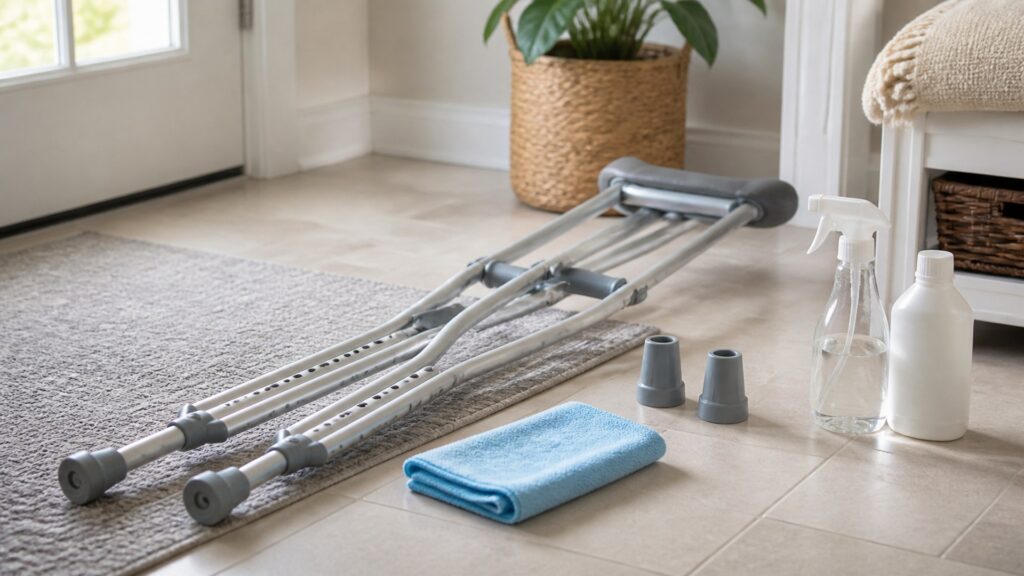
Buying framework
Judge crutches by the parts that can get dirty or loose
A durable pair should make wear visible and cleanup simple. Evaluate the crutches as a set of contact parts, fasteners, and surfaces rather than as two aluminum sticks.
Start with replacement tips: Floor ends should be common, removable, and easy to inspect for glazing, cracks, or uneven compression.
Choose wipeable contact areas: Pads and grips need surfaces that release sweat, lotion, dust, and cleaning residue without soaking through.
Inspect the locks: Spring buttons and collars should click cleanly after adjustment, because residue can hide a partial lock.
Check tube condition: Look for straight tubes, smooth drilled holes, and a finish that will not trap grime around scratches.
Who this is for
Crutch buyers who will clean and inspect often
The right durability priorities depend on what makes the crutches dirty, damp, or repeatedly adjusted.
Daily commuter: This user needs tough tips and wipeable grips because sidewalks, bus floors, and entrances add grit.
Shared-home user: A household pair benefits from clear height markings, clean pads, and hardware another person can verify.
Sweat-prone user: Hands and underarm contact points should resist slick buildup and dry without odor-prone padding.
Frequent adjuster: A buyer changing settings often should avoid sticky buttons, vague collars, or tubes with hard-to-read holes.
What to pay attention to
Durability details that are easy to miss
The most useful specifications describe surfaces and replaceable parts. They show whether the crutches can be kept reliable after real use.
Cleanability
Favor surfaces that wipe dry and reveal residue quickly.
Wear Visibility
The safest wear part is one you can inspect without guessing.
Tip size and source: Measure whether replacements are standard and whether the bottom ferrule holds the rubber foot securely.
Grip texture: A lightly textured grip can stay controllable after wiping, while spongey covers may hold moisture.
Pad cover material: Dense, sealed padding is usually easier to clean than fabric-like or porous covers.
Fastener visibility: Buttons should stand proud enough to see at a glance after cleaning or height changes.
Finish around holes: Burrs, dents, or rough edges can collect residue and make adjustment less predictable.
Avoid these traps
Cleaning and durability traps that create false confidence
A clean-looking pair can still be poorly adjusted or worn. These mistakes matter before the crutches become part of a routine.
Cleaning only the pads: The floor tips and handgrips usually need at least as much attention as the underarm pads.
Keeping glossy tips: A rubber foot can look intact while the tread has become smooth enough to reduce traction.
Ignoring trapped moisture: Wet pads, sleeves, or collars can encourage odors and make hardware harder to inspect later.
Buying uncommon parts: Unusual tips or proprietary pads can turn a simple replacement into a delayed repair.
Decision guidance
Choose the pair that is easiest to keep dependable
When two crutches fit the same person, choose the one with simpler inspection and easier replacement of worn surfaces.
If floors are dirty: Put replaceable rubber feet and easy tip checks ahead of decorative padding or travel claims.
If cleaning is frequent: Choose sealed pads, smooth grips, and adjustment points that stay visible after wiping.
If settings change: Favor clear hole spacing and buttons that confirm with both sight and touch.
If parts are proprietary: Confirm replacement availability before relying on the crutches for daily movement.
Ownership & compatibility
Keep durability checks quick enough to repeat
Crutch upkeep works best when the checks are brief and attached to normal moments such as leaving home, cleaning up, or changing height.
Before leaving: Look at both tips for flat spots, cracks, or grit stuck in the rubber.
After cleaning: Dry pads, grips, collars, and adjustment holes before storing the pair upright.
After adjustment: Confirm both sides match and each button is fully seated in its hole.
FAQ
Questions buyers ask about crutch durability and cleaning
These answers focus on wear parts, washable surfaces, and replacement timing.
What should be cleaned most often?
When are tips worn out?
Are foam pads harder to maintain?
Can cleaning damage crutches?
Should both crutches wear evenly?
What makes a crutch durable?
Do travel crutches need different checks?
Can worn grips affect safety?
Is a scratched frame unsafe?
Bottom line
Buy crutches that make upkeep obvious
For durability and cleaning, the best crutches are not the fanciest pair. They are the pair whose tips, pads, grips, locks, and tubes can be cleaned, dried, checked, and repaired without uncertainty.
Prioritize wear parts: Tips, grips, and pads decide daily dependability.
Keep locks visible: Adjustment hardware should stay easy to confirm.
Replace early: Small worn contact parts are easier to fix than unsafe movement.
Reading Shortcuts
durability-cleaning checkpoints.
Decision Reminders
Before choosing: durability-cleaning.
- Control: Confirm crutch control in use.
- Fit: Measure body contact points.
- Surfaces: Check the expected floors.
- Wear: Inspect replaceable parts.
- Storage: Park it without clutter.
- Guidance: Ask about clinical limits.
Glossary Snippets
crutch terms for durability-cleaning.
When to Use a Top 10 Review
Ranked picks after durability-cleaning.
- Shortlist: Compare after fit decisions.
- Filter: Use durability-cleaning priorities.
- Complaints: Watch repeated fit issues.
- Upkeep: Check replacement details.
For durability-cleaning finalists, use Comparison next.
When to Use a Comparison
Compare close crutch options.
- Fit: Check measurements side by side.
- Control: Compare brakes and contact.
- Storage: Match the real location.
- Care: Review wear and cleaning.
For broad durability-cleaning shopping, start with Top 10.