
How to Choose Crutches for Sizing and Adjustability
Crutches for sizing and adjustability should be chosen around where body weight travels: through the hands, frame, tips, and walking pattern during height setting, body measurements, strap reach, locking holes, and mid-day readjustment. A pair that is tall enough is not automatically comfortable, stable, or practical.
This guide focuses on underarm clearance, handgrip height, tip traction, adjustment locks, frame style, storage, and realistic use limits. It is buying guidance only; injury care, weight-bearing rules, and gait training should follow qualified clinical direction.
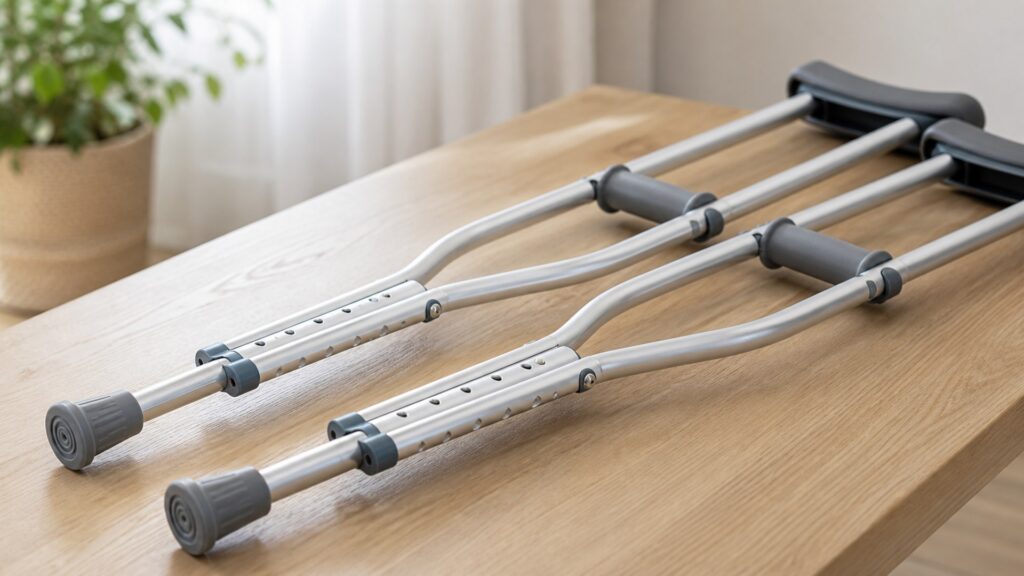
Buying framework
Match the crutch to the support task
The main question is how the crutches will control movement in the setting named by the title. Let the user's real mobility demand guide the first pass before comparing padding or folding features.
Define the load path: Underarm crutches, forearm crutches, and platform crutches put force through the body differently. The correct style depends on hands, wrists, shoulders, balance, and clinical weight-bearing limits.
Set height by landmarks: Handgrips and underarm pads must land correctly, not merely within a published height range. Poor adjustment can shift weight into the armpits or make the shoulders work too hard.
Check the walking surface: Rubber tips, frame angle, and user control matter on stairs, thresholds, tile, carpet, and sidewalks. The tip is small, but it decides floor contact every step.
Keep safety boundaries visible: Retail choice cannot replace instruction after surgery, fracture, severe pain, or unstable balance. Professional guidance should define allowed weight bearing and stepping pattern.
Who this is for
Different users need different mobility compromises
Crutch decisions change with strength, balance, setting, and help available. These profiles keep the selection grounded in actual use rather than a generic aid category.
Short-term injury user: This buyer often needs simple underarm crutches with correct handgrip height and reliable tips. Comfort pads help, but safe adjustment and weight-bearing instructions matter more.
Arm or wrist sensitive user: Forearm or platform designs may reduce one pressure problem while adding another. Buyers should consider grip strength, wrist tolerance, forearm support, and whether clinical fitting is needed.
Home navigator: Doorways, chairs, bathroom turns, and small thresholds make control more important than speed. A crutch that feels fine in open space may be awkward in a tight room.
Assisted setup household: When another person helps, height marks, push-button locks, and easy pad checks make settings repeatable. Confusing adjustment holes can create uneven support between sides.
What to pay attention to
Crutch features that change stability and comfort
The useful specifications are the ones that affect load transfer and step control. Compare parts by what they do under the user, not by how technical they sound.
Load Path and Adjustment
Handgrip height, pad clearance, frame length, and locks determine how force moves through the arms.
Mobility Setting and Control
Tips, frame shape, and turning space decide how crutches behave on household and travel surfaces.
Underarm pad clearance: Pads should sit below the armpit rather than become the main bearing point. Too much armpit pressure can create soreness and poor posture.
Handgrip position: Grip height affects elbow bend, shoulder load, and forward control. A small mismatch becomes noticeable quickly because the hands take force on every step.
Rubber tip condition: Tip diameter, tread, and wear affect traction on smooth floors and outdoor surfaces. Worn tips should be treated as a replacement issue, not a cosmetic flaw.
Adjustment lock security: Push buttons and collars need to seat fully and stay even between the left and right crutch. Rattling or partial engagement undermines trust.
Frame style and storage: Forearm cuffs, platforms, folding sections, and underarm frames change packing, reach, and maneuverability. The best style is the one that fits the user's setting and body demands.
Avoid these traps
Crutch buying mistakes that show up in motion
Many errors come from treating crutches as interchangeable sticks. The problems usually appear after the first adjustment feels acceptable and the user starts moving through real spaces.
Resting weight on the armpits: Underarm pads are not meant to carry the user's weight. Proper hand load and clearance reduce pressure and improve control.
Ignoring tip wear: A crutch can look usable while the rubber tip has lost grip. Tip condition should be checked before stairs, wet entrances, and smooth flooring.
Accepting uneven settings: Left and right crutches should match unless a clinician has directed otherwise. Uneven holes or grips can create awkward posture and unpredictable steps.
Buying around storage only: Folding or compact designs help with transport, but they still need secure locks, adequate weight rating, and comfortable contact points. Convenience cannot outrank safe support.
Decision guidance
Narrow the choice by body demand and setting
Once size and safety limits are clear, choose the crutch style that matches how the aid will actually be used. The best branch depends on arm tolerance, surfaces, and duration.
If use is brief and straightforward: Standard underarm crutches can work when clinical instructions are clear and the user can load the hands comfortably. Confirm pad clearance, grip height, and tip traction before relying on them.
If underarm pressure is a concern: Forearm crutches may suit some users better, but they require different coordination and arm contact. Cuff fit and grip comfort become central checks.
If hand or wrist loading is limited: Platform crutches shift support toward the forearm, which can help certain users. They are bulkier and should be considered with professional fitting guidance when symptoms are complex.
If mobility is unstable or restricted: Do not solve the problem by guessing at a stronger-looking crutch. Balance trouble, stairs, surgery recovery, or uncertain weight bearing should trigger qualified guidance.
Ownership & compatibility
Keep crutches reliable after setup
Crutches are simple devices, but their contact points wear. Regular checks protect stability because small parts carry repeated load.
Replace worn tips: Inspect rubber tips for smoothing, cracking, or uneven wear. Traction loss is a safety issue because every step depends on that small floor contact.
Check locks and holes: Push buttons should protrude fully and collars should stay tight. Recheck both sides after travel, storage, or height changes.
Clean pads and grips: Sweat, lotions, and dirt can make handgrips slippery or pads uncomfortable. Wipe contact points and let them dry before longer use.
FAQ
Questions buyers ask about crutches
These answers cover fit, style choice, safety limits, and practical ownership before purchase.
Should crutches touch my armpits?
What height measurements matter?
Are forearm crutches better?
When are platform crutches useful?
How important are rubber tips?
Can travel crutches be sturdy enough?
What is the biggest comfort issue?
How often should parts be checked?
Can crutches replace mobility training?
Bottom line
Choose crutches that support the real movement pattern
For sizing and adjustability, the right crutches combine correct adjustment, dependable floor contact, and a style that suits the user's body demands. Comfort features matter after the load path is right.
Start with allowed use: Know the weight-bearing rule, walking setting, and help available before comparing designs. That keeps the purchase tied to safe mobility.
Fit the contact points: Handgrip height, underarm clearance, cuff fit, and tip condition should work together. One wrong contact point can make the whole pair feel unstable.
Treat uncertainty seriously: If balance, stairs, post-injury recovery, or pain patterns are unclear, get professional guidance instead of choosing by appearance or convenience.
Reading Shortcuts
Jump to the checks that matter most for repeatable adjustment.
Decision Reminders
Use these checks before ordering.
- Name the task: Judge products against the real repeatable adjustment setting.
- Fit first: Confirm the contact points land where the design requires.
- Move carefully: Check the activity that will actually happen after purchase.
- Inspect pressure: Treat numbness, pinching, or lasting marks as warning signs.
- Plan care: Know what needs cleaning, drying, tightening, or replacement.
- Escalate symptoms: Clinical concerns deserve qualified guidance before relying on a product.
Glossary Snippets
Terms that make product listings easier to read.
When to Use a Top 10 Review
Use a ranked list after deciding what repeatable adjustment requires.
- Build a shortlist: Compare several designs after eliminating poor-fit categories.
- Filter by use: Prioritize models that match the setting in this guide.
- Scan fit notes: Look for comments about the same contact points.
- Watch durability: Repeated complaints about wear or slipping matter.
Already down to 2-3 options? A Comparison is usually the faster next step.
When to Use a Comparison
Use a direct comparison when two products seem close.
- Compare fit: Look at where each design contacts the body.
- Compare control: Decide which product handles the target movement better.
- Compare convenience: Check packing, removal, adjustment, or cleaning tradeoffs.
- Compare wear signs: Review tips, straps, pads, or liners for long-term concerns.
Still exploring? Start with a Top 10 to build a shortlist first.