
How to Choose Cycling Apparel for Indoor Training
Try your existing summer cycling clothing indoors before buying a separate training wardrobe. If the shorts stay settled, the top provides suitable coverage and the outfit works with your room's airflow, an indoor-specific label may add little. Spend first on the garment problem you can identify: shifting padding, unwanted fabric, inadequate coverage or too few clean pairs between sessions.
Stationary riding changes the buying priorities because road pockets and weather shells may be unnecessary while ventilation and washing become daily concerns. This guide helps you choose clothing for a private trainer, shared room or studio, with practical checks for seated fit, fabric coverage and a repeatable laundry routine.
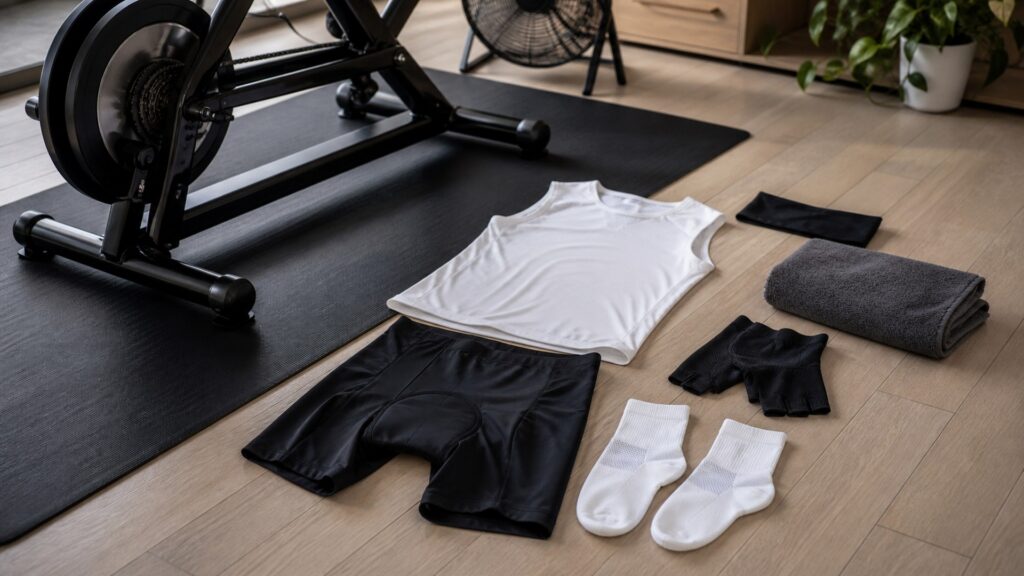
Buying framework
Solve the indoor clothing problem you actually have
A trainer session does not require a complete new outfit. Separate garment fit from the conditions in the room before spending.
Use the training position: Fit the shorts on the saddle and handlebar setup you use indoors. A pair that works for a more upright outdoor ride may behave differently during a sustained forward-leaning session.
Consider the room's airflow: You are not moving through outdoor air while the bicycle remains stationary. Assess clothing with the fan and ventilation you normally use instead of expecting a fabric label to provide cooling by itself.
Decide the needed coverage: Private home use, shared living space and a studio can require different choices. Check how mesh, stretched panels and the top's length look in the actual riding position.
Budget for clean rotation: Count the sessions between realistic laundry opportunities. An additional proven pair of shorts may remove more friction from daily training than one expensive garment with unused outdoor features.
Who this is for
Choose for your training setting
Indoor use is not one uniform environment. Room temperature, privacy and session frequency change the purchase.
Occasional trainer user: You already own summer cycling kit and train indoors intermittently. Test that outfit first, buying only to address a clear fit or care limitation.
Frequent home sessions: You ride often enough that washing and drying create gaps. Favor dependable contact fit and manageable care, then build enough rotation to begin each session with clean, dry clothing.
Shared studio or gym: Clothing must work around other people and meet the venue's expectations. Prioritize opaque coverage, secure hems and comfortable movement on the equipment you will use.
Cool room that warms during exercise: You may want removable coverage at the start rather than a permanently heavy top. Choose a layer you can remove safely after stopping, with lighter clothing underneath.
What to pay attention to
Check fit, coverage and turnaround
The important details are easy to miss in a product thumbnail. Compare them using your actual trainer posture and intended clothing layers.
Pedaling contact and room conditions
Evaluate how the pad, straps and hems behave during stationary pedaling. Room airflow is a separate input to the clothing comparison.
Coverage and wash rotation
Check whether the fabric is suitable for the people around you and how quickly it returns to use after proper care. These can matter more than outdoor pockets or styling.
Pad placement under seated pedaling: The chamois should remain smooth and positioned without repeated adjustment. Test the complete short on the trainer; extra foam is not a substitute for a suitable cut.
Waist and strap pressure: Bend forward and observe whether a waistband rolls or bib straps pull restrictively. Choose the retention system that works for your torso rather than assuming one is inherently better indoors.
Panel openness and opacity: Mesh can change coverage as well as airflow access. Inspect stretched fabric under realistic lighting and confirm whether a liner is designed to be worn beneath another garment.
Hem and tie clearance: Check short legs, long tops and any drawcords through the pedaling motion. Keep loose clothing clear of moving equipment and follow the exercise bike or trainer's clothing guidance.
Top access and useful features: Try the neck opening or zipper and decide whether rear pockets have an actual task when a table holds supplies. Avoid paying for outdoor storage or weather protection that you will not use.
Care instructions and drying: Read the label before buying several pieces for rotation. A garment that requires a drying method unavailable in your home may be less convenient than another with similar riding fit.
Avoid these traps
Avoid paying for the wrong kind of comfort
Indoor clothing should address contact and practical use. These shortcuts can leave the original problem unchanged.
Buying an indoor label before trying existing kit: Suitable road shorts and a light top may already do the job. Compare the specific construction improvement rather than treating a new category name as a requirement.
Adding heavy layers to increase sweating: More sweat is not a useful clothing-performance target. Choose layers for the room and workload, and use ventilation rather than deliberately trapping heat as a buying strategy.
Confusing lightweight with suitable coverage: A very thin top or liner may be appropriate privately but not in a shared space. Check its intended use and opacity before deciding it can replace ordinary training clothing.
Replacing shorts when the setup changed: An unfamiliar trainer position or saddle can alter contact. Review the equipment setup as well as garment fit instead of assuming that a more expensive chamois resolves every new discomfort.
Decision guidance
Choose the smallest useful indoor wardrobe
Start with what already works and add only the missing function. Contact fit and clean availability remain the main priorities.
Keep existing summer kit when it passes: Use it if the pad, hems and coverage remain suitable on your trainer. Spend elsewhere only when a repeatable clothing problem survives the room and setup checks.
Choose lightweight pieces for a warm training space: Compare a ventilated top and securely fitting shorts with the airflow you actually have. Preserve the coverage your surroundings require rather than selecting openness as the only criterion.
Choose a studio outfit for shared use: Use garments intended for standalone wear, with stable coverage during seated and standing movement. Ask the venue about any clothing requirements before purchasing a highly specialized mesh outfit.
Choose extra basics for frequent sessions: Once one pair has proved suitable, add enough rotation for the wash cycle. This can be more valuable than a premium single outfit that is unavailable while drying.
Ownership & compatibility
Make clean kit part of the setup
Indoor garments may see frequent washing even when they never encounter road dirt. Care for the fabric and pad according to their own instructions.
Handle used clothing promptly: After the session, follow the label's washing and drying guidance rather than leaving damp garments bundled indefinitely. Keep clean kit separate from items awaiting laundry.
Avoid one care rule for every textile: Check restrictions on heat, softeners and cleaning products for the actual garment. Follow separate instructions for any technical shell or other piece also used outdoors.
Inspect retention after repeated use: Watch for loose seams, stretched straps and grippers that no longer hold position. Replace or repair according to supported options when the garment stops performing its basic fit function.
FAQ
Indoor cycling clothing questions
These answers cover the choices that remain after checking the trainer fit. Follow both garment and equipment instructions.
Do I need an indoor-specific chamois?
Can I wear ordinary exercise shorts?
Are bibs too warm for indoor training?
Should I wear a base layer indoors?
Can a padded liner replace shorts in a studio?
Do jersey pockets help on a home trainer?
How many pairs should I buy for regular training?
Can I use worn outdoor shorts indoors?
Should indoor clothing fit more loosely than road kit?
Bottom line
Choose for the room and the repeat session
Useful indoor apparel lets you pedal with settled contact and appropriate coverage. Buy the missing function, then make the laundry routine workable.
Prove the trainer fit: Check the outfit on the stationary setup rather than relying only on outdoor experience.
Keep ventilation and coverage together: Select fabric for the actual airflow and the privacy of the training space.
Build a practical rotation: Favor clean, dry availability over a collection of unused specialist features.
Reading Shortcuts
Assess existing kit before shopping for an indoor label.
Decision Reminders
Check the outfit on the actual training setup.
- 1: Try the trainer's riding position.
- 2: Check mesh and liner coverage.
- 3: Keep hems clear of moving parts.
- 4: Plan the wash-and-dry rotation.
Glossary Snippets
Terms relevant to indoor clothing and care.
When to Use a Top 10 Review
Shortlist only the garment function your current kit lacks.
- Start with the observed problem: Separate pad fit, top coverage and laundry availability.
- Question unused features: Outdoor pockets and weather protection need an indoor purpose.
References: PEARL iZUMi clothing and indoor-use guidance; PEARL iZUMi shorts fit and care guidance. Checked October 7, 2026. This guide does not claim original product measurements. Use the Comparison to assess finalists.
When to Use a Comparison
Compare fit and coverage under the same room conditions.
- Use the same room setup: Keep fan placement and underlying clothing consistent.
- Compare repeat use: Account for care requirements as well as the first fitting.
For a selection of candidates, visit the Top 10.