
How to Choose Cycling Apparel for Long Rides
For a long ride, choose clothing you have already tested in the intended position, with the intended load. Stable shorts, manageable layers and practical stop access are more useful starting points than a pad advertised for a particular number of hours. A comfortable shop try-on is only the first filter; shorter familiar rides provide better evidence before a full day away.
This guide focuses on the decisions that grow with time outside: small rubbing points, pockets pulling on the outfit, changing weather, toilet stops and drying between consecutive days. It helps you choose which clothing capability to add while keeping the successful parts of an existing outfit.
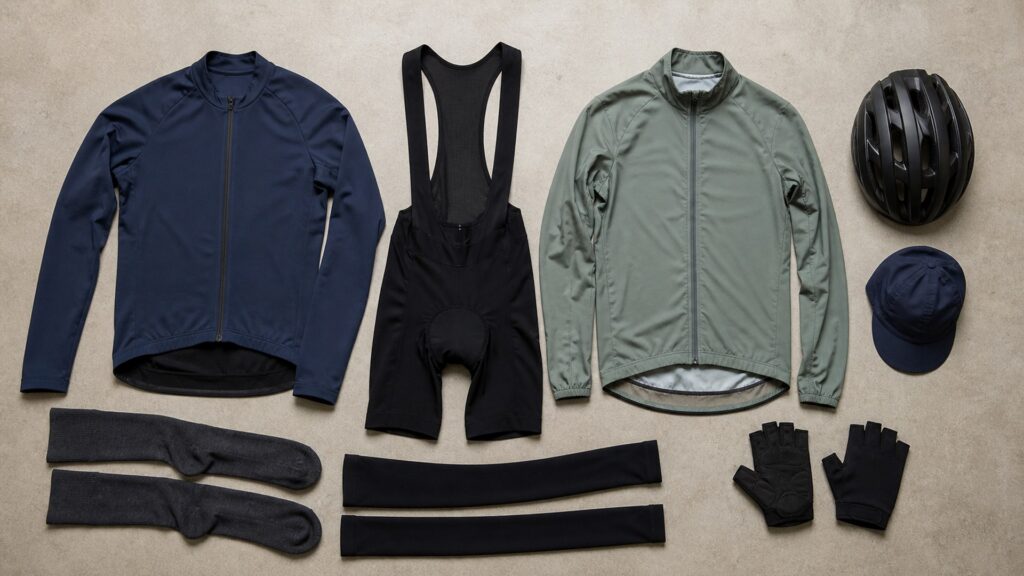
Buying framework
Use shorter rides to earn confidence
Long-distance apparel should be selected through a realistic trial process. Establish what already works before changing several pieces at once.
Keep a proven contact layer: Start with shorts or a liner that remain settled on your normal saddle. If replacing them, allow time for progressively longer familiar outings before the major ride.
Map the day's exposure changes: Include the early start, highest or most exposed section, long stops and likely finish conditions. Buy layers for those transitions instead of selecting the whole outfit from one forecast temperature.
Plan the clothing load: Set out what will go in jersey or cargo pockets and what belongs in bicycle luggage. A full-day supply can distort a garment that worked well carrying only a phone.
Rehearse the stops: Try jacket removal, toilet access and repacking with the complete outfit. A convenient retention system while pedaling can still be awkward when covered by several other layers.
Who this is for
Which long-ride problem is most likely?
Duration alone does not identify the outfit. Support, exposure and the number of days change where additional clothing earns its place.
Supported single-day outing: You have planned stops and limited carrying needs. Favor proven shorts and a manageable layer rather than buying storage-heavy clothing for supplies available elsewhere.
Self-supported day ride: You carry more essentials and cannot count on immediate help. Test the loaded outfit and divide bulky items between clothing and appropriate bicycle luggage.
Route with large exposure changes: The day includes wind, rain risk, elevation changes or a late finish. Layer function, overlap and packed space become central even if the distance is familiar.
Consecutive riding days: Clothing must return to use between stages. Choose a rotation and permitted care routine that work with the actual accommodation, rather than relying on an optimistic drying claim.
What to pay attention to
Look beyond the first minutes of fit
The specifications matter through repeated movement and a changing load. Use these observations to narrow candidates before the extended trial.
Fit proven over time
Observe how contact and retention behave over a representative trial. A short fitting identifies obvious mismatches but cannot prove all-day suitability.
Changing conditions and stops
Inspect the full-day system: loaded pockets, removable layers, breaks and overnight care. These obligations distinguish distance clothing from a simple short-loop outfit.
Chamois edges and retention: Check for folds, migration or an edge that repeatedly contacts the same area as you pedal. Compare pad shape within the short, not only thickness or a manufacturer ride-duration category.
Strap and gripper behavior: Inspect bib tension, waist retention and leg openings after returning to the saddle several times. The garment should resume its intended position without a ritual of pulling and rearranging.
Loaded pocket stability: Carry representative supplies during a shorter shakedown ride. Note sagging, bouncing or items pressing against you, and reduce or relocate the load if it changes the outfit's fit.
Layer overlap: Check the junctions between sleeves and warmers, jersey and shorts, or jacket and lower layers. Reach and pedal to expose gaps or bulky overlaps that were invisible while standing.
Ventilation and packed bulk: Open the available vents and pack the removed layer into its actual storage space. A useful weather garment must remain carryable when conditions no longer require it.
Stop access and care requirements: Try the exact bib or short design under the outer layers, then read its washing and drying instructions. On multi-day trips, both stop convenience and overnight turnaround can change which construction suits you.
Avoid these traps
Avoid gambling the whole ride on new kit
An expensive garment can still be an untested variable. These shortcuts make a long outing the first meaningful fitting session.
Treating advertised hours as a guarantee: A pad's suggested ride duration cannot establish your personal fit or saddle interaction. Use it as product information, then require evidence from your own shorter outings.
Debuting the entire outfit together: If several unfamiliar garments cause a problem, identifying the cause becomes harder. Introduce changes with enough trial time to distinguish pad fit, pocket load and layer interference.
Overloading cargo pockets: Extra pockets create options, not unlimited usable capacity. Move items to suitable luggage when their weight drags on the shorts or interferes with pedaling.
Packing for the start only: An outfit suitable for leaving home may be inadequate for a long stop or exposed finish. Choose additional coverage from the route's actual changes and reserve the space to carry it.
Decision guidance
Add the capability your proven outfit lacks
Keep successful contact clothing where possible. Select the remaining pieces according to support, exposure and repeat use.
For a familiar supported day, keep the outfit simple: Use proven shorts and a jersey that handles the modest load. Add the needed weather layer without replacing comfortable pieces merely because the event is longer.
For carrying more, compare pockets with luggage: Cargo shorts or a stable jersey can hold suitable small items. Use bicycle storage for bulk that distorts clothing, and test the final distribution before committing to the route.
For variable exposure, build removable coverage: Choose layers for the planned wind, rain and insulation tasks, with workable overlap. A single thick garment may be less adaptable when the day includes both sustained effort and extended stops.
For consecutive days, buy a viable rotation: Consider a second proven pair of shorts when the first may not be ready after correct washing. Balance that availability against packing space rather than assuming one premium pair solves the whole trip.
Ownership & compatibility
Prepare apparel as part of the trip
Useful long-ride clothing depends on preparation and care, not only shopping. Keep the routine realistic for the route and accommodation.
Record what the trial revealed: Note where a seam, strap or loaded pocket needs attention and resolve it before extending the outing. Keep the setup consistent enough to tell whether a clothing change helped.
Check condition before packing: Inspect pad attachment, seams, grippers and closures, then make supported repairs in advance. Do not let the main ride become a test of a damaged fastener that was already unreliable at home.
Plan permitted cleaning and drying: Check available facilities against each garment's care label. Pack enough rotation when proper drying is uncertain, and keep clean clothing separate from used damp pieces.
FAQ
Long-ride apparel questions
Use the trial process to resolve personal fit questions. These answers help with remaining configuration and packing choices.
Should I buy the thickest pad for a long ride?
How long should a shakedown ride be?
Are cargo bib shorts essential for distance riding?
Can I wear the same shorts on consecutive days?
Do I need different shorts for touring and road rides?
Should I carry a spare jersey?
Will arm and leg warmers cover every weather change?
Can a new chamois solve recurring saddle discomfort?
Is an endurance label useful when comparing shorts?
Bottom line
Choose proven fit and planned adaptability
The strongest long-ride outfit has survived a realistic trial and covers the day's changes. Extra features should earn their weight and complexity.
Trust the shakedown evidence: Select clothing that works on familiar rides before asking it to serve a much longer day.
Carry without distorting the fit: Use garment pockets only for loads they retain comfortably in motion.
Cover the whole itinerary: Account for exposure, stops and the next day's clothing readiness when choosing layers and spares.
Reading Shortcuts
Choose distance clothing through trial and route planning.
Decision Reminders
Check the outfit before the full-day outing.
- 1: Trial new pieces before the main ride.
- 2: Include the intended pocket load.
- 3: Rehearse stops with all layers.
- 4: Check overnight laundry feasibility.
Glossary Snippets
Terms used in trial rides and clothing rotation.
When to Use a Top 10 Review
Shortlist pieces that address a known distance-ride gap.
- Keep the proven contact layer: Replace only where the trial identifies a genuine limitation.
- Identify the exposure gap: Choose removable coverage with space to carry it.
References: Rapha bib and short construction guide; PEARL iZUMi outerwear functions and layering. Checked October 7, 2026. This guide does not claim original product measurements. Use the Comparison to assess finalists.
When to Use a Comparison
Compare complete loaded outfits rather than pad claims alone.
- Use the same shakedown conditions: Compare posture, load and layers consistently.
- Include multi-day readiness: Count rotation and permitted care in the total purchase.
For a selection of candidates, visit the Top 10.