
How to Choose Cycling Apparel for Weather Changes
A ride can start cool, become warm on a climb and turn wet before you get home. Buying one heavily insulated jacket for every part of that outing leaves you with little control over coverage. Choose clothing by the changes you expect, then decide which layers can open, come off or go back on.
This guide separates wind protection, rain construction and insulation, and explains where a gilet, shell, warmers or thermal jersey earns its place. It also covers layered fit and the space needed for removed clothing, so your weather plan works while pedaling and at stops rather than only when standing outside before departure.
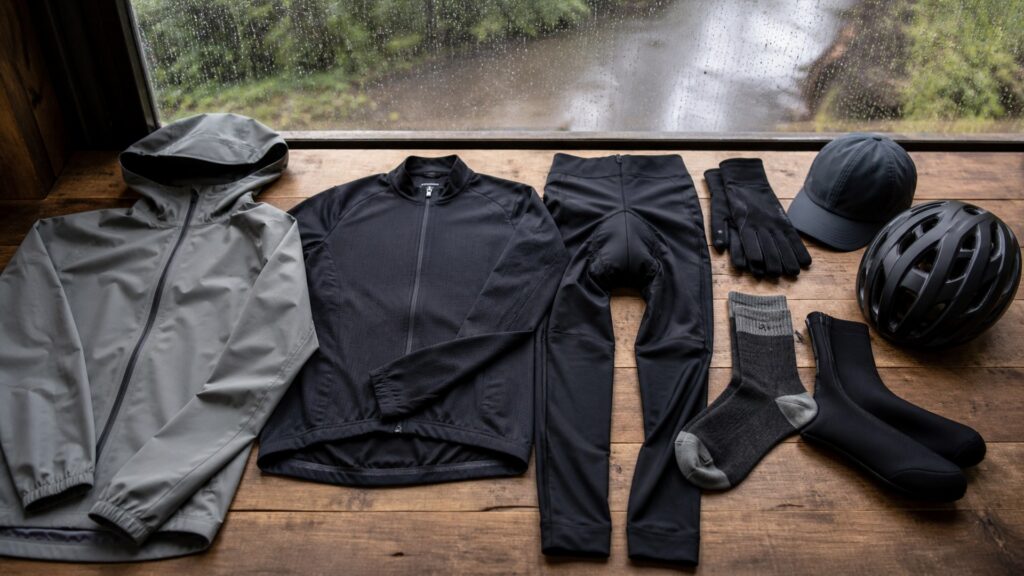
Buying framework
Build a clothing system that can change with the ride
Think through the departure, hardest effort, exposed sections and return. Each point below defines a job for the clothing before you compare fabrics.
Separate warmth from a weather barrier: Insulation adds warmth; a shell deals with wind or rain according to its construction. Combining these functions in one garment is convenient only when you expect to need both throughout the outing.
Plan around effort as well as the forecast: A sheltered climb and an exposed descent can call for different coverage even when the forecast temperature is unchanged. Give yourself an adjustment you can make at a suitable stop.
Distinguish rain risk from a wet ride: A reserve layer for a possible shower is a different purchase from outerwear intended for sustained rain. Read the specific weather claim rather than treating water-resistant and waterproof labels as interchangeable.
Choose a destination for every removed layer: A gilet, shell or pair of warmers needs a pocket or bag after removal. If you cannot carry it, the flexibility that attracted you to the garment is difficult to use.
Fit the combination, not separate sizes: Try the intended base layer, jersey and outer garment together in riding posture. Three individually comfortable pieces may crowd the shoulders or pull the cuffs when combined.
Who this is for
Five ways weather changes the clothing priority
These situations differ by effort, exposure and the likelihood of keeping a barrier on. Use the nearest pattern to identify the function you are missing.
Cool start, dry warming afternoon: Your main requirement is shedding coverage as the day warms. A removable torso or limb layer deserves attention before a permanently insulated top.
Warm ride with a realistic shower risk: You want rain-oriented coverage in reserve without carrying unnecessary warmth. Packed size and the room to wear a shell over your jersey become central.
Cold outing with prolonged wet conditions: You may keep the outer layer on for much of the ride. Layered insulation, rain construction and usable closures matter more than winning the smallest-packed-jacket comparison.
Hard climbs followed by exposed descents: Coverage needs can change quickly as exertion and exposure alternate. Prioritize an adjustable front opening and a layer you can put on before the exposed stretch.
Easy pace with frequent stops: You generate less continuous riding heat and spend time off the bike. Look at warmth during waiting as well as ventilation while moving, rather than copying a fast rider's outfit.
What to pay attention to
Inspect the barrier, openings and packed shape
Labels identify an intended role but do not show the complete outfit. These checks translate construction into changes you can observe.
Weather barrier
Compare the areas covered and the claimed wind or rain function, including seams and closures. These details determine what the outer garment is intended to block.
Adjustment and carrying
Inspect the ways coverage can change while worn, and the bulk remaining after removal. Flexibility has a practical cost in openings, loose pieces and pocket space.
Rain fabric and seam treatment: Check the maker's waterproof claim alongside seam sealing and zipper protection. A rain-oriented fabric does not by itself describe how stitching holes, the neck opening and cuffs are managed.
Front zipper and ventilation openings: Try opening the garment while it is worn over your intended layers. Vents and a usable zipper let you reduce coverage, but opening a barrier also exposes the area you are trying to protect.
Cuffs, sleeve length and rear hem: Reach forward as you do on the bicycle. Check that wrist and lower-back coverage remains where you want it; a long standing hem is less useful if the jacket pulls upward in riding posture.
Insulation location: Look at which panels are lined or insulated instead of relying on the word thermal. Warmth fixed into the sleeves or torso cannot be packed away separately when you decide to ride with less coverage.
Real packed bulk: Fold the garment as instructed and try the pocket or bag you will use. An integrated stuff pocket is useful only if the resulting shape fits that carrying space without displacing essentials.
Avoid these traps
Avoid buying the wrong kind of protection
Weather labels can sound like a simple ladder from basic to premium. The mismatch usually comes from choosing the wrong function rather than an insufficiently expensive version.
Using a wind layer as a rain guarantee: A light wind garment may have a water-resistant finish without being designed as waterproof outerwear. Confirm the rain claim for the specific garment before planning a long wet outing around it.
Expecting breathability to remove all sweat: A breathable rain shell is still a barrier, and the rider's effort changes how damp the outfit feels inside. Consider ventilation and exertion instead of expecting a fabric rating to promise a dry jersey.
Choosing fixed warmth for a removable-coverage problem: A thick jersey may suit consistently cold conditions but cannot become an uninsulated jersey halfway through the ride. Buy adjustable layers when the problem is a warming outing.
Reading a temperature recommendation as a personal rule: Garment suggestions cannot account for every rider's effort, exposure and preferred warmth. Use your experience in similar conditions to refine a purchase rather than relying on one printed temperature band.
Decision guidance
Choose the layer for the change you expect
Start with the function that your current clothes cannot provide. Accept the corresponding carrying or ventilation compromise before buying.
If dry wind exposure is the gap, try a gilet or wind jacket: A gilet covers the torso with less sleeve bulk, while a full jacket covers the arms too. Choose between them by the areas you want covered; neither should be treated as waterproof without the relevant product claim.
If rain is a meaningful part of the forecast, compare waterproof shells: Prioritize rain construction and room over your planned jersey. A shell may feel less airy than riding without it, so judge closure and ventilation access alongside the weather barrier.
If mild conditions will warm, keep warmth removable: Warmers and a light outer layer let you retain a short-sleeve outfit underneath. You gain several coverage combinations but must manage the loose pieces and carry them after removal.
If cold conditions persist, put insulation under the appropriate barrier: A thermal jersey or suitable mid-layer can provide warmth while the shell addresses wind or rain. This occupies more space and may be too warm for harder efforts; choose the combination for the ride you actually expect.
Ownership & compatibility
Keep weather layers ready for their next job
Shell construction and elastic warmers need their own care instructions. Storage and treatment should support those materials rather than follow one rule for all sportswear.
Dry before packing away: Open a damp shell after the ride and allow the garment to dry before returning it to its stuff pocket. Compact packing is for carrying or dry storage, not for trapping a wet outfit until the next outing.
Follow the garment's washing and treatment sequence: Check whether the maker specifies a particular wash method, cleaning product or treatment. Instructions for an ordinary jersey are not automatically suitable for a rain membrane or its surface finish.
Inspect closures and seam treatment: Look for zipper damage, lifting seam tape or cuffs that no longer close as intended. Those details affect the weather garment's function even if the main fabric still looks tidy.
Reproof only as the instructions allow: A water-repellent surface finish and the underlying waterproof construction are different parts of a garment. Ask the maker about the correct treatment when performance changes; do not apply an unspecified spray to every layer.
FAQ
Questions about combining weather clothing
These details help resolve the gaps left after choosing the main weather function.
Can I use a long-sleeve jersey instead of arm warmers?
Does a waterproof shell provide insulation?
Should an outer jacket fit as tightly as a jersey?
Do I need waterproof gloves whenever I carry a rain shell?
Can a backpack replace jersey pockets for removed layers?
Will leg warmers fit beneath all cycling shorts?
Are overshoes a substitute for checking the shoe underneath?
Can one shell serve commuting and faster road rides?
How should I compare breathability numbers?
Bottom line
Choose the weather job, then check the whole outfit
The purchase order is barrier, warmth, adjustment and carrying. This keeps an attractive jacket from taking the place of a missing function.
Name the change: Decide whether the unresolved problem is wind, meaningful rain, persistent cold or a ride that warms. That choice determines which garment category to compare.
Keep insulation separate where useful: Choose fixed warmth for sustained cold and removable coverage for changing mild conditions. Pay attention to the layer that must remain when the outer garment comes off.
Approve the layered fit: Reject a combination that pulls cuffs or the back hem out of place in riding posture. Better weather claims do not correct insufficient room over the intended jersey.
Confirm the carrying plan: Pack each removable piece into its planned pocket or bag before checkout. Leave space for the other items you carry on the same outing.
Reading Shortcuts
Read by the weather function you need to add.
Decision Reminders
A shell purchase should answer these three ride-specific checks.
- Weather role: Identify the actual wind or rain function stated by the maker.
- Layered reach: Try the cuffs and hem with the jersey underneath.
- Stowage: Reserve carrying room for clothing you may remove.
Glossary Snippets
Terms used to describe adjustable cycling layers.
When to Use a Top 10 Review
Browse candidates after deciding whether you need wind coverage, rain protection or insulation.
- Filter by function: Keep garments built for the weather role you selected.
- Compare the carrying burden: A shortlist should show how the relevant jackets or warmers fit your on-bike storage.
Already down to 2-3 options? A Comparison is usually faster than reading broad buying advice.
When to Use a Comparison
Compare finalists with the same intended barrier role so the tradeoffs remain useful.
- Examine construction: Put seams, closures and ventilation access next to each other.
- Test the outfit: Compare the finalists over the same layers and in the same carrying space.
Still exploring? Start with a Top 10 to identify the right category first.