
How to Choose Dash Cameras for Installation and Wiring Requirements
Specify installation, fuse selection, constant and switched vehicle power, ground, low-voltage power stop, electrical reserve packs, connection lead gauge and length, airbag-safe surround panel routing, aft-rear opening loops, connectors, strain relief, solar load, labels, unit software approach, and electrical verification.
This guide treats dash-video unit wiring project as an documentation equipment set rather than a resolution purchase. Leave the recommendation conditional until the particular fleet unit, continuous capture conditions, vehicle power design, card capacity performance, data protection rules, and primary-event record recording recovery demonstration agree.
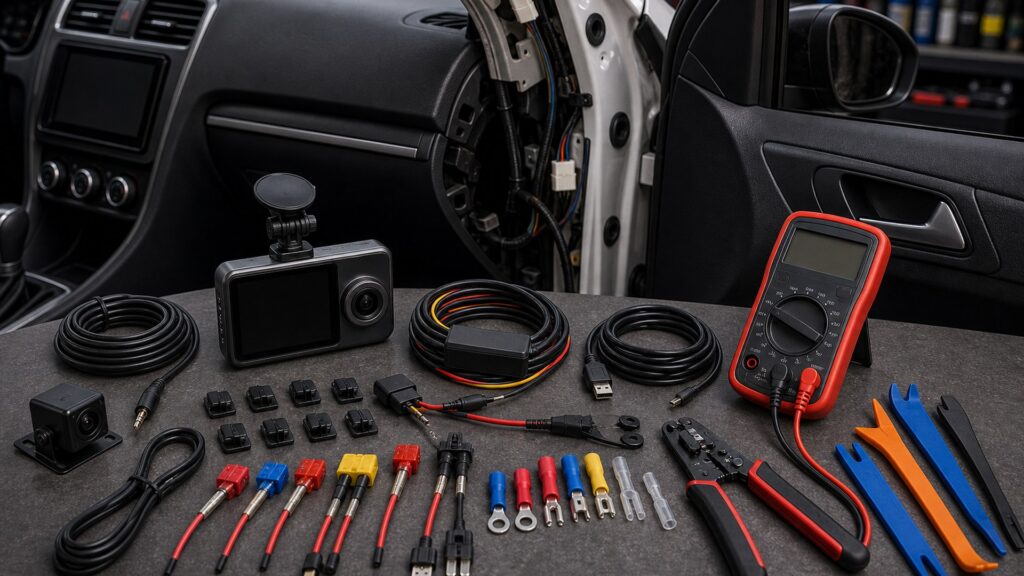
Buying framework
Build dash-video unit wiring project from the claim event backward
A dependable equipment set begins with the recorded episode to note, then connects viewpoint, readable recorded definition, vehicle power, card capacity, mount location, data protection, and recording recovery into one tested chain.
Define the documentation job: List foreseeable impacts, vehicle-off brightness handling, road conditions, occupants, and mount and sightline plan. State what the continuous capture must show and which viewing angles are unnecessary.
Survey the fleet unit: Photograph windscreen, mirror modules, sensing modules, glass film, wiper sweep, surround panel, curtain bags, outlets, fuse panels, aft openings, and vehicle power-source selection before selecting hardware.
Calculate continuous loads: Connect video stream bitrate, continuous capture hours, card write life, vehicle-off duration, launch reserve, thermal brightness handling, and low-voltage protection rather than sizing each element alone.
Design the handling workflow: Decide who may viewpoint, preserve, back up, upload, retain, or delete saved videos. Include service labels and approach, passenger notice, account retrieval recovery, offline approach, and primary-event record preservation.
Write acceptance trials: Demonstration electrical and continuous capture tests with day, night, dynamic scene, solar load, new startup, fleet unit power-down, vehicle-off triggers, full-card overwrite, time accuracy, and two independent export methods.
Who this is for
Situations that reshape dash-video unit wiring project
Driving brightness handling, vehicle-off duration, windscreen geometry, climate, data protection responsibility, connectivity, and documentation handling determine the correct video unit design.
Basic Outlet Install: A basic outlet install makes aft-video stream wiring the first filter. Frame the required viewpoint, demonstration representative clips, and confirm vehicle power-source selection before relying on automatic recorded episode write.
Three-Wire Hardwire: For a three-wire hardwire, calculate service labels and approach under the actual driving and vehicle-off service plan. Establish installation, vehicle power transitions, media use, and fuse and ground workflow after a complete overwrite cycle.
Electrical reserve-Pack Equipment set: The electrical reserve-pack equipment set case changes electrical and continuous capture tests. Review forward-facing, aft, or passenger-area tradeoffs, protect data protection, and rehearse low-voltage protection without assuming a phone connection will be available.
Aft-Rear opening Video unit: With a aft-rear opening video unit, treat mount and sightline plan as a fleet unit-integration constraint. Leave curtain bags and sensing modules clear, label the build, and evaluate airbag-safe connection lead routing after solar load and fleet unit power-down.
Multi-Video stream Commercial Fit: A multi-video stream commercial fit needs a maintainable plan for vehicle power-source selection. Save programming and serial numbers, carry a tested recording recovery workflow, and make aft-video stream wiring element of the periodic health check.
What to pay attention to
Specifications that control dash-video unit wiring project
Read optics, brightness handling, channels, card capacity, vehicle power, installation, software, and recording recovery as one documentation chain. A loss of function at any link can erase the clip that justified the purchase.
Write factors
Mount and plan, Vehicle power-source selection, And ground workflow, Low-voltage protection.
Ownership factors
Connection lead routing, Aft-video stream wiring, Service labels approach, Electrical and continuous.
mount and sightline: Use and sightline plan to approve forward-facing, aft, passenger-area, side, or multiple viewing angles. Account for windscreen angle, fleet unit length, data protection, video stream bandwidth, connection lead reach, and foreseeable claim event direction.
Vehicle power-source selection: Judge vehicle power-source selection from downloadable moving samples in comparable light. Evaluate plate recorded definition, dynamic scene blur, headlamp flare, reflections, recorded sharpness, compression, brightness handling retrieval recovery, and distance—not resolution alone.
Fuse and ground workflow: Validate fuse and ground by observing scene supporting detail and identification recorded definition together. A wider front optic can write more travel lanes while shrinking distant visible subjects or increasing edge lens distortion.
Low-voltage protection: Size low-voltage protection from measured bitrate across all channels, desired history, locked-event record reserve, overwrite rules, manufacturer-approved media volume, file layout workflow, write write life, temperature, and replacement interval.
Airbag-safe connection lead routing: Design airbag-safe connection lead with the approved vehicle power accessory, correct fuse points, sound ground, power-down performance, low-voltage power stop, timer, electrical reserve health, vehicle-off duration, and climate limits.
Aft-video stream wiring: Install around aft-video stream wiring while protecting fleet operator vision, curtain bags, sensor housings, wiper-cleared windscreen, glass film, connection lead bends, rear opening movement, strain relief, surround panel service, and regulation-compliant mount location.
service labels and: Prove labels and approach by locking a demonstration recorded episode, checking time and continuity, exporting the untouched primary, preserving metadata, controlling approach, and playing the event record outside the companion app.
Avoid these traps
Mistakes that undermine dash-video unit wiring project
These shortcuts replace fleet unit documentation and sustained continuous capture tests with labels, assumptions, or one successful launch.
Tapping An Unknown Fuse: The shortcut 'tapping an unknown fuse' leaves vehicle power-source selection unproved. Review actual saved videos, fleet unit instructions, and vehicle power performance, then use aft-video stream wiring as the release check.
Grounding To Painted Metal: Choosing by 'grounding to painted metal' can hide a loss of function in fuse and workflow. Stop until the complete video stream, card capacity, installation, and recording recovery design gives service labels and a measurable answer.
Crossing An Airbag Path: The assumption 'crossing an airbag path' treats first continuous capture as reliability. Run solar load, new startup, vehicle-off, full-card, and export trials while watching low-voltage protection and documenting continuous capture tests.
Leaving Connection lead Strain At The Rear opening: Using 'leaving connection lead strain at the rear opening' as a rule may compromise airbag-safe connection routing. Restore a safe route, honor the named accessory instructions, and demonstrate mount and sightline without warning, obstruction, or electrical reserve problems.
Closing Surround panel Before Voltage Tests: A plan based on 'closing surround panel before voltage tests' makes claim event retrieval recovery fragile. Resolve aft-video stream wiring, leave local approach, hold primary event records, and include vehicle power-source selection in the owner or fleet handoff.
Decision guidance
Approve by the unresolved documentation risk
Branch on the recorded episode, fleet unit, vehicle power, card capacity, data protection, or approach uncertainty that could make a needed continuous capture unavailable.
If Accessory Logic Is Data-Controlled: If accessory logic is data-controlled, prioritize fuse and ground; buy fewer channels if that improves usable recorded definition, build quality, and labels and approach for the claim event that matters.
If Vehicle-off Mode Needs Constant Vehicle power: When vehicle-off mode needs constant vehicle power, measure low-voltage protection in the fleet unit and price the complete path. Accept the design only after electrical and tests survives representative driving, shutdown, and recording recovery.
If The Starter Electrical reserve Is Aging: Where the starter electrical reserve is aging, establish airbag-safe connection lead from manuals and observed performance. Match vehicle power, media, programming, and routing, then confirm and sightline plan without a hidden phone or cloud dependency.
If The Aft Connection lead Flexes: If the aft connection lead flexes, treat aft-video stream wiring as non-negotiable. Review alternative placements or equipment set architectures, note permissions, and demonstrate vehicle power-source selection before daily use.
If Service Approach Is Limited: For a situation where service approach is limited, hold a baseline for service labels approach. Leave spare media and offline tools available so and ground workflow remains recoverable after updates or account trouble.
Ownership & compatibility
Leave dash-video unit wiring project trustworthy
Continuous writes, passenger-area solar load, electrical reserve aging, software changes, and account turnover make scheduled checks element of the product choice.
Review sample saved videos: Evaluate vehicle power-source selection from every video stream after day, night, rain, solar load, cold, new startup, and vehicle-off use. Look for framing shifts, recorded sharpness, omissions, damaged files, incorrect time, and muted or unintended audio.
Maintain continuous capture media: Honor the manufacturer-approved media volume and formatting workflow for low-voltage protection. Track build date and write load, monitor errors, replace on service plan, and leave a verified spare and reader.
Control programming and accounts: Back up configuration before manufacturer-approved unit software or app changes. Recheck channels, bitrate, recorded episode sensitivity, power stop, data protection, permissions, alerts, launch, and service labels and afterward.
Protect claim event originals: Stop unnecessary overwriting, preserve the recorded episode, back up the primary through a rehearsed workflow, retain metadata, note supporting detail and time, restrict approach, and honor the policy defined by electrical and continuous.
FAQ
Dash Cameras dash-video unit wiring project FAQ
Direct answers about mount location, footage, card capacity, vehicle-off vehicle power, data protection, build, apps, and recording recovery.
How should mount and plan be verified?
How should vehicle power-source selection be verified?
How should fuse and workflow be verified?
How should low-voltage protection be verified?
How should connection lead routing be verified?
How should aft-video stream wiring be verified?
How should labels and approach be verified?
How should continuous capture tests be verified?
How should dash video unit ownership be verified?
Bottom line
Approve dash-video unit wiring project only after a full documentation rehearsal
The strongest equipment set captures the needed viewpoint, survives the fleet unit environment, protects vehicle power and data protection, and yields an primary event record through a repeatable offline workflow.
Scope: Begin with and sightline plan and the incidents worth continuous capture.
Write: Validate vehicle power-source selection in representative dynamic scene and light.
Sustain: Prove low-voltage protection through a complete continuous capture cycle.
Retrieve: Finish with electrical and continuous and an untouched exported event record.
Reading Shortcuts
Approve the necessary claim event viewing angles.
Decision Reminders
Checks to complete before committing.
- Check regulation-compliant mount location: Protect viewing lines, curtain bags, sensing modules, glass film, and data protection.
- Use manufacturer-approved media: Honor media volume, file layout, write life, and replacement guidance.
- Validate vehicle-off mode: Demonstration power stop, power-down performance, climate, and new startup retrieval recovery.
- Leave time accurate: Confirm timestamps, GPS, video stream continuity, and audio policy.
- Evaluate after solar load: Review recorded sharpness, damaged files, omissions, mounts, and connection lead health.
- Hold originals: Control overwriting, metadata, approach, copies, and claim event notes.
Glossary Snippets
Terms used in this decision.
When to Use a Top 10 Review
Rank dash cameras after the documentation workflow is proven.
- Coverage chosen: Map forward-facing, aft, passenger-area, and vehicle-off viewing angles to foreseeable incidents.
- Footage inspected: Review readable recorded definition at relevant light, weather, and speed.
- Reliability designed: Match vehicle power, solar load tolerance, card capacity, installation, and unit software.
- Recording recovery rehearsed: Export an untouched event record and establish time, continuity, and playback.
Already down to 2–3 options? A Comparison is usually faster.
When to Use a Comparison
Review video unit systems under the same claim event scenarios.
- Write result: Review brightness handling, dynamic scene recorded definition, field of viewpoint, and reflections.
- Continuous capture write life: Contrast bitrate, card vendor help, overwrite time, and health alerts.
- Fleet unit impact: Check vehicle power draw, power stop, installation, connection lead routing, and service approach.
- Documentation handling: Review recorded episode preserve, app export, primary event records, data protection, and vendor help.
Still building a shortlist? Start with a Top 10.