
How to Choose Dermaplaning Devices for Facial Treatment Devices Safety and Settings
Dermaplaning safety depends on blade exposure, angle, stroke direction, pressure, skin tension, lighting, and the user’s ability to stop. Electronic speed modes cannot compensate for a poorly guarded edge or repeated passes over the same curve.
Screen the face and routine before selecting settings. Inflamed acne, infection, open skin, sunburn, active dermatitis, recent resurfacing, or increased bleeding and healing risk may rule out home blade treatment regardless of device features.
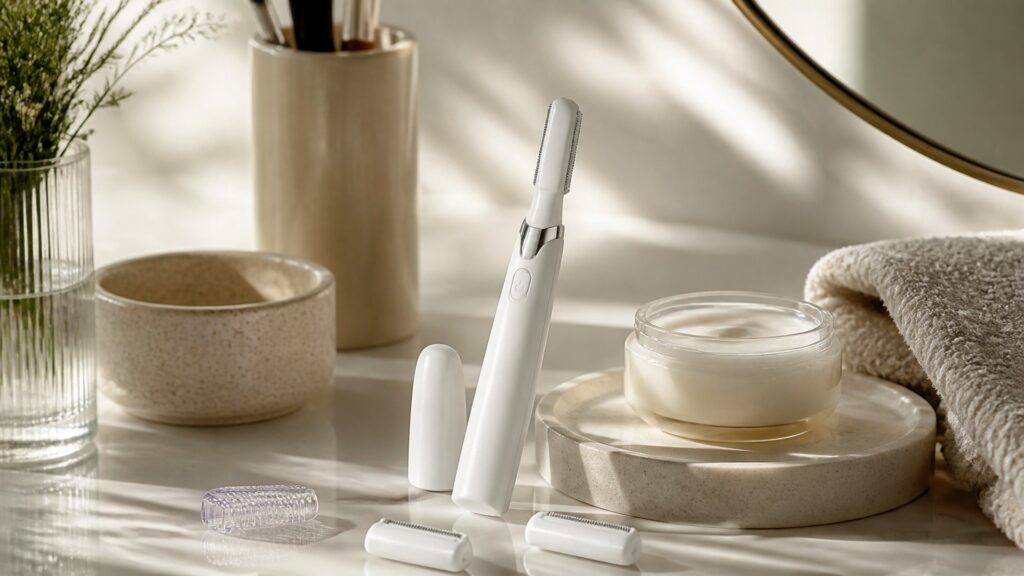
Buying framework
Define the facial treatment devices safety and settings routine before comparing products
Use the setting, frequency, and skin priorities to narrow dermaplaning devices logically.
Start with the use case: Identify the exposed edge length, guard geometry, motion type, and intended facial zones.
Rank the practical tradeoffs: Review contraindications, head installation, power control, and immediate shutoff.
Check instructions early: Plan one short downward pass sequence with predetermined no-go areas and stop signs.
Use profiles
Match dermaplaning devices to the person and pace
Three shopper profiles expose different priorities for facial treatment devices safety and settings.
Routine-focused buyer: A beginner needs low blade exposure and a handle that cannot roll or slip.
Performance-focused buyer: A tremor or dexterity-limited user should avoid tools requiring precise freehand angle.
Occasional or flexible user: An acne-prone user needs a route that never crosses inflamed lesions.
Specifications
Read the specifications through a facial treatment devices safety and settings lens
Translate technical language into visible routine benefits.
Handling lens
Compare blade exposure while the device is tilted within normal hand variation.
Ownership lens
Test emergency power-off without changing grip.
Edge Design: A guard limits depth only when held at the intended angle.
Speed And Control: Oscillating heads can catch at curves if pressure or direction changes.
Safety Guard: Speed control changes stroke rate rather than safe blade depth.
Replacement Blades: Bright lights improve edge visibility but can flatten depth cues.
Cleaning Method: Lockout and cap design reduce accidental activation and contact during storage.
Common mistakes
Avoid shortcuts that undermine facial treatment devices safety and settings
A good purchase can still disappoint when selection or use is based on the wrong assumption.
Buying from one metric: Do not increase speed because one pass leaves fine hair.
Skipping compatibility checks: Avoid moving sideways across the blade edge.
Ignoring post-use care: Do not cross raised acne, moles, cuts, or irritated patches.
Decision guidance
Choose the simplest option that covers the real need
Use these decision rules to finish a shortlist for facial treatment devices safety and settings.
Choose the basic format when: Choose a well-guarded edge with stable grip and simple shutoff.
Choose the flexible format when: Skip powered use when dexterity, vision, or skin condition prevents precise control.
Pause before upgrading when: Stop for pain, bleeding, skin lifting, sudden drag, or repeated catching.
Ownership & compatibility
Plan for clean, repeatable ownership
The best value remains convenient after the first few uses.
Consumables and replacements: Inspect head seating and blade condition before every session.
Cleaning and storage: Power off before cleaning, capping, or changing heads.
Routine compatibility: Record zones, passes, edge age, and delayed response.
FAQ
How to Choose Dermaplaning Devices for Facial Treatment Devices Safety and Settings FAQ
Practical answers about choosing and owning dermaplaning devices for facial treatment devices safety and settings.
What matters most when choosing dermaplaning devices for facial treatment devices safety and settings?
Is the most expensive option better for facial treatment devices safety and settings?
How should I compare two similar dermaplaning devices options?
Bottom line
Buy for repeatable facial treatment devices safety and settings results
A focused shortlist is easier to own and use well.
Prioritize fit: Treat blade geometry and hand angle as one safety system.
Verify the limits: Use settings to reduce strokes, never to justify more pressure.
Count ownership costs: Define no-go facial zones before the device is powered.
Reading Shortcuts
Jump to the key dermaplaning devices decisions.
Decision Reminders
Keep these checks beside your shortlist.
- Check edge design: Use only as directed on clean, intact skin with light controlled strokes.
- Check speed and control: Do not use on active acne, broken skin, infection, or significant irritation.
- Check safety guard: Never share blades and replace them as directed.
Glossary Snippets
Plain-language dermaplaning devices terms.
When to Use a Top 10 Review
Use a ranked list to identify a manageable set of strong candidates.
- You are still exploring: A ranked list can reveal the main formats and price tiers.
- You want a shortlist: Start broad, then confirm fit with this buying guide.
Have finalists? Use a Comparison.
When to Use a Comparison
Use a direct comparison when only a few candidates remain.
- Features are close: Side-by-side details clarify meaningful differences.
- Prices overlap: Compare ownership value, not only purchase price.
Still exploring? See the Top 10.