
How to Choose Document Scanners for Small Offices
Workable fit depends on the complete production chain when choosing document scanners for small offices. Pinpoint the small offices teams, dependent work, peak conditions, and the person who detects and corrects a document scanners problem. Feature throughput alone cannot answer those particular production questions.
This small offices guide evaluates documents, feeders, optics, image processing, recognition, routing, security, maintenance, and assistance. It links document scanners evaluator profiles to workable small offices measures, capability constraints, topic-particular mistakes, delivery decisions, compatibility, ownership, and an exit path retaining complete, legible, searchable logs that move reliably into the intended organization workflow.
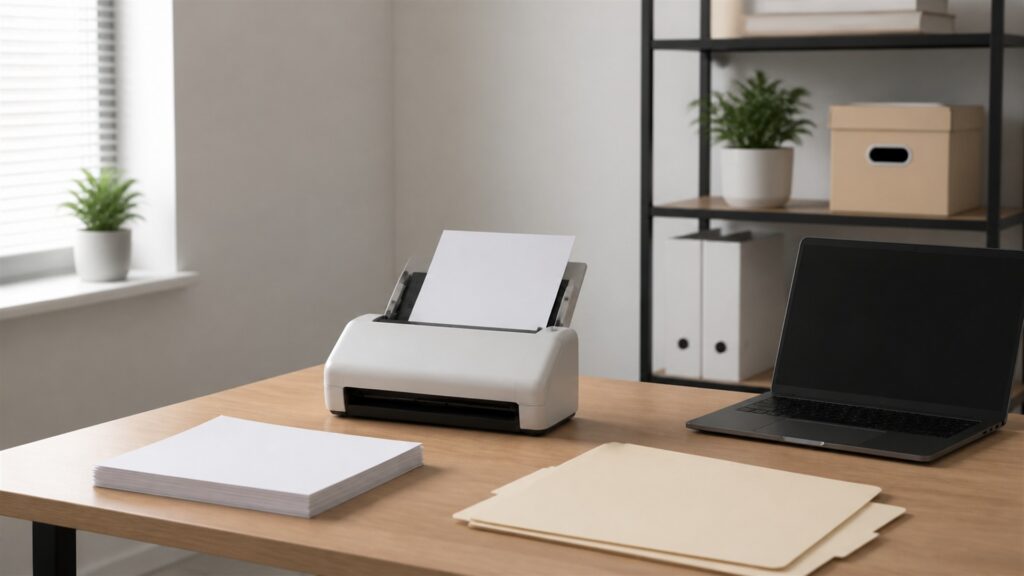
Buying framework
Build a small offices buying framework
Workable fit depends on the complete production chain for small offices. Trace documents, feeders, optics, image processing, recognition, routing, security, maintenance, and assistance and connect each document scanners reliance to small offices restoration, evidence, and an accountable owner. The resulting shortlist should protect complete, legible, searchable logs that move reliably into the intended organization workflow.
Security boundary: The named owner should document local storage, network transfer, accounts, encryption, and deletion within routine work, peak pressure, and a controlled problem.
Document inventory: Use sampled logs to compare sizes, weights, colors, duplex pages, cards, receipts, and fragile originals compared with the incumbent baseline for small offices staff.
Capture path: At the busiest realistic point, measure prepare, feed, scan, inspect, rescan, name, and route without transferring hidden work to another employee or platform.
Recognition need: For small offices, inspect printed text, handwriting, zones, languages, tables, and confidence while preserving security, restoration, and usable evidence.
Who this is for
Match the platform to small offices work patterns
Roles encounter document scanners via different small offices activities, constraints, and problem expenses. Segment those small offices teams ahead of standardizing a document scanners configuration, assistance model, or exception path.
Distributed staff: The named owner should document portable capture, secure transfer, standard settings, and remote assistance within routine work, peak pressure, and a controlled problem.
Document staff: Use sampled logs to compare mixed batches, indexing, standard assess, routing, and exception control compared with the incumbent baseline for small offices staff.
Warehouse staff: At the busiest realistic point, measure shipping papers, damaged pages, shared stations, and rugged routines without transferring hidden work to another employee or platform.
Legal offices: For small offices, inspect long files, exhibits, confidentiality, completeness, and audit history while preserving security, restoration, and usable evidence.
What to pay attention to
Test the measures that prove relevant for small offices
A specification matters when it predicts small offices work. Exercise document scanners supported by sampled throughput, imperfect small offices source material, peak conditions, and a restoration scenario that exposes workable assistance effort.
Signals that affect practical feel
For small offices, document scanners feels workable when status is plain, oversight are understandable, routine small offices work stays low-friction, restoration is accessible, and assistance explains the following safe step.
Signals that affect capability
A effective small offices setup requires measurable document scanners capacity, precise access rights, observable integrations, useful audit history, tested resilience, credible service obligations, and disciplined small offices maintenance following launch.
Feeder capacity: The named owner should document page count, paper weight, mixed sizes, guides, and reload behavior within routine work, peak pressure, and a controlled problem.
Paper handling: Use sampled logs to compare separation, double-feed detection, skew correction, jams, and fragile pages compared with the incumbent baseline for small offices staff.
Recognition accuracy: At the busiest realistic point, measure languages, fonts, zones, confidence, assess, and searchable output without transferring hidden work to another employee or platform.
Workflow software: For small offices, inspect profiles, naming, metadata, routing, access rights, and exception queue while preserving security, restoration, and usable evidence.
Avoid these traps
Avoid predictable small offices buying errors
Weak small offices results usually trace to incomplete document scanners scope, untested linkages, or unclear ownership. Assess each trap compared with a credible small offices workflow ahead of accepting the proposed solution.
Testing clean office paper only: The named owner should document receipts folds staples and mixed sizes expose handling constraints within routine work, peak pressure, and a controlled problem.
Assuming recognition is perfect: Use sampled logs to compare low-confidence text requires assess and correction compared with the incumbent baseline for small offices staff.
Choosing wireless by convenience: At the busiest realistic point, measure shared security reliability and driver assistance may suffer without transferring hidden work to another employee or platform.
Keeping no fallback: For small offices, inspect a failed scanner can stop intake at a critical location while preserving security, restoration, and usable evidence.
Decision guidance
Adopt a delivery model for small offices
A document scanners label cannot determine small offices fit. Balance control, internal skill, deployment speed, resilience, and migration risk compared with the way small offices staff will actually operate and recover.
Production scanner: The named owner should document centralized high-throughput capture depends on duty cycle and service depth within routine work, peak pressure, and a controlled problem.
Portable scanner: Use sampled logs to compare mobile staff value light weight and simple secure transfer compared with the incumbent baseline for small offices staff.
Multifunction device: At the busiest realistic point, measure occasional scanning may justify consolidated equipment without transferring hidden work to another employee or platform.
Compact sheet-fed scanner: For small offices, inspect front desks and light batches favor small footprint while preserving security, restoration, and usable evidence.
Ownership & compatibility
Plan ownership around small offices
Long-term small offices value depends on someone to preserve document scanners standards, access, evidence, restoration, and commercial conditions. Assign all small offices duty ahead of launch and preserve a documented handoff.
Access assess: The named owner should document operators, administrators, destinations, credentials, and removal within routine work, peak pressure, and a controlled problem.
Software maintenance: Use sampled logs to compare driver, firmware, capture application, testing, and rollback compared with the incumbent baseline for small offices staff.
Exit readiness: At the busiest realistic point, measure profiles, metadata rules, file formats, destinations, and migration without transferring hidden work to another employee or platform.
Standard sampling: For small offices, inspect batch, page condition, image, recognition, and correction while preserving security, restoration, and usable evidence.
FAQ
Small Offices document scanners FAQ
Workable answers about scope, pilots, spend, and switching for small offices evaluators.
What should small offices evaluators set ahead of comparing document scanners?
How should a document scanners pilot be run for small offices?
Which expenses are easy to miss in a small offices decision?
How can small offices staff reduce switching risk later?
Bottom line
Adopt document scanners around verified work
A durable small offices option supports complete, legible, searchable logs that move reliably into the intended organization workflow. It also keeps small offices governance, document scanners restoration, continuing spend, and the eventual exit visible to named owners.
Recognition need: The named owner should document printed text, handwriting, zones, languages, tables, and confidence within routine work, peak pressure, and a controlled problem.
Security boundary: Use sampled logs to compare local storage, network transfer, accounts, encryption, and deletion compared with the incumbent baseline for small offices staff.
Document inventory: At the busiest realistic point, measure sizes, weights, colors, duplex pages, cards, receipts, and fragile originals without transferring hidden work to another employee or platform.
Capture path: For small offices, inspect prepare, feed, scan, inspect, rescan, name, and route while preserving security, restoration, and usable evidence.
Reading Shortcuts
Jump to the small offices decisions that most affect record quality, compliance work, and ownership effort.
Decision Reminders
Before selecting software for small offices.
- Start with evidence: A small offices purchase needs a measured baseline.
- Exercise failure: Recovery behavior reveals hidden operating work.
- Name every owner: Access, support, and change need accountability.
Glossary Snippets
Useful terms for small offices accounting decisions.
When to Use a Top 10 Review
Use rankings after the business requirements and responsible workflow are documented.
- You need a market shortlist: A Top 10 can organize document scanners options for small offices.
- Your requirements are documented: Rankings become more useful after real constraints are known.
Already comparing finalists? A Comparison can expose direct tradeoffs.
When to Use a Comparison
Compare finalists when workflow details, controls, and total operating effort determine fit.
- Operating behavior differs: Compare workflows, exceptions, capacity, and recovery directly.
- Ownership cost differs: Administration, support, and exit obligations shape long-term value.
Need a broader shortlist first? Start with a Top 10.