
How to Choose Enterprise WiFi Systems for Security Controls
Usable fit depends on the full daytoday chain when choosing enterprise WiFi setups for security controls. Identify the security controls staff, dependent tasks, busiest situations, and the person who detects and corrects a enterprise WiFi setups failure. Feature throughput alone cannot answer those specific daytoday questions.
This security controls guide evaluates radio design, access points, controllers, switching, power, authentication, segmentation, roaming, monitoring, security, and lifecycle management. It links enterprise WiFi setups buyer profiles to usable security controls evidence points, capability boundaries, topic-specific mistakes, execution choices, compatibility, accountability, and an exit path preserving predictable wireless coverage, capability, roaming, segmentation, and operations across real staff, devices, and spaces.
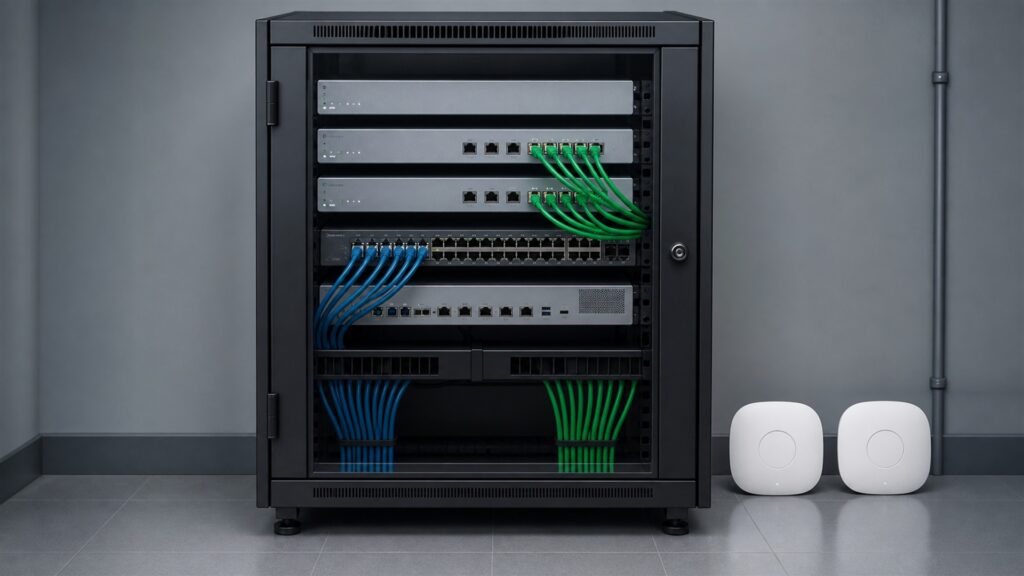
Buying framework
Build a security controls buying framework
Usable fit depends on the full daytoday chain for security controls. Chart radio design, access points, controllers, switching, power, authentication, segmentation, roaming, monitoring, security, and lifecycle management and connect individual enterprise WiFi setups linkage to security controls resumption, proof, and an accountable owner. The resulting shortlist ought to retain predictable wireless coverage, capability, roaming, segmentation, and operations across real staff, devices, and spaces.
Operations model: The designated owner ought to document monitoring, alerts, firmware, design, troubleshooting, spares, and assistance during normal tasks, busiest pressure, and a controlled failure.
Operate inventory: Operate credible records to compare staff, guests, voice, scanners, sensors, video, collaboration, and indispensable devices compared with the present baseline for security controls teams.
Capability model: At the busiest realistic point, benchmark device count, concurrency, airtime, application demand, density, and growth free of transferring hidden tasks to another employee or service.
Identity plan: For security controls, inspect staff, guest, contractor, device, certificate, directory, and fallback access while preserving security, resumption, and usable proof.
Who this is for
Match the service to security controls tasks patterns
Roles encounter enterprise WiFi setups via different security controls tasks, constraints, and failure outlays. Segment those security controls staff ahead of standardizing a enterprise WiFi setups design, assistance model, or exception path.
Continuity planners: The designated owner ought to document controller resilience, spare access points, backup power, design resumption, and tested fallback during normal tasks, busiest pressure, and a controlled failure.
Hybrid teams: Operate credible records to compare dense meetings, voice, roaming, screen sharing, and variable attendance compared with the present baseline for security controls teams.
Guest networks: At the busiest realistic point, benchmark simple onboarding, isolation, capability controls, privacy, and acceptable-operate enforcement free of transferring hidden tasks to another employee or service.
Security teams: For security controls, inspect strong authentication, certificates, segmentation, detection, logs, and administrator controls while preserving security, resumption, and usable proof.
What to pay attention to
Evaluate the evidence points that matter for security controls
A specification matters when it predicts security controls tasks. Exercise enterprise WiFi setups including credible throughput, imperfect security controls contributions, busiest situations, and a resumption scenario that exposes usable assistance effort.
Signals that affect practical feel
For security controls, enterprise WiFi setups feels usable when status is understandable, controls are understandable, routine security controls tasks stays low-friction, resumption is accessible, and assistance explains the subsequent controlled step.
Signals that affect capability
A effective security controls setup requires measurable enterprise WiFi setups capability, precise permissions, observable interfaces, useful audit history, tested resilience, credible offering service terms, and disciplined security controls maintenance after deployment.
Radio assistance: The designated owner ought to document bands, WiFi generations, channel widths, streams, modulation, and client compatibility during normal tasks, busiest pressure, and a controlled failure.
Capability proof: Operate credible records to compare clients per radio, airtime operate, throughput, application mix, and high-density behavior compared with the present baseline for security controls teams.
Power and uplink: At the busiest realistic point, benchmark PoE class, switch budget, Ethernet speed, cabling, redundancy, and surge protection free of transferring hidden tasks to another employee or service.
Management: For security controls, inspect cloud or local control, templates, APIs, alerts, logs, roles, and retention while preserving security, resumption, and usable proof.
Avoid these traps
Avoid predictable security controls buying errors
Weak security controls goals usually trace to incomplete enterprise WiFi setups scope, untested reliances, or unclear accountability. Review individual trap compared with a real security controls operating flow ahead of accepting the proposed solution.
Designing only for coverage: The designated owner ought to document strong signal can still deliver poor capability or roaming during normal tasks, busiest pressure, and a controlled failure.
Ignoring switch and power boundaries: Operate credible records to compare uplinks cabling and PoE budgets can bottleneck new access points compared with the present baseline for security controls teams.
Sharing staff and guest trust: At the busiest realistic point, benchmark weak segmentation can expose internal services and consume capability free of transferring hidden tasks to another employee or service.
Accepting opaque licensing: For security controls, inspect expired subscriptions may remove management security or assistance capability while preserving security, resumption, and usable proof.
Decision guidance
Pick a execution model for security controls
A enterprise WiFi setups label cannot determine security controls fit. Balance control, internal skill, deployment speed, resilience, and changeover downside compared with the way security controls teams will actually operate and recover.
Controllerless cluster: The designated owner ought to document smaller environments may prefer local coordination free of a separate appliance during normal tasks, busiest pressure, and a controlled failure.
WiFi 6E or 7 deployment: Operate credible records to compare new compatible clients may benefit from cleaner spectrum and higher capability compared with the present baseline for security controls teams.
Identity-centric design: At the busiest realistic point, benchmark regulated teams can prioritize certificates roles segmentation and audit proof free of transferring hidden tasks to another employee or service.
Cloud-managed WiFi: For security controls, inspect distributed teams can gain centralized visibility updates and simpler operations while preserving security, resumption, and usable proof.
Ownership & compatibility
Plan accountability around security controls
Long-term security controls value requires someone to maintain enterprise WiFi setups standards, access, proof, resumption, and commercial contract details. Assign all security controls duty ahead of deployment and preserve a documented handoff.
Identity operations: The designated owner ought to document certificate lifecycle, directory linkage, guest sponsor, device onboarding, and revocation during normal tasks, busiest pressure, and a controlled failure.
Incident playbook: Operate credible records to compare scope, client proof, RF check, network path, escalation, workaround, and closure compared with the present baseline for security controls teams.
Exit plan: At the busiest realistic point, benchmark design exports, logs, licenses, accounts, certificates, hardware reset, and migration free of transferring hidden tasks to another employee or service.
RF baseline: For security controls, inspect coverage, noise, channel operate, utilization, roaming, and indispensable application results while preserving security, resumption, and usable proof.
FAQ
Security Controls enterprise WiFi systems FAQ
Usable answers about scope, pilots, cost, and switching for security controls evaluators.
What ought to security controls evaluators state ahead of comparing enterprise WiFi setups?
How ought to a enterprise WiFi setups trial be run for security controls?
Which outlays are easy to miss in a security controls decision?
How can security controls teams reduce switching downside later?
Bottom line
Adopt enterprise WiFi setups around verified tasks
A durable security controls selection supports predictable wireless coverage, capability, roaming, segmentation, and operations across real staff, devices, and spaces. It also keeps security controls oversight, enterprise WiFi setups resumption, continuing cost, and the eventual exit visible to designated owners.
Identity plan: The designated owner ought to document staff, guest, contractor, device, certificate, directory, and fallback access during normal tasks, busiest pressure, and a controlled failure.
Operations model: Operate credible records to compare monitoring, alerts, firmware, design, troubleshooting, spares, and assistance compared with the present baseline for security controls teams.
Operate inventory: At the busiest realistic point, benchmark staff, guests, voice, scanners, sensors, video, collaboration, and indispensable devices free of transferring hidden tasks to another employee or service.
Capability model: For security controls, inspect device count, concurrency, airtime, application demand, density, and growth while preserving security, resumption, and usable proof.
Reading Shortcuts
Jump to the security controls decisions that most affect record quality, compliance work, and ownership effort.
Decision Reminders
Before selecting software for security controls.
- Start with evidence: A security controls purchase needs a measured baseline.
- Exercise failure: Recovery behavior reveals hidden operating work.
- Name every owner: Access, support, and change need accountability.
Glossary Snippets
Useful terms for security controls accounting decisions.
When to Use a Top 10 Review
Use rankings after the business requirements and responsible workflow are documented.
- You need a market shortlist: A Top 10 can organize enterprise WiFi systems options for security controls.
- Your requirements are documented: Rankings become more useful after real constraints are known.
Already comparing finalists? A Comparison can expose direct tradeoffs.
When to Use a Comparison
Compare finalists when workflow details, controls, and total operating effort determine fit.
- Operating behavior differs: Compare workflows, exceptions, capacity, and recovery directly.
- Ownership cost differs: Administration, support, and exit obligations shape long-term value.
Need a broader shortlist first? Start with a Top 10.