
How to Choose Epilators for At-Home Grooming
At-home epilation can replace repeated shaving for people who prefer removing hair from the root, but the best device is not automatically the one with the most tweezers or attachments. Your usual body areas, session length, grip, and tolerance for repeated passes matter more than a crowded feature list.
This guide helps you choose a home epilator by looking at head size, speed control, wet or dry operation, cordless runtime, cleaning, storage, and the accessories you will actually use. The goal is a routine you can repeat safely and consistently, not a device that looks impressive in the box.
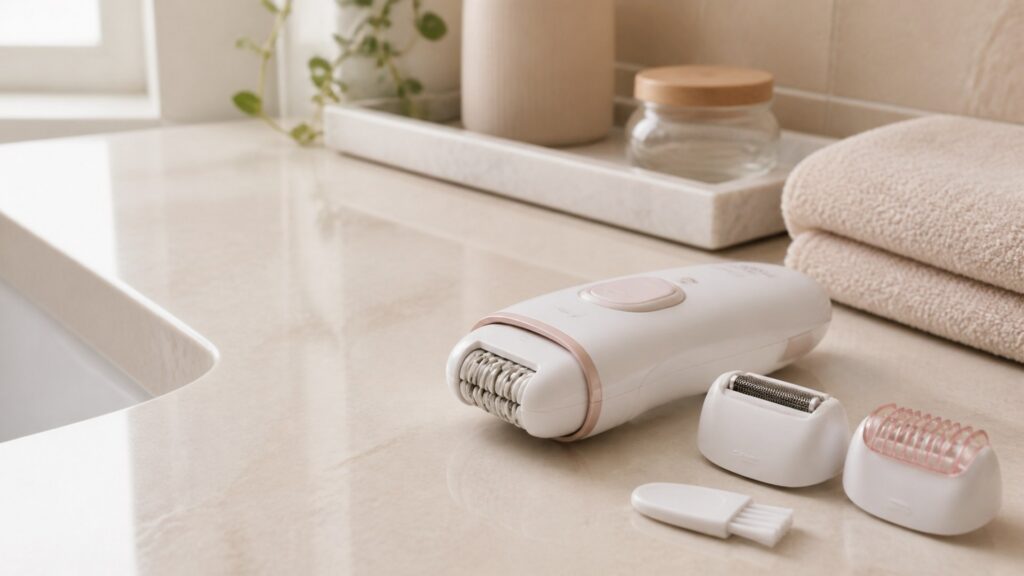
Buying framework
Define your home epilation routine before comparing models
Start with the places, timing, and cleanup conditions in which the device will be used.
List the body areas: A wide head can speed up legs, while underarms, bikini lines, and small contours benefit from a narrower cap or dedicated head. Confirm the manual allows every area you intend to treat.
Choose wet, dry, or both: Dry use is easy to inspect and can catch hairs efficiently. A genuinely wet/dry cordless model offers shower flexibility, but waterproof use and washable cleaning must be stated clearly by the manufacturer.
Plan realistic session length: Large areas need enough runtime and a comfortable grip. Short routines may favor a lighter device, while longer sessions reward balance, a pivoting head, and easy head cleaning.
Use profiles
Match the epilator to how you groom at home
Different routines call for different controls and accessory sets.
First-time home user: Look for two speeds, a gentle or efficiency cap, clear instructions, and an easy-to-clean head. Simple controls make it easier to learn pressure, angle, and pacing.
Whole-leg routine: Prioritize a wider head, steady battery life, good grip, and a light that helps reveal missed hairs. Comfort over a full session matters more than a large accessory count.
Multiple body areas: Choose a model with purpose-built caps or heads and explicit manufacturer guidance for each area. A trimming or shaving attachment can help manage longer regrowth before epilation.
Specifications
Read home-epilator specifications as routine features
Connect every specification to control, coverage, or cleanup.
Daily handling
Body balance, grip security, control layout, and head visibility determine whether a home session remains comfortable and orderly.
Routine flexibility
Approved treatment zones, water resistance, cordless duration, attachment purpose, and cleanup steps determine how many home routines one device can support.
Head width and contour contact: A broad head covers open areas quickly; a pivoting or contoured head can maintain contact around knees and ankles. Narrow caps reduce the active area for more controlled placement.
Speed and pressure feedback: A lower speed can support deliberate technique, while a higher setting can shorten large-area sessions. Pressure indicators may discourage pushing too hard, which can reduce control.
Runtime and charging: Compare usable cordless time with your expected session, not just the maximum claim. Check whether the device can operate while charging and remember that many wet/dry models cannot.
Cleaning method: A removable washable head simplifies cleanup, but only rinse parts the manual identifies as washable. Brushes, drying time, and replacement-head availability affect ownership.
Common mistakes
Avoid home-epilator buying shortcuts
A poor match often creates more passes, discomfort, or neglected maintenance.
Buying for attachment count: A large bundle has little value if the core epilation head is awkward or the extra tools duplicate products you already own.
Ignoring allowed body areas: A full-size body epilator is not automatically suitable for the face or every intimate area. Follow the device-specific manual rather than assuming one head works everywhere.
Treating waterproof and washable as identical: Some devices or components can be rinsed but are not approved for shower use. Verify the symbols and instructions before exposing the appliance to water.
Decision guidance
Choose the home setup that removes the most friction
The best configuration is the one that fits your normal space and routine.
Choose a simple dry model if: You mainly treat legs, value straightforward maintenance, and do not need shower use or a large attachment set.
Choose a cordless wet/dry model if: You want bathroom flexibility, washable cleanup, and enough battery time for your normal areas.
Choose a multi-head kit if: You will genuinely use trimming, shaving, precision, or exfoliation attachments and have room to clean and store them.
Ownership & compatibility
Account for the full home-grooming system
Long-term convenience depends on cleaning, storage, batteries, and replacement parts.
Drying and storage: Washable heads need complete air drying before closed storage. A ventilated pouch or dedicated tray can keep clean parts together without trapping moisture.
Wear items: Check whether caps, shaving foils, brushes, or heads are replaceable and available in your region. Specialty accessories can be difficult to replace years later.
Shared use: Treat an epilator as a personal grooming device unless the manufacturer explicitly supports another sanitation method. Routine cleaning does not necessarily make sharing appropriate.
FAQ
How to Choose Epilators for At-Home Grooming FAQ
Practical answers about configuring an epilator for repeatable household grooming routines.
Is a wet/dry epilator necessary for home use?
How many speed settings should a home epilator have?
Can one epilator handle every body area?
Bottom line
Choose the epilator you can use consistently at home
Routine fit beats an oversized specification list.
Prioritize control: A comfortable grip, useful speeds, and the right head for your main areas will affect every session.
Buy only useful flexibility: Wet/dry operation and extra heads are worthwhile when they solve a real routine problem.
Check ownership before checkout: Confirm cleaning steps, drying space, replacement parts, and battery behavior before you commit.
Reading Shortcuts
Jump to the decisions that matter most when how to choose epilators for at-home grooming.
Decision Reminders
A quick checklist before you commit to an epilator.
- Verify body-area approval: Use only on areas and with attachments allowed by the manufacturer.
- Check water symbols: Washable parts and shower-safe operation are not always the same.
- Budget for upkeep: Replacement foils, heads, and batteries can influence long-term value.
Glossary Snippets
Plain-language definitions for common epilator terms.
When to Use a Top 10 Review
Use a ranked shortlist when you want to compare the strongest options by routine, comfort, and value.
- You are still defining your needs: A Top 10 can separate full-size, compact, wet/dry, and attachment-heavy models before you compare details.
- You want a manageable shortlist: Ranked picks help you focus on models that fit your body areas, routine, and preferred cleanup method.
Already down to 2-3 options? A Comparison is usually the faster decision tool.
When to Use a Comparison
Use a direct comparison after you have narrowed the field and need to judge practical tradeoffs.
- You have two or three finalists: Side-by-side coverage clarifies head width, speed control, attachments, runtime, cleaning, and warranty differences.
- The prices are close: A comparison shows whether the extra cost buys better control and useful accessories or merely a larger bundle.
Still exploring? Start with a Top 10 to identify the most suitable epilator type first.