
How to Choose Epilators for Coarse Hair
Coarse body hair does not simply call for the highest tweezer count. Hair length, growth direction, head contact, motor consistency, and controlled movement all affect whether hairs are removed from the root or repeatedly missed and broken.
This guide focuses on the features that help manage dense or coarse regrowth: useful speed choices, a stable grip, a head that follows contours, trimming support for overlong hair, sufficient runtime, and cleaning access. It also explains when preparation matters more than buying a more aggressive device.
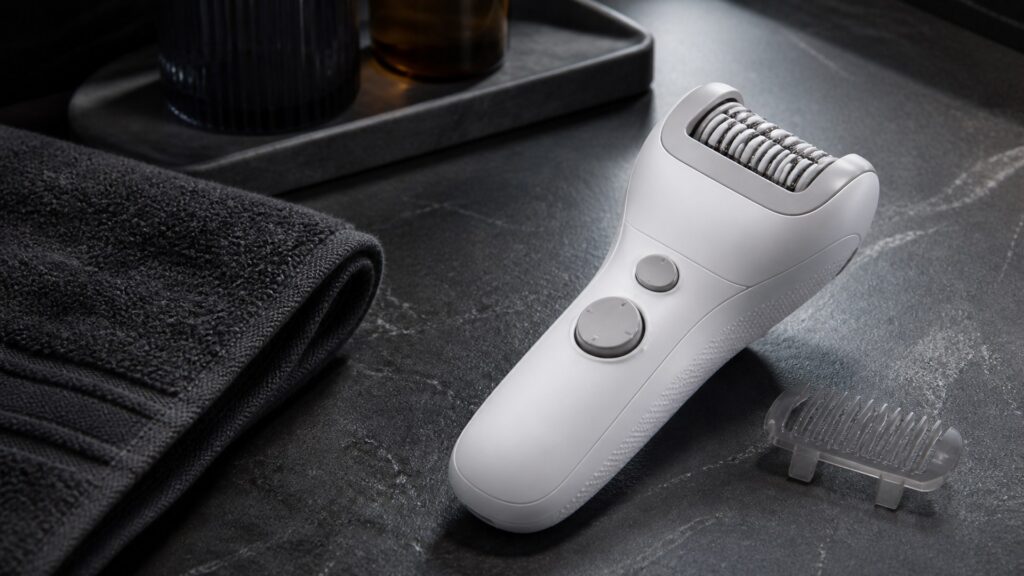
Buying framework
Separate hair preparation from device capability
Define hair length, density, and treatment area before judging specifications.
Start at a manageable length: Long hair can pull, tangle, or break. A trimming attachment or separate trimmer helps bring regrowth into the length range recommended by the epilator manufacturer.
Favor contact over pressure: A pivoting head, clear sight line, and stable grip help the tweezers meet hair consistently. Pressing harder can reduce control and is not a substitute for correct angle.
Expect directional variation: Coarse hair may grow in different directions, especially around contours. A light and a narrower cap can make deliberate sectioning easier.
Use profiles
Match the setup to density and area size
Coarse-hair routines differ between broad legs and smaller contoured areas.
Dense leg hair: Look for a wider head, consistent speed, enough battery for deliberate passes, and a grip that remains secure throughout a full-leg session.
Patchy coarse regrowth: A built-in light and good head visibility help locate isolated strong hairs without repeatedly covering clear skin.
Long regrowth cycles: Prioritize a trimming comb or shaving attachment so overlong hair can be shortened before epilation rather than forced through the tweezer head.
Specifications
Judge the features that preserve control under load
Useful capability is more than a high tweezer number.
Controlled contact
Handle leverage, treatment-edge visibility, contour follow-through, and selectable pace influence capture when regrowth is dense or resistant.
Workload support
Tweezer architecture, sustained drive, pre-trimming tools, battery reserve, and debris removal determine how well the setup manages heavier regrowth.
Tweezer layout: Closely spaced tweezers and an effective contact surface can improve capture, but design and angle matter more than the count printed on the box.
Speed range: A controlled lower setting may help on sensitive contours; a higher setting can improve progress on open areas. Both should feel stable rather than abrupt.
Motor consistency: The device should maintain predictable motion during normal contact. Marketing wattage is rarely as useful as clear model guidance and reputable performance support.
Trimming accessories: A comb that produces a repeatable pre-epilation length can reduce pulling and missed hairs when regrowth is longer than recommended.
Common mistakes
Do not confuse force with effective coarse-hair removal
Better preparation and sectioning often solve more than extra pressure.
Pushing the head into skin: Epilators are designed for light, controlled contact. Excess pressure can compromise movement and make it harder to maintain the intended angle.
Starting with overlong hair: Trim first when regrowth exceeds the manual's recommendation. This can improve control and reduce the tendency to rush.
Repeating passes without checking direction: Change approach based on growth direction and lift the device before reversing, following model instructions.
Decision guidance
Choose for capture, preparation, and stamina
A coarse-hair setup should support deliberate work without unnecessary bulk.
Choose a wide-head model if: Most work is on large, open areas and the grip remains comfortable for longer sessions.
Choose a kit with trimming support if: Hair is often long when you restart the routine or you alternate between shaving and epilation.
Choose wet/dry flexibility if: Wet use genuinely improves your comfort and the device is fully approved for shower operation.
Ownership & compatibility
Keep coarse-hair performance repeatable
Dense regrowth increases the importance of cleaning and inspection.
Frequent head cleaning: Remove trapped hair after each session and rinse only approved parts. A crowded tweezer head cannot maintain clean contact.
Accessory availability: Confirm replacement caps, shaving foils, and trimming combs can be purchased separately if they are central to your routine.
Session planning: Allow enough time to work in sections. A rushed routine can create repeated passes, inconsistent results, and unnecessary skin stress.
FAQ
How to Choose Epilators for Coarse Hair FAQ
Clear answers about preparing and managing dense or coarse regrowth with an epilator.
Does coarse hair require the highest tweezer count?
Should coarse hair be trimmed before epilating?
Is faster always better for coarse hair?
Bottom line
Control coarse hair through preparation and steady contact
Buy for the full routine rather than one headline specification.
Prepare the length: Use a trimming option when regrowth is too long for controlled epilation.
Prioritize handling: A stable grip, visible head, and useful speeds support consistent capture.
Maintain the head: Easy cleaning and available replacement accessories protect long-term performance.
Reading Shortcuts
Jump to the decisions that matter most when how to choose epilators for coarse hair.
Decision Reminders
A quick checklist before you commit to an epilator.
- Trim long regrowth: Follow the manual's recommended hair-length guidance.
- Use light contact: Correct angle and movement matter more than extra pressure.
- Work by direction: Section the area and account for changing growth patterns.
Glossary Snippets
Plain-language definitions for common epilator terms.
When to Use a Top 10 Review
Use a ranked shortlist when you want to compare the strongest options by routine, comfort, and value.
- You are still defining your needs: A Top 10 can separate full-size, compact, wet/dry, and attachment-heavy models before you compare details.
- You want a manageable shortlist: Ranked picks help you focus on models that fit your body areas, routine, and preferred cleanup method.
Already down to 2-3 options? A Comparison is usually the faster decision tool.
When to Use a Comparison
Use a direct comparison after you have narrowed the field and need to judge practical tradeoffs.
- You have two or three finalists: Side-by-side coverage clarifies head width, speed control, attachments, runtime, cleaning, and warranty differences.
- The prices are close: A comparison shows whether the extra cost buys better control and useful accessories or merely a larger bundle.
Still exploring? Start with a Top 10 to identify the most suitable epilator type first.