
How to Choose Exercise Bikes for Apartment Gyms
An apartment fitness room is a commercial or institutional use setting, even when the building is residential. Consumer exercise bikes may exclude apartment, condominium, retirement-community, hotel, or similar use from warranty. Buying a familiar home model without written eligibility can turn a low sticker price into uncovered downtime.
Begin with duty rating, local service, accessibility, floor behavior, power, network, privacy, cleaning, and resident fit. Schwinn explicitly says its consumer products are not intended for apartment or condominium communities; Life Fitness publishes separate commercial bike warranties and commercial-use specifications. Request a written installed quote and service plan instead of treating residential reviews as facility evidence.
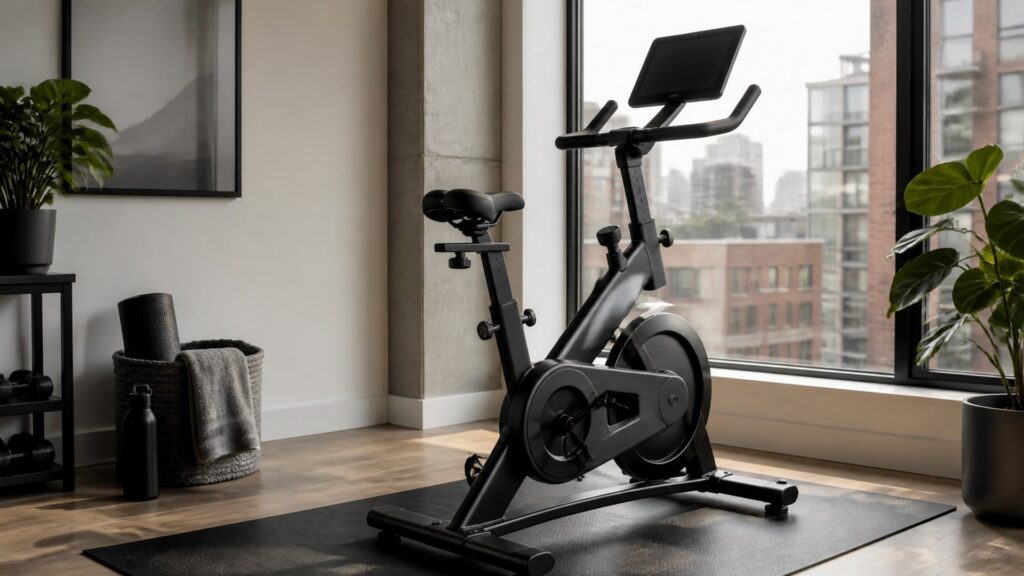
Buying framework
Procure the bike as shared building infrastructure
Apartment-gym selection begins with commercial eligibility, resident access, service response, and documented ownership responsibility.
1. Define the facility demand: Estimate apartments, expected users, peak hours, unsupervised access, session length, cleaning schedule, accessibility obligations, and replacement tolerance. Record whether cycling is an amenity, rehabilitation-adjacent offering, or training resource.
2. Map the installed room: Measure delivery, doors, elevator, floor, outlets, network, ventilation, sprinkler and egress constraints, equipment spacing, mounting sides, cleaning route, camera policy, and technician work zones.
3. Choose inclusive formats: Provide upright and recumbent options when resident needs justify both, then test entry, seat adjustment, pedals, handles, controls, display readability, body limits, and emergency response with representative users.
4. Verify duty and contract: Obtain written confirmation that apartment use is covered. Separate frame, parts, electronics, labor, travel, wear items, preventive maintenance, response time, loaner or replacement, and return terms.
5. Design operations: Assign inspections, approved cleaning, fault tagging, account reset, data deletion, incident reporting, out-of-service controls, resident communication, and vendor escalation before the exercise bikes open for use.
Who this is for
Apartment-gym bike roles
An apartment-gym bike fleet should cover resident access and workload without forcing one consumer cycling geometry or connected platform on everyone.
Commercial upright bike: A compact cabinet and familiar pedaling position support general fitness-room use. Verify heavy/commercial rating, high-frame entry, fit range, self-powered options, console durability, pedal service, and local labor.
Commercial recumbent bike: A lower side approach, backrest, and larger seat can broaden access for selected residents. It needs more floor length, clear transfer space, seat-rail maintenance, and a reachable stop or resistance control.
Commercial indoor cycle: Direct controls and robust frames suit structured cycling or experienced users. Facilities must manage saddle and bar adjustments, sweat, pedals or cleats, unsecured accessories, moving flywheels, and unsupervised standing efforts.
Commercial air or bike ergometer: Effort-responsive equipment supports intervals and performance metrics without an integrated subscription. Fan sound, moving arms where present, resident instruction, display batteries, and clear floor zones need operational planning.
Connected facility bike: Integrated content can differentiate an amenity, but account licensing, network, privacy, updates, headphone cleaning, content availability, console replacement, and resident authentication become building systems.
What to pay attention to
Facility bike specifications with operational consequences
Apartment-gym evidence must connect duty class, access, utilities, privacy, and service to the building's actual resident load.
Designed use: Require explicit heavy/commercial or applicable light-commercial eligibility for the exact building. A residential maximum user weight does not establish duty rating, shared-use warranty, or appropriate risk management.
Resident fit and access: Compare published user range with moving trials across heights and mobility needs. Include step-through, fixed handles, saddle or seat adjustment, pedal size, straps, display sightline, and dismount space.
Floor and sound: Evaluate stabilizer loads, frame movement, pedal sound, fan noise, speaker output, and vibration to units below or beside the gym. Use facility-approved flooring without destabilizing the bikes.
Electrical and network: Document circuits, plugs, adapters, generator or battery operation, standby demand, cable routing, Wi-Fi coverage, authentication, firewall constraints, update windows, and function during internet or subscription interruption.
Console privacy: Determine what names, workout history, heart-rate data, accounts, contacts, and payment information can remain visible. Require guest reset, sign-out, deletion, administrative control, and documented service access.
Cleaning compatibility: Choose bike surfaces and displays compatible with approved facility products and frequency. Map every resident contact point, control, foot-retention part, bottle area, device shelf, upholstery panel, and visible sweat path.
Service economics: Compare preventive visits, technician travel, response time, parts stock, console coverage, wear items, labor years, escalation, downtime reporting, removal, and multi-unit discounts in a written installed proposal.
Avoid these traps
Apartment-fitness procurement errors
The largest apartment exercise-bike risks come from residential warranties, single-user geometry, unmanaged console data, and no plan for mechanical downtime.
Buying a consumer bike: A home product may work physically yet have its warranty voided in an apartment community. Obtain written use eligibility from the manufacturer or authorized commercial dealer.
Selecting one geometry: A row of identical upright bikes can exclude residents who need lower entry or back support. Fleet composition should reflect resident access needs and facility obligations.
Treating Wi-Fi as entertainment only: Connected consoles can depend on accounts, updates, licenses, and authentication. Network changes can disable features or expose information when responsibilities are unclear.
Using household cleaning habits: Shared equipment needs documented products, frequency, inspection, supplies, and staff ownership. Residents should not spray unknown cleaner into consoles, bearings, resistance systems, or adjustment rails.
Waiting for complete failure: A loose pedal, slipping resistance, unstable seat, damaged cord, or failed stop control should trigger a lockout and service process before the bike becomes unusable or unsafe.
Decision guidance
Run a facility acceptance test
Approve the installed exercise bikes only after resident access, utilities, privacy, cleaning, and service workflows operate in the real room.
Inspect delivery and assembly: Record package condition, serial numbers, model and console versions, parts, torque or assembly sign-off, levelers, floor protection, outlet routing, network connection, and clearance.
Test representative riders: Use several heights and access needs to evaluate entry, adjustments, pedals, posture, controls, visibility, resistance, stopping, and dismount without exceeding written limits.
Exercise every console state: Try guest use, sign-in, sign-out, profile reset, lost connectivity, update, power cycle, volume, headphone behavior, privacy view, and administrator controls under the building's network.
Complete a cleaning round: Have responsible staff clean and inspect every required surface with approved products, replenish supplies, tag a simulated fault, and restore neutral settings within the planned labor window.
Simulate a service call: Report a pedal or resistance fault with serial number, document vendor response, protect resident access, estimate downtime, and verify who authorizes labor, parts, travel, or replacement.
Ownership & compatibility
Operate exercise bikes as a managed amenity
A reliable apartment gym requires assigned inspections, privacy resets, cleaning records, preventive service, and visible out-of-service control.
Inspect on schedule: Check pedals, crank arms, straps, saddles, backrests, adjustment locks, handles, levelers, cords, displays, resistance, and unusual sound at a frequency based on manufacturer and facility use.
Record cleaning: Use approved chemicals, dwell times, cloths, and drying steps. Maintain supplies and logs without implying sanitation claims beyond the product instructions and building policy.
Lock out faults: Remove a bike from service when safety, stability, electrical, pedal, seat, resistance, or control concerns appear. Use clear signage and prevent residents from restarting it casually.
Reset resident data: Audit guest sessions, profiles, app pairing, browsing, account retention, and deletion. Coordinate privacy policy, vendor terms, network administration, support access, and resale or disposal.
Review lifecycle cost: Track utilization, downtime, repeated parts, labor, technician travel, subscriptions, network support, cleaning time, and resident complaints before renewing service or replacing fleet models.
FAQ
Apartment Gym Exercise Bike FAQ
Answers for owners and managers about duty rating, accessibility, privacy, cleaning, noise, and service.
Can an apartment gym use a home exercise bike?
What duty rating should an apartment bike have?
Should the gym provide upright and recumbent bikes?
How much space should surround facility bikes?
Are connected exercise bikes a privacy risk?
How should shared bikes be cleaned?
How can an apartment gym reduce bike noise?
What belongs in a service contract?
What should staff check each day?
Bottom line
Buy uptime, access, and accountability
Apartment exercise bikes should be procured as serviced shared infrastructure, not as household products placed in a common room.
Eligibility: Written warranty covers the exact apartment setting and expected duty.
Access: The fleet serves representative resident fit and entry needs.
Operations: Cleaning, privacy, inspection, and lockout workflows are assigned.
Service: Response, parts, labor, travel, downtime, and removal are priced.
Apartment Gym Bike Route
Use these checkpoints before comparing apartment gym bike products.
Apartment Gym Bike Boundaries
Apartment gyms require written commercial-use evidence and managed operations.
- Residential is still shared-use: Check exclusions.
- Capacity is not accessibility: Test entry and fit.
- Connected means data: Plan privacy resets.
- Downtime is an ownership cost: Contract service.
Apartment Gym Bike Terms
Terms used in this apartment gym bike guide.
When a Apartment Gym Bike Ranking Helps
Apartment-gym rankings should be built for facility procurement.
- Best suited for: Prefer written duty eligibility, inclusive access trials, floor and electrical plans, privacy controls, cleaning compatibility, service response, parts, and lifecycle cost.
- Known drawback: Residential best-bike lists can recommend products whose warranties exclude apartment communities and whose accounts, labor coverage, or cleaning design fail under shared use.
Method: facility procurement analysis using current commercial-use, warranty, specification, and service disclosures; no Review Streets installation or hands-on test. Verified September 18, 2026. Sources: Schwinn commercial-use notice, Life Fitness commercial cardio warranty, and Life Fitness Integrity specifications.
Compare Apartment Gym Bike Finalists
Compare facility finalists through delivery, resident use, cleaning, fault lockout, and service response.
- Evidence check: Use commercial specifications, written warranties, representative-user trials, network tests, acceptance records, and vendor service terms.
- Ownership check: Include freight, installation, electrical and network work, flooring, preventive maintenance, subscriptions, labor, travel, downtime, and removal.
Choose the exercise-bike fleet that the building can keep accessible, private, clean, documented, and serviceable throughout its planned life.