
How to Choose Exfoliating Body Wash for Shower and After-Bath Routines
An exfoliating wash turns ordinary shower technique into part of the treatment dose. Pump count, contact time, hand pressure, scrub tools, water heat, rinse, towel friction, and aftercare can make the same bottle mild or excessive.
Safe handling matters too. Granular residue and thick formulas can make the tub slippery, while active cleanser left in folds may continue to irritate after the intended rinse.
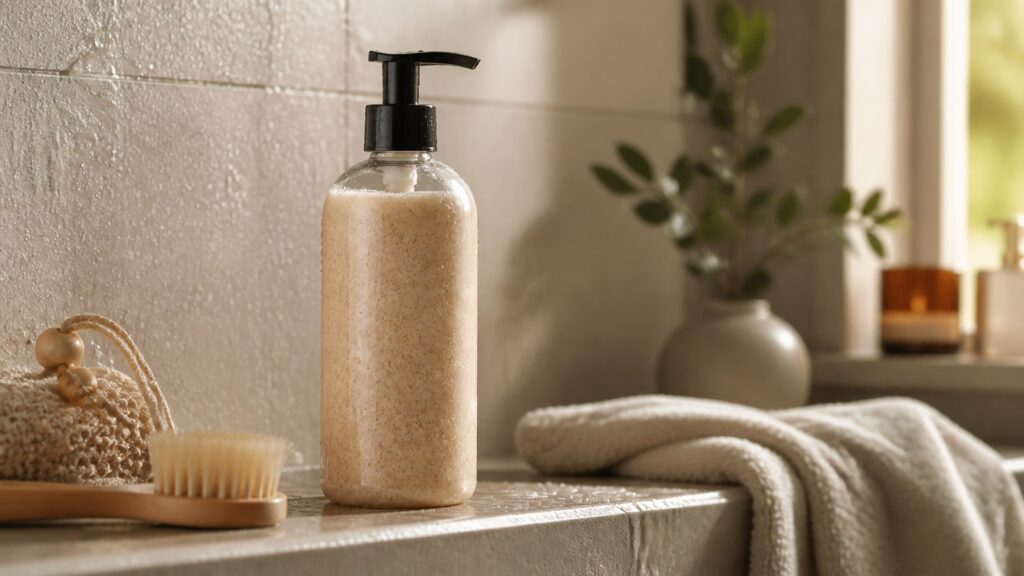
Buying framework
Define the shower and after-bath routines routine before comparing products
Use the setting, frequency, and skin priorities to narrow exfoliating body wash logically.
Start with the use case: Place the bottle securely and decide on a consistent measured dose.
Rank the practical tradeoffs: Apply with hands unless the directions and tolerance justify a tool.
Check instructions early: Rinse fully, pat dry, and plan moisturizer or sunscreen for treated areas.
Use profiles
Match exfoliating body wash to the person and pace
Three shopper profiles expose different priorities for shower and after-bath routines.
Routine-focused buyer: A beginner needs a simple hands-only technique before adding scrub accessories.
Performance-focused buyer: A mobility-limited user should prioritize stable dispensing and minimal floor residue.
Occasional or flexible user: A dry-skin user may exfoliate only selected areas and moisturize immediately afterward.
Specifications
Read the specifications through a shower and after-bath routines lens
Translate technical language into visible routine benefits.
Handling lens
Rehearse the entire shower sequence without rushing.
Ownership lens
Check the tub, towel, and skin for remaining particles or slick film.
Exfoliation Method: Pump size governs treatment quantity per shower.
Particle Or Acid Strength: Viscosity affects spread, contact, and accidental floor deposits.
Surfactant System: Particle suspension can become uneven if storage directions are ignored.
Frequency Guidance: Contact instructions set a boundary against improvised soaking.
Rinse Behavior: Rinse behavior determines whether active residue remains in folds.
Common mistakes
Avoid shortcuts that undermine shower and after-bath routines
A good purchase can still disappoint when selection or use is based on the wrong assumption.
Buying from one metric: Do not combine a textured wash with vigorous mesh or brush use.
Skipping compatibility checks: Avoid leaving active lather on longer to force faster results.
Ignoring post-use care: Never rub treated skin aggressively with a towel afterward.
Decision guidance
Choose the simplest option that covers the real need
Use these decision rules to finish a shortlist for shower and after-bath routines.
Choose the basic format when: Choose a controlled pump when dose consistency is the key need.
Choose the flexible format when: Use hands and brief contact when friction is the main risk.
Pause before upgrading when: Switch to targeted leave-on care if shower handling cannot remain controlled.
Ownership & compatibility
Plan for clean, repeatable ownership
The best value remains convenient after the first few uses.
Consumables and replacements: Rinse shower surfaces so particles and oils do not accumulate.
Cleaning and storage: Wash and air-dry any reusable tool after every use.
Routine compatibility: Follow exposure precautions and sunscreen directions for treated uncovered skin.
FAQ
How to Choose Exfoliating Body Wash for Shower and After-Bath Routines FAQ
Practical answers about choosing and owning exfoliating body wash for shower and after-bath routines.
What matters most when choosing exfoliating body wash for shower and after-bath routines?
Is the most expensive option better for shower and after-bath routines?
How should I compare two similar exfoliating body wash options?
Bottom line
Buy for repeatable shower and after-bath routines results
A focused shortlist is easier to own and use well.
Prioritize fit: Make shower technique reproducible.
Verify the limits: Control friction before increasing chemical strength.
Count ownership costs: Complete rinse and aftercare as part of every active session.
Reading Shortcuts
Jump to the key exfoliating body wash decisions.
Decision Reminders
Keep these checks beside your shortlist.
- Check exfoliation method: Begin less often than the maximum label frequency and watch how skin responds.
- Check particle or acid strength: Do not use on broken, sunburned, or actively irritated skin.
- Check surfactant system: Stop use if burning, significant dryness, or persistent irritation develops.
Glossary Snippets
Plain-language exfoliating body wash terms.
When to Use a Top 10 Review
Use a ranked list to identify a manageable set of strong candidates.
- You are still exploring: A ranked list can reveal the main formats and price tiers.
- You want a shortlist: Start broad, then confirm fit with this buying guide.
Have finalists? Use a Comparison.
When to Use a Comparison
Use a direct comparison when only a few candidates remain.
- Features are close: Side-by-side details clarify meaningful differences.
- Prices overlap: Compare ownership value, not only purchase price.
Still exploring? See the Top 10.